Keno Online Casinos in the UK: Odds and Rules
 Available in GB
Keno uses a numbered card and a separate draw; game rules determine how many spots can be selected and how results are paid.

Table of Contents
- Keno’s 80-number card and the draw
- Keno games: one format, several versions
- Keno odds and payouts: the paytable sets the terms
- Finding a keno casino site without a promised winner
- Picking numbers, or letting the game pick
- Licensed keno and the limits of the live label
- Bonuses, bitcoin and the terms behind the headline
- Online casinos with keno: what the format can and cannot tell us
- Real-money keno and the cost of a round
- Keno slots and the familiar comparison
Keno’s 80-number card and the draw
An online keno round begins with a field of numbers running from 1 to 80. They appear on a card, usually as a grid, turning a broad range into a compact visual choice. Before the draw, a player marks spots on that card. The selected spots form the ticket for that round; the rest remain untouched. Then the game produces its draw.
The arrangement has an old lottery logic: a fixed pool, a personal selection and a result determined elsewhere. The card makes the first part feel orderly. Every number occupies its own place, and every marked spot is easy to count. But the neat grid should not be mistaken for a map of the future. It is simply the surface on which a random game is played.
How many spots can be marked depends on the particular game. Some allow up to 10, 15 or 20 selections. That difference changes the shape of a player’s ticket, but not the basic sequence: choose spots, submit the selection, wait for the draw. The rules displayed within a game establish which choices are available. There is no single selection limit that can safely be assumed for every online keno casino in the UK.
Choosing a UK online casino for keno involves checking the details that matter to you, including how quickly withdrawals are paid. This list gives a concise reference point for considering the options.
Payout speed: 1-3 business days Chanze lists a payout speed of 1–3 business days.
Payout speed: 1-3 business days WinBeast lists a payout speed of 1–3 business days.
Payout speed: 1-3 business days EvoSpin lists a payout speed of 1–3 business days.
Payout speed: 1-3 business days SpinFormula lists a payout speed of 1–3 business days.
Payout speed: 1-3 business days SlotoSport lists a payout speed of 1–3 business days.
Payout speed: 1-3 business days Amunbet lists a payout speed of 1–3 business days.
Payout speed: 1-3 business days BeOnBet lists a payout speed of 1–3 business days.
Payout speed: 1-3 business days Britsino lists a payout speed of 1–3 business days.
Payout speed: 1-3 business days Jetsetspins lists a payout speed of 1–3 business days.
Payout speed: 1-3 business days x3bet lists a payout speed of 1–3 business days.
Once the selection is set, an online game uses a random number generator to produce the drawn numbers. In a standard round, 20 numbers are drawn from the card’s pool. The generator, rather than the player’s pattern or a sequence on the screen, determines which numbers appear. The animation may give the result a sense of ceremony; the underlying process is a random selection.
That distinction matters because the card invites interpretation. A run of adjacent spots looks deliberate. A scattered set may look more considered. Neither appearance gives a selection any influence over the draw. Each round is resolved by the game’s random process, not by a hidden response to the way a ticket has been marked.
After the draw, the card provides a visible comparison: which chosen spots were caught, and which were not. Winnings depend on both the number of spots selected and how many of them match the draw. The game’s payout terms determine what those matches mean. At this basic level, the important point is that the result is not simply a matter of whether one favourite number appears. It is assessed against the complete selection.
A round therefore has a clear order. The card presents the number pool; the player marks permitted spots; the game generates its draw; and the result is compared with the ticket. That order is shared by online keno games even when the details vary. It is also why the rules attached to a particular game matter: the familiar card does not guarantee identical conditions from one platform to another.
There is a small theatre to the format. A numbered card turns chance into something that can be watched and counted. The player makes a selection, then the draw seems to answer it, one number at a time. That visual exchange can make the process feel personal. Yet the numbers are not responding to the person who selected them. The appearance of dialogue is just the presentation.
For anyone looking at keno casinos in the UK, the word “round” can make the game sound more complicated than it is. The core mechanic is simple enough to describe without dressing it up: a fixed set of 80 spots, a selection made before play, and a random draw against which that selection is checked. What varies between games is the detail around this shared structure, not the basic fact that the result comes from the draw.

The card also explains why a result can be read at a glance. Marked spots and drawn spots either overlap or they do not. The overlap is the catch; the total number of catches is part of the basis on which the game calculates a win. The size of a ticket matters because the game evaluates the catches in relation to the spots selected, rather than treating every isolated match as identical.
That is the whole mechanism in miniature, though not the whole set of rules. A card is not a forecast, and a tidy choice is not a claim on the numbers. Keno’s appeal lies partly in the brief interval between marking the spots and seeing the draw resolve them. The mathematics remains indifferent. The card, at least, is legible.
Keno games: one format, several versions
The name “keno” can suggest a single fixed game, but online versions do not all use the same draw size or offer the same range of picks. The differences are not merely decorative. A game that draws fewer numbers creates a different set of conditions from one that draws the full set, while the number of spots available for selection also depends on the particular version.
In an online round, twenty numbers are drawn. Some variants draw fewer, so the familiar pattern is not universal. That distinction matters when comparing keno casino games: a screen may look much like another, yet the game rules can set a different scale for the draw. The label alone does not tell the whole story.
The selection range changes too. Depending on the game, the available choices may extend to ten, fifteen or twenty spots. A compact range and a broader one give the player different ways to build a ticket, but neither alters the random nature of the draw. These are variations in format, not evidence that one version can be read or controlled more reliably than another.

Some specialist reviews describe keno games that include optional multipliers as side bets. That is a feature reported for some games, not a standard element of every online keno game. Where such an option appears, it belongs to that version’s rules and terms; the word “keno” by itself does not establish that it is offered. Small additions can change the shape of a game, even when the familiar grid remains in view.
This is why “spot keno” is best treated as a description of a format rather than a guarantee that every casino presents the same experience. The interface may preserve the recognisable card while the number of drawn spots, permitted selections or optional features differ. The game’s title is a label, not a complete specification.
The same caution applies to free keno casino games and demo versions. Free play can provide a way to see how a particular version is arranged before wagering, but a demonstration is not a promise that every real-money version will share its rules or layout. The useful point is narrower: the format can be inspected without treating the title as enough information.
Mobile keno is another matter of presentation rather than a separate set of game mechanics. A compact display may arrange the card differently, but the relevant differences remain those written into that version’s rules: how many numbers are drawn, what selections it permits and whether it includes optional features. A smaller screen does not make those terms less important.
For anyone comparing online casino keno games, the sensible distinction is between what is common to the format and what belongs to an individual variant. The draw may be recognisably keno; its precise structure is not guaranteed by the name. The details are where the versions part company.
Keno odds and payouts: the paytable sets the terms
A catch is a spot selected for a ticket that also appears in the draw. The payout is not simply a reward for having caught something: it depends on how many spots were selected and how many were caught. The same number of catches can therefore mean different things under different game rules. In some variants, matching no numbers can also win, but only under conditions set by that game.
House Edge
Keno typically has a house edge of 25% or more, meaning the mathematical advantage is significantly built in favour of the casino.
That is why a payout table matters more than a headline prize. It sets out which combinations pay and what each is worth. A game with a generous-looking prize for one result may offer less favourable returns across its other outcomes. The figures cannot be judged in isolation; the whole table, alongside the rules for qualifying combinations, defines the terms.
The central caution is plain: keno has a house edge of 25% or more. The house edge describes the mathematical advantage built into the game, not a prediction of what will happen in an individual round. A player may win or lose more than the long-run expectation suggests; randomness does not arrange itself neatly around a single session.
There is also a wider range of estimates in circulation. One specialist review has cited house edges from 5% to 40%, with the result depending on the casino. That spread should not be mistaken for a stable market-wide measure: it underlines how much the game’s rules and payout structure can matter. A low stated edge is meaningful only if it applies to the particular version being played and can be checked against its terms.
The phrase “keno casino RTP” points to a related measure: the proportion of stakes a game is designed to return over time. It is not a promise about an individual ticket, nor a shortcut around the paytable. Where a platform presents a return figure, it should be read with the relevant game rules rather than treated as a universal property of keno. There is no single payout profile shared by every online version.

Before wagering, the specific game’s paytable, rules and odds need to be checked together. The paytable shows how catches are rewarded; the rules explain which results qualify; the odds help put those rewards in context. Payouts vary across platforms, so figures from one game cannot safely be carried over to another, even when both are labelled keno. A casino app is only the doorway. The terms belong to the game inside it.
Particular attention belongs on unusual outcomes. If a variant pays for matching zero spots, the table should make clear how many spots must have been selected and what the zero-match result returns. Without that condition, “a zero can win” says very little. The same care applies to larger catches: the apparent size of a prize says nothing by itself about how often that result occurs.
The paytable is not decorative small print. It is the game’s arithmetic, made visible. Check it before the stake goes in.
Finding a keno casino site without a promised winner
A site can make keno easy to find and still leave the important terms scattered across help pages, game screens and promotional copy. The useful comparison begins elsewhere: with the rules attached to the specific game, its odds and its paytable. Those details, rather than the brightness of the lobby or the number of tiles on its home page, determine what a wager means.
Before Wagering
- Check the specific game’s paytable for reward values
- Review the rules to see which results qualify for a win
- Examine the odds to put potential rewards in context
- Verify the operator holds a UK Gambling Commission licence
Keno rules and payout structures differ between platforms. A familiar name for a game does not establish that two versions work alike, and a paytable from one site cannot stand in for another’s. Before wagering, the specific game’s rules, odds and paytable need to be checked together. The paytable shows how the game treats different outcomes; the rules explain which conditions apply; the odds give context to the chances involved. Read as a set, they are more useful than a headline promising generous keno slot machine payouts.
Keno has a house edge of 25% or more, so the possibility of a prize should not be mistaken for favourable terms. The precise edge depends on the game and platform. A specialist review has cited a range from 5% to 40% across casinos, but that reported spread is not a current guarantee about any particular site or game. It is a reason to look for game-specific information, not a reason to assume the most favourable figure applies. If the site does not make the relevant odds and payout conditions clear, the comparison has reached its limit.
A paytable deserves more than a glance at its largest prize. The top line can dominate a promotional panel while telling little about how often other outcomes pay, or what conditions attach to them. The practical question is whether the listed returns correspond to the game being opened and the stake being considered. A table that is hard to locate, incomplete or apparently detached from the game leaves an essential part of the decision unresolved. No promise of a big win repairs that omission.
The same care applies when a casino groups keno with other games under broad labels such as keno slots, online keno slots or slot-style keno. Such wording may describe how a product is presented, but it does not settle its rules or payout structure. A search for keno slot games can lead to different formats, and the name alone cannot establish that their odds match. The game’s own information remains decisive. Labels are not terms.

There is also a difference between comparing the game and comparing the site that hosts it. A polished page can make a product look settled before its details have been read; a plain one may still provide the information needed to judge its terms. For real-money play in the UK, a casino serving British customers must hold a UK Gambling Commission operating licence. That is a baseline legal condition, not evidence that a particular keno game has favourable odds or a generous paytable. Regulation governs the operator; it does not turn a random game into a reliable source of winnings.
Claims about the “best” keno casino sites are especially thin when they do not show how the games were compared. A ranking without the rules and paytables for the specific versions offers little basis for judging value. Neither a large game catalogue nor a striking jackpot label establishes that one keno casino site is better on the terms that matter. The distinction is quietly important: visibility is not transparency.
The same restraint applies to bonus language. A promotion can make an offer sound attached to keno, but it cannot answer questions about the game’s odds, rules or payout conditions. Those belong to the game itself. Broad claims about keno casino bonuses should not be allowed to obscure the basic comparison: what game is offered, what its paytable says, and whether its terms are available before a wager is made.
- Read the full paytable before staking
- Verify the UKGC license of the operator
- Base decisions on game-specific rules
- Rely on headline prizes alone
- Assume all keno versions work alike
- Trust a ranking without rules and paytables
A sound comparison may end with a site being set aside. That is not indecision; it is a response to missing information. Online keno offers no promised winner, and no site description can change that. Clear terms are the minimum.
Picking numbers, or letting the game pick
A keno card allows two kinds of choice: selecting spots by hand or asking the game to make a random selection. The first can feel personal; the second removes the small ritual of deciding which numbers deserve a place. Neither changes what follows. In legitimate keno, the draw is random, and a chosen spot has no greater claim on appearing than any other.
Manual selection often carries a private logic. Someone may reuse dates, favour a pattern on the card, or keep the same spots from one game to another. Such choices can make a round feel less anonymous, but they do not influence its result. A number that appeared in a previous draw is not thereby due to return, and a number left out for a long time has no debt to repay. The draw keeps no memory.
An automated pick offers a different kind of comfort: the decision is made without the player’s preferences. It is still only a selection, not an advantage. Whether spots are chosen by hand or supplied at random, the outcome is not altered. Keno has no dependable system that turns a pattern, a hunch or a sequence of past results into a guaranteed win. The machinery is indifferent.

That distinction matters when learning how to play keno online. The practical choice is about how to fill the card, not how to influence the draw. Someone who enjoys making selections can do so; someone who would rather avoid choosing can use the random option. The game does not reward either style with a different set of probabilities.
Some games also offer multi-race cards. These let the same spots remain in play across consecutive games, sparing the repeated task of entering them again. It is a convenience of continuity, not a system for improving the chance of catching a spot. Each game still has its own random outcome. Repeating a selection does not make it stronger.
There is a familiar temptation to treat repeated play as evidence: a pattern seems to be forming, or a run of misses appears to call for a change. But earlier outcomes cannot direct a later draw. Switching numbers may change which spots are on the card, yet it does not make the replacement more likely to appear. Keeping them does not make them more likely either.
Free versions can help someone become comfortable with choosing spots and using a game’s controls before wagering. They do not reveal a hidden pattern or provide a preview of future results. The choice remains modest: select personally, or let the game select randomly. Neither offers command over chance.
The preference is human. The draw is not.
Licensed keno and the limits of the live label
For real-money keno in Great Britain, a casino’s licence is more than a badge beside its name. Remote gambling operators serving customers there must hold the relevant licence from the UK Gambling Commission, whether the operator is based in Britain or elsewhere. The Gambling Act 2005 governs gambling in England, Scotland and Wales; Northern Ireland has a separate legal framework.
Regulatory Framework
Remote gambling operators serving customers in Great Britain must hold a license from the UK Gambling Commission, governed by the Gambling Act 2005 (with a separate framework for Northern Ireland).
That requirement applies to the operator, not to the wording used to describe a game. “Live” may sound like a promise of a human caller, a studio or a broadcast draw, but the label alone establishes none of those things. Nor does it show that a particular keno product is offered by a licensed casino. A UKGC licence says something about the operator’s regulatory status; it is not a certificate for every claim made in a game’s title.
There is a practical difference between those questions. A site can be checked for its licence, while the format and operation of a specific game need to be checked in that game’s own information. The available market-wide rules do not establish that particular licensed live keno casinos exist, or that online live keno is available in a defined form. The label is not evidence.
Safeguards apply to accounts as well as operators. Before allowing a customer to deposit, an operator must verify that person’s age. New customers must also be prompted to set a financial limit before making their first deposit, and account-level limit controls must remain accessible. These are not optional decorations on a responsible-gambling page: they are part of the framework for remote gambling in the British market.
The distinction matters because “licensed” and “live” answer different questions. Licensing concerns whether an operator may lawfully serve the market under the applicable rules. “Live” is a product description, whose meaning depends on what the game actually does. Neither term, by itself, says how a keno draw is conducted or what safeguards a particular page displays.
A careful assessment therefore separates the operator’s regulatory standing from the game’s description. A title containing “live” should not be treated as proof of a live dealer or draw, and a casino’s licence should not be taken as confirmation of a particular live keno offering. The safeguards are real; the inference is not.
Bonuses, bitcoin and the terms behind the headline
A keno bonus can sound like a shortcut to more play, while a bitcoin label suggests a particular way to fund an account. Neither phrase, by itself, says what is actually available. Offers and payment options need to be confirmed on the relevant site; a headline is not a set of terms.

The same caution applies to claims about a no-deposit offer. Its name alone does not establish whether it applies to keno, what conditions attach to it, or whether any winnings can be withdrawn. Those details belong to the offer’s own terms. A bonus should not be treated as evidence that a game pays more generously or that its odds have changed.
The game’s paytable is the firmer document. Keno rules and payouts differ between platforms, so the specific game’s rules, odds and paytable need checking before any wager. The display may make a game look familiar while its payout structure says otherwise. Small print, in this case, is the machinery.
A bonus may affect the terms on which play is offered, but it does not make a random draw predictable. Keno has a house edge of 25% or more; the relevant paytable shows how that edge is reflected in a particular game’s payout structure. Comparing the headline value of an offer without reading the game rules leaves out the part that determines what a wager can return.
Bitcoin searches call for the same distinction between a label and a verified feature. The phrase “bitcoin keno” does not establish that a particular casino accepts bitcoin, or that any such payment option is available to UK customers. That needs confirmation from the operator’s current payment information. No assumptions should be made from the wording of a page title or promotional banner.
Nor does a supposed “best” bonus settle which game is suitable. The meaningful comparison is between the actual offer conditions and the particular game’s rules, odds and payouts. If those terms cannot be found clearly, the headline offers little to assess. A less dazzling proposition may at least be legible.
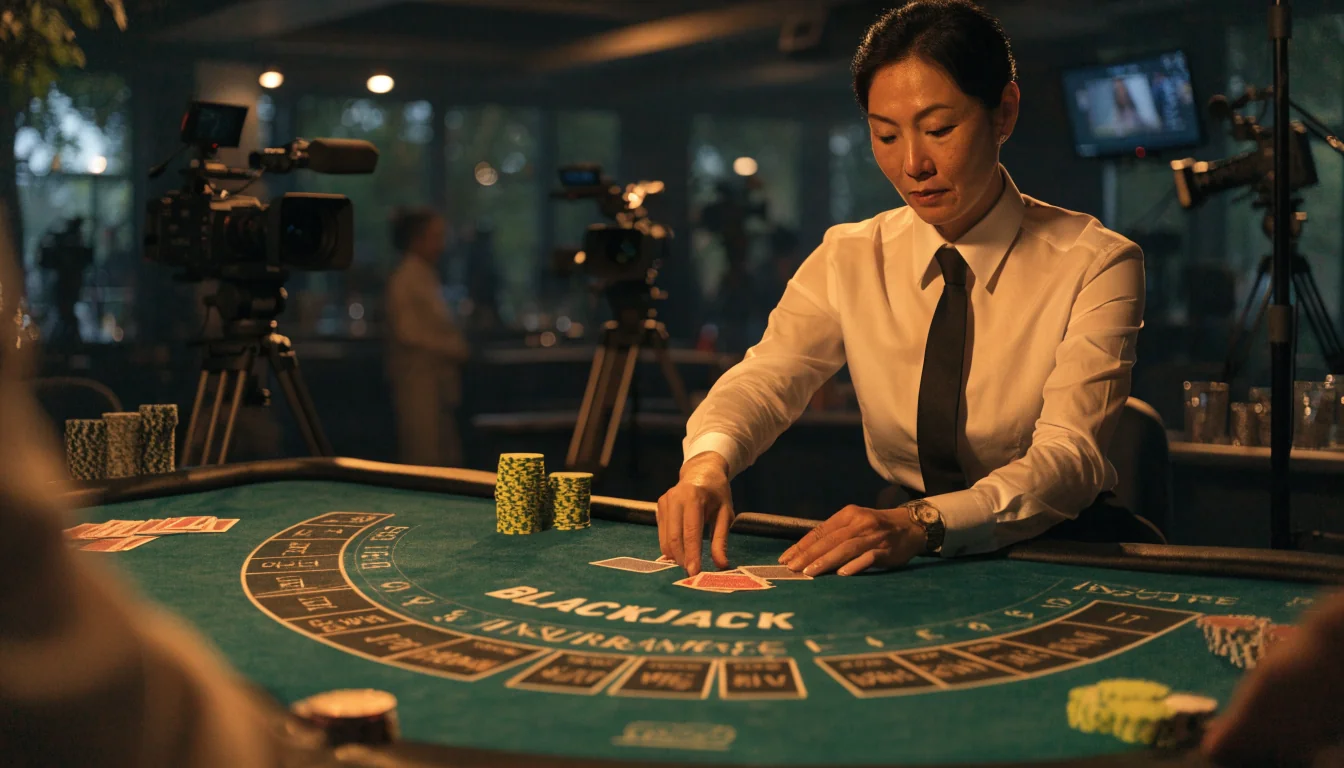
Online casinos with keno: what the format can and cannot tell us
Keno is a number-draw game, but its name alone says little about the version offered by an online casino. The useful distinction is between what belongs to the format and what belongs to a particular game: the draw is random, while the rules and payment structure are set by the game being played.
Online keno uses a random number generator to select the drawn numbers. That describes how the result is produced; it does not make one platform’s version interchangeable with another’s. The same label can sit above different rules, betting arrangements and payout structures. A game title, thumbnail or short description cannot stand in for the details that govern a wager.
A specialist review reports that platforms can differ in their betting and payout structures. That is a reason to treat each game on its own terms, not to assume a market-wide standard. Before wagering, the specific game’s rules, odds and paytable need to be checked. Keno payouts vary between platforms, and the house edge is 25% or more. The name on the screen is not the contract.
The phrase “live keno” calls for similar care. It may be used in a casino’s description or in a search for a more immediate style of play, but the label alone does not establish how a particular game works. Nor does the broad category of online keno establish that a live-dealer version is available. The game’s own information is more telling than the adjective.
That is what the format can and cannot tell us. It can establish that keno is based on a random draw; it cannot reveal the practical terms of a specific casino’s game. The distinction matters because online play makes different versions look neatly comparable while leaving their conditions in separate paytables. A small amount of reading, less theatrical than a spinning graphic, does more to explain the wager.
For anyone asking what keno is, the concise answer is a game in which a random draw determines the result under the rules of a particular version. Beyond that, the details belong to the individual game. Check its rules, odds and paytable before wagering; familiarity with the format is not a substitute for knowing those terms.
Keno Essentials
- Results are determined by a random number generator
- Payouts and rules vary significantly between different platforms
- The house edge is typically 25% or higher
- A UKGC licence is a baseline legal requirement for operators in the UK
- Personal number selection does not influence the random draw
Real-money keno and the cost of a round
With real-money keno, the stake is the part of the round a player can decide in advance. The draw is not made more predictable by spending more, and a larger bet does not turn a losing run into a debt the game must repay. It simply puts more money at risk on each play.
That distinction can disappear in the rhythm of repeated games. A player may choose a stake, keep the same spots for several rounds and watch the balance move with each result. The individual bet can look modest while the sequence quietly becomes expensive. A planned bankroll gives that sequence a boundary: money set aside for gambling, separate from funds needed for ordinary costs.
The useful decision comes before play begins. Set a spending limit and decide how much can be lost without affecting other commitments. Then choose a keno game whose available bets fit that amount. If the lowest stake on offer is already beyond the planned range, the game is not a fit; the budget should not be bent to accommodate its menu.
A budget is not a target to spend in full, either. It is a ceiling. Stopping when it is reached keeps a session from becoming an attempt to recover money already gone. Chasing losses gives the previous result an influence it does not possess: the next round remains separate, while the player’s exposure grows.
The same caution applies to wins. A favourable result may make another round feel financed by the game, but the money is still part of the player’s balance. Deciding beforehand when to stop can prevent a session from expanding simply because it has gone well so far. Restraint is less theatrical than a streak. It is also more useful.
Some platforms allow several games to be played with one number selection. That can make repeated betting feel like a single extended choice, though each game still carries its own stake. The total planned spend should account for every round being entered, not just the first click. A familiar card does not make later bets cost nothing.

Keno casino games played for real money therefore call for two separate decisions: how much to risk on a round and how much the whole session may consume. Neither requires a system for choosing spots. The financial limit belongs to the player, not to the draw.
Keno slots and the familiar comparison
Video keno can look slot-like on a casino screen, which makes “keno slots” an easy shorthand. The resemblance has limits. Keno centres on spots and a random draw; the comparison with slots concerns the odds, not an identical game or a shared way of playing.
The available comparison is sobering: the odds in video keno are about as bad as those on slot machines. That does not make the games interchangeable, nor does it establish the return of any particular version. Keno has a house edge of 25% or more, while its rules and payouts vary between platforms. The specific game’s rules, odds and paytable are therefore essential reading before any wager. A familiar-looking screen is not a mathematical explanation.
Number choice adds no control. In legitimate keno, selecting a favourite spot, avoiding one that has appeared before, or following a pattern does not alter the random outcome. A video display may make the sequence feel personal; the draw is not taking requests. No system turns chosen numbers into an advantage.
For someone curious about the format, keno may be available in a demo or at a social casino using play money, as well as in real-money form. Those are different ways to encounter the same broad idea, not evidence that a free version predicts what a paid game will return. A demo can show how a particular game presents its rules and results; it cannot make future draws less random.
The slot comparison is useful chiefly as a warning against assuming that bright graphics or familiar casino styling make a game generous. Video keno may invite the same quick, repeated play associated with slots, but its identity still rests on spots and catches. Presentation is not probability.
How important is it to pick the right Keno game?
It matters because rules, payouts and house edge can vary between games. Check the game’s paytable and choose one with bets that fit your budget.
Are there different versions of Keno?
Yes. Versions can differ in how many numbers are drawn, how many spots you can select and whether they offer features such as multipliers.
How do you play Keno?
Choose numbers from the 1–80 card, set your bet and let the game draw its numbers at random. Your payout depends on how many of your selections match the draw.
How much does it cost?
Minimum stakes are £1. You can choose your bet size, so set a budget before playing.
What is the house edge in Keno?
It can range from 5% to 40%, depending on the game and casino. Check the game’s rules and paytable before playing.
How is Keno betting done?
Select your numbers manually or use an automated random selection, then choose your bet size. Some games also let you use the same numbers across multiple rounds.
How do I choose a line and place a bet?
Mark the permitted number of spots on the 1–80 card, or use random selection, then choose your stake and submit your ticket. The available number of spots varies by game.
Published by the Tenobet Casino 4 team.