French Roulette Online Casinos in the UK: Rules and Play
 Available in GB
La Partage returns half of an even-money stake on zero, while table format, pace and bonus terms shape the wider session.

Table of Contents
- French Roulette’s Zero Changes the Arithmetic
- What Makes a French Roulette Casino Suitable for the UK
- Live French Roulette: The Wheel on Camera
- Low Stakes, Standard Tables and the Pace of Play
- The Online Roulette Session: Software or a Live Dealer
- French Roulette and Casino Bonus Wagering
- Premium Tables and the Question of Pace
- European and American Roulette: Two Different Wheels
- Betting Systems Meet the Limits of Chance
- Lightning Roulette’s Altered Payouts
French Roulette’s Zero Changes the Arithmetic
In roulette, the green zero is not merely another pocket. It is the point at which the table’s rules become visible: a winning colour bet can turn into a loss, even though the ball has landed on neither red nor black. French roulette softens that moment for certain bets. Its distinction lies less in the wheel’s appearance than in what happens to a stake when zero appears.
La Partage applies to even-money wagers, such as red or black, odd or even, and high or low. If the ball lands on zero, half of the stake is returned rather than the whole bet being lost. The other half goes to the house. The rule does not make the wager safe, nor does it alter the result of any spin; it changes the financial consequence of one particular result.
That adjustment matters because zero interrupts the apparent balance of the outside bets. Red and black may look like opposing halves of a simple choice, but the green pocket belongs to neither. On a standard European wheel, that extra outcome is enough to give even-money bets a house edge of 2.70%. With La Partage, the edge on those bets falls to 1.35%. The difference is not a prediction about what a session will produce. It is a change in the long-run arithmetic of the wager.
En Prison offers another French treatment of zero. Instead of settling a qualifying even-money bet as an ordinary loss, the stake is held for a further spin. The player’s money remains exposed to the next result, rather than being returned at once or immediately surrendered. The rule gives zero a pause in the proceedings. It does not remove the house’s advantage, but it is part of why French roulette has the lowest house edge among standard variants.
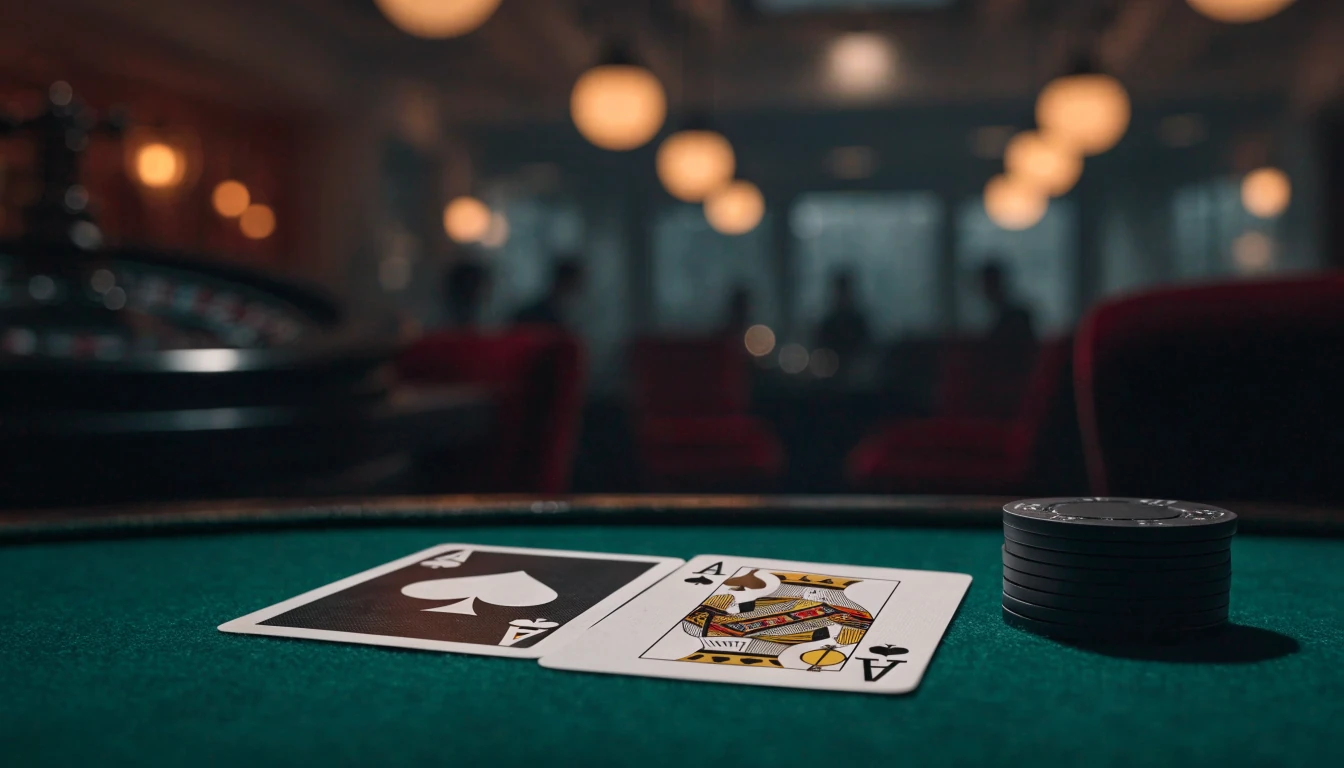
The distinction is specific. La Partage and En Prison concern even-money bets; they do not improve every wager on the layout. A straight-up choice of one number, for instance, is not made more favourable by a rule that addresses the fate of an even-money stake. The felt may carry one shared wheel and one shared set of numbers, but the consequences of zero depend on the kind of bet placed.
That is worth keeping in view when French roulette appears in an online casino. A French name or a tricolour interface cannot by itself establish that the relevant rules are active. The table’s rules should identify whether La Partage, En Prison, or both apply, and which bets qualify. If the game shows only a familiar layout while leaving the zero rule unclear, the missing detail is not decorative. It is the arithmetic.
The contrast with European roulette is particularly clear because the baseline is familiar. A European table has a single zero, and its even-money house edge is 2.70%. La Partage halves that edge for the eligible bets, rather than changing the wheel or rewriting every payout. French roulette therefore does not abolish the house advantage; it trims it where zero would otherwise take the whole even-money stake.
The language of “better odds” can make this sound broader than it is. A lower house edge describes the expected cost of a wager over repeated play, not a promise that a particular bet will win, or that a short session will behave gently. Each spin remains uncertain. A run of reds does not make black due, and the earlier appearance of zero does not make it less likely on the next spin. The rule changes settlement, not chance.
For anyone comparing French roulette casinos, the useful question is not simply whether a game carries the French label. It is whether the table rules explain the treatment of zero and whether the wager being considered is covered. When La Partage applies, an even-money bet loses only half its stake on zero; under En Prison, its stake is held rather than immediately settled. Those are different procedures, though both soften zero’s effect on eligible bets.
Attention: A French name or interface does not guarantee that La Partage or En Prison rules are active; always verify the table rules.
French roulette’s appeal is consequently a matter of small print with unusually large significance. The wheel still has its green interruption; the ball still chooses without regard to the previous spin. But the table need not treat every zero as a complete defeat for an even-money wager. A modest concession, formally stated.
What Makes a French Roulette Casino Suitable for the UK
The phrase “best French roulette casino” sounds as if it should lead to a neat hierarchy: one name at the top, a few runners-up beneath it, and the matter settled. In practice, a table’s appeal cannot establish whether the business behind it is fit to serve British customers. A polished lobby is not a licence, and a game label is not evidence of how an operator is supervised.
For customers in Great Britain, remote gambling businesses offering casino games must be authorised by the UK Gambling Commission (UKGC). It is the regulator responsible for online casino activity there. That requirement applies to operators selling into the British market, including businesses based elsewhere. A casino without the relevant UKGC licence cannot lawfully offer real-money gambling to British residents. The distinction is not decorative: it determines which regulatory framework applies to the account.
A licence should therefore be treated as a threshold, not a trophy. The UKGC’s public register allows a business’s status to be checked before money is deposited. The name shown on the casino site should correspond to the licensed operator, rather than merely to a brand or a game supplier. If the connection is difficult to establish, that is not a puzzle the customer needs to solve by trusting the homepage.

What the licence makes possible
A UKGC-licensed operator is required to provide protections that shape the account as well as the game. New customers must be prompted to set a financial limit before making their first deposit, and controls for managing account limits must remain accessible. Those measures matter because a roulette session can feel self-contained while its consequences are paid for elsewhere: through an account balance, a household budget, or the uneasy arithmetic of the next morning.
Age checks belong to the same basic framework. Operators must verify a customer’s age before allowing deposits into a gambling account. Online gambling in the UK is legal for adults aged eighteen and over when it takes place with an operator holding a UKGC licence. A site that treats age verification as an afterthought is not offering a small convenience; it is signalling a failure to respect a core condition of lawful operation.
Account protections also include ways to pause or stop gambling. UKGC-licensed casinos must provide self-exclusion, while live casino operators must offer deposit and loss limits, session time reminders, reality checks and cool-off periods, as well as access to GamStop self-exclusion. These tools are practical rather than ceremonial. A reminder interrupts the smooth passage of one spin into another; a limit gives the account a boundary that does not depend on mood.
Legal Requirement
A casino without a UK Gambling Commission (UKGC) licence cannot lawfully offer real-money gambling to British residents.
Payment rules offer another useful test of whether the service belongs to the regulated British market. UKGC-licensed casinos cannot accept credit cards for gambling. Remote operators also cannot accept credit-card payments routed through a money service business, or wallet payments where credit-card funds can be used to gamble. Such restrictions may make a cashier seem less flexible. Their purpose is precisely to prevent borrowed credit from being made to look like ordinary spending.
Information should be findable
A casino offering French roulette should make relevant return-to-player information accessible, rather than relying on a broad claim that its games are fair or its tables are generous. RTP is a published theoretical measure, not a forecast of what an individual session will return. Its value for comparing games depends on being able to locate the information and understand which game or version it describes.
That last point is easily overlooked. A familiar name can appear across different formats or providers, and the small print may be more informative than the promotional tile. Clear game information lets a customer distinguish the table’s stated return from general advertising language. A missing or hard-to-find explanation does not prove misconduct, but it makes meaningful comparison harder.
The operator’s complaint route matters too. UKGC licensees must provide an internal process for complaints and access to an approved Alternative Dispute Resolution service. This gives a dispute a route beyond a support-chat exchange, where a conversation may otherwise end with the customer and the company remembering events differently. Operators are also required to contribute to the Research, Education and Treatment levy, part of the wider public framework around gambling harm.
None of these checks identifies a universally “best” online casino for French roulette. That label compresses distinct questions—lawful operation, understandable game information, workable controls and a route for complaints—into a single sales adjective. A suitable UK option is one where those essentials can be verified before play, not one whose banner makes the boldest promise. The paperwork is part of the product.

Live French Roulette: The Wheel on Camera
In a live French roulette game, the wheel is not an animation dressed up as theatre. A studio camera streams a physical wheel, a human dealer sets the ball in motion, and the result comes from its landing in an actual pocket. The screen carries small details software cannot quite imitate: the dealer’s movements, the ball slowing against the rim, the brief pause before the result is announced. Even through glass and broadband, the ritual remains recognisable.
French roulette in a live casino combines that studio performance with the rules of the French variant. A table’s label is not enough to establish which rules apply: the game information should explain its wheel and betting conditions. In particular, the presence of La Partage or En Prison should be stated rather than inferred from the word “French”. The distinction matters because a familiar-looking layout can conceal a different set of rules. The wheel is visible; the terms still need reading.
The human dealer gives the session a measured cadence. Bets close, the wheel turns, the ball travels, and the table resets. The studio is a working environment, not a private room: other players’ decisions may appear on screen, and the dealer’s commentary can make a solitary session feel briefly communal. That atmosphere is part of the appeal, though it does not alter the chance of any result. A camera can make a game feel more present. It cannot make it more predictable.
For British players, the live experience sits inside a regulatory framework as well as a studio set. A platform without a valid UK Gambling Commission licence cannot legally offer real-money live roulette to British residents. UKGC licensees must verify a customer’s age before allowing a deposit. They must also provide account controls, including a prompt for new customers to set a financial limit before their first deposit and accessible controls for adjusting account-level limits.
The required protections extend beyond the deposit screen. UKGC-licensed live casino operators must offer deposit limits, loss limits, session time reminders, reality checks and cool-off periods, alongside self-exclusion through GamStop. These tools address different moments in a session: limits can set boundaries in advance, reminders can interrupt the sense that time has stopped, and self-exclusion is intended for a more decisive break. Their presence is a condition of regulated play, not a decorative feature of the table.

The live table minimum is also a practical part of the experience, though it varies by game and operator. A specialist review reports that UK live roulette minimums can begin at 10p; the same type of review gives 5p as a possible starting point for auto-roulette and speed formats. Those figures describe reported entry points, not a promise that every French table will offer them. The felt may be digital, but table terms remain specific.
There is a civic contrast in the arrangement. The studio presents roulette as ceremony, while the account controls treat it as a financial activity that needs interruption points. Both views are accurate. Live play can feel leisurely because a person conducts it, but an unhurried atmosphere is not itself a safeguard; the licensed operator’s controls are the useful part. The ball still falls where chance takes it.
A live French table is therefore best understood as two things at once: a streamed physical game and a regulated online service. Its human pace supplies the spectacle. Its rules, account protections and licence determine the conditions under which that spectacle reaches a British screen. The camera shows the wheel. The framework sits just outside the frame.
Low Stakes, Standard Tables and the Pace of Play
A small stake and a slow game are different things. Roulette tables set a minimum bet, but the pace depends on how quickly rounds are dealt and settled. A low-limit table may still move briskly; a quicker format can accept small bets. Treating those choices as one feature makes the lobby harder to read than it needs to be.
The figures vary by format. A specialist review reports that UK live roulette table minimums can begin at 10p, while auto-roulette and speed formats sometimes begin at 5p. These are entry points, not promises that every French roulette table will offer them. Table limits are set for the particular game, so the French label alone does not establish the minimum stake. A table’s displayed limit is the useful detail.
Offers a measured rhythm with approximately 80–100 spins per hour.
Provides a compressed tempo with more than 150 spins per hour.
Allows sessions to be divided into smaller bets, often starting at 10p or 5p.
A lower minimum matters because it allows a session to be divided into smaller bets. That can make a table accessible without changing the game’s tempo or turning a short visit into a long one. Higher limits serve a different audience: they set a greater threshold for joining, but do not by themselves make the wheel turn faster. “Low stakes” describes the size of a bet, not the length of a round.
Tempo has its own scale. A specialist review places speed roulette at more than 150 spins per hour, compared with 80–100 spins per hour at a standard table. The distinction is practical: more rounds arrive in the same stretch of time, leaving less pause between decisions. A standard table gives each round more room, though the number of spins is only a guide to pace, not a measure of how long any individual session will last.
That difference can matter more than the minimum. With a quick sequence of rounds, even modest bets can accumulate into a substantial total of decisions and expenditure. A slower table creates more breathing space, but does not guarantee restraint; the clock and the stake remain separate considerations. The small print is the limit. The larger question is how quickly the game carries on.
French roulette is therefore best compared across two separate details: the table’s minimum and maximum, and the format’s pace. A low-limit French table may suit smaller individual bets, while a standard table may offer a less compressed rhythm. Speed roulette can combine a low entry point with rapid rounds. None of those labels tells the whole story on its own.
For anyone comparing low-stakes French roulette tables, the displayed limits should be checked before play, rather than inferred from a game name or a promotional description. The same applies to tables presented as standard or high limit: those terms are not a substitute for the figures shown at the table. A higher ceiling may be relevant to the size of bets accepted, but it need not signal a different pace.
The useful distinction is plain: stake size governs how much can be placed on a round; table tempo governs how often another round begins. Choosing between them is not a choice between careful and careless play. It is a choice about access and rhythm. Two different things.
The Online Roulette Session: Software or a Live Dealer
An online roulette table can put two very different things on screen. In one, software uses a random number generator to produce each spin. In the other, a camera carries the image of a real wheel, a dealer and a physical ball drop from a studio. Both are forms of roulette; the session around them is not the same.
With RNG roulette, the wheel is represented by software rather than a ball travelling around a physical rim. A result is generated by the random number generator, and the next round can begin without waiting for a dealer to gather the bets, set the wheel in motion and call the result. That makes software play faster. Its minimum stakes can also be lower, with some games allowing a stake as low as 10p.
Those differences help explain why an online French roulette game may feel quite unlike a live table, even when the rules displayed are familiar. Software removes the studio routine: there is no dealer’s call to follow and no physical wheel to watch. The screen still shows the betting layout and the result, but the central event is computational. It is a compact transaction, not a small theatrical performance.
Live play has a human rhythm. The dealer manages the table, and the physical ball has to land before the next round proceeds. That interval is part of the format, not a technical delay. It gives the session a visible sequence: bets close, the wheel turns, the ball settles, and the result is announced. The camera makes that sequence available remotely, but does not make it software-generated.

The difference in tempo can be substantial. For RNG American roulette, a specialist review reports a pace of 150 to 200 or more spins per hour, compared with 50 to 60 spins per hour for live dealer play. These figures describe American roulette, not a universal rate for every French roulette game or every casino. A particular table’s pace depends on its format and operation; the useful point is that a software session can move through rounds much more quickly than a streamed physical wheel.
Speed is not simply a matter of convenience. Each new round is another occasion to place a stake, so a quicker sequence can make a session feel more compressed. A live table inserts pauses that software does not need. Neither format changes chance into certainty, and neither makes a result more readable. The difference is how the game is delivered, and how much time the process gives between decisions.
The low entry point sometimes associated with RNG games is similarly practical rather than magical. A small minimum stake can make a game accessible at a lower outlay per round, but rapid play means rounds may accumulate quickly. A slower live session may involve more waiting, yet the presence of a dealer and a physical wheel does not itself determine how much is staked. Format and budget are separate choices.
For someone looking for French roulette online, the first distinction is therefore not merely whether the table is labelled French. It is whether the result comes from software or from a streamed wheel. The former tends to favour speed and lower entry stakes; the latter retains the visible mechanics and human pacing of a studio table. One is brisk. The other has a pause built in.
French Roulette and Casino Bonus Wagering
Choosing a French roulette casino in the UK is about finding an option that fits your preferences and provides clear practical details. Use this list as a starting point, and check each casino’s terms before playing.
Payout speed: 1-3 business days Chanze lists a payout speed of 1–3 business days. This is the available practical detail to consider when exploring it for French roulette.
Payout speed: 1-3 business days WinBeast lists a payout speed of 1–3 business days. This is the available practical detail to consider when exploring it for French roulette.
Payout speed: 1-3 business days EvoSpin lists a payout speed of 1–3 business days. This is the available practical detail to consider when exploring it for French roulette.
Payout speed: 1-3 business days SpinFormula lists a payout speed of 1–3 business days. This is the available practical detail to consider when exploring it for French roulette.
Payout speed: 1-3 business days SlotoSport lists a payout speed of 1–3 business days. This is the available practical detail to consider when exploring it for French roulette.
Payout speed: 1-3 business days Amunbet lists a payout speed of 1–3 business days. This is the available practical detail to consider when exploring it for French roulette.
Payout speed: 1-3 business days BeOnBet lists a payout speed of 1–3 business days. This is the available practical detail to consider when exploring it for French roulette.
Payout speed: 1-3 business days Britsino lists a payout speed of 1–3 business days. This is the available practical detail to consider when exploring it for French roulette.
Payout speed: 1-3 business days Jetsetspins lists a payout speed of 1–3 business days. This is the available practical detail to consider when exploring it for French roulette.
Payout speed: 1-3 business days x3bet lists a payout speed of 1–3 business days. This is the available practical detail to consider when exploring it for French roulette.
French roulette can be part of a casino’s game selection without being treated like every other game when bonus wagering is calculated. The distinction is not a special property of the French wheel. It lies in the operator’s terms: roulette wagers may count towards a wagering requirement at a reduced rate, so the displayed size of a bet and the amount of progress it earns are not necessarily the same thing.
Across UK operators, roulette is commonly assigned a game-weighting rate of 10% to 20%. In practical terms, only that share of an eligible stake is credited towards the requirement. The remainder does not advance it. This can make roulette a slow choice for clearing bonus funds, particularly beside games assigned a higher weighting. The bonus may look generous; its conditions do the quieter work.
French roulette does not automatically receive a better weighting because of its rules or lower house edge. An online casino with French roulette may offer the game for ordinary play while excluding it from bonus wagering, or counting only part of eligible stakes. The terms attached to a particular promotion decide the matter, not the game’s name on the table.
Live and RNG roulette can also be treated differently. A specialist review of UK casino bonus terms reports that live roulette may count at 10% or 20%, while RNG roulette may receive 100% weighting. These are not universal rates: the operator’s promotion rules remain decisive. Some UK operators exclude live roulette from no-deposit bonus wagering altogether; a specialist review reports rates from 0% to 10% where it is included. A rate of zero means that placing a live bet makes no progress towards that requirement.
That difference reflects how bonus rules classify games, not a promise that one format is more favourable in every other respect. For UK online casinos with French roulette, the useful comparison is between the actual terms for the specific bonus and the game version being played. A general page about roulette may not settle whether a live table, an RNG table or both qualify. Terms can also distinguish bonus funds from cash balances, set eligible-game lists, or describe which bets count. Those details matter more than a broad claim that roulette is included.
The wagering cap is a separate safeguard. A UK regulatory update describes a maximum wagering requirement of 10 times the bonus amount for licensed operators, in force since January 2026. The cap limits the multiplier; it does not mean every promotion uses that maximum, nor does it determine how roulette wagers are weighted. A capped requirement can still take longer to meet when only a fraction of each eligible stake counts.
For French roulette at UK casinos, bonus comparison therefore involves two separate figures: the requirement’s multiplier and the game-weighting rate. The first sets the overall target; the second determines how much qualifying roulette play contributes to it. Neither should be inferred from the word “French”, or from the presence of a roulette table in a casino’s lobby. The terms are the terms.
Premium Tables and the Question of Pace
The word “premium” can make a roulette table sound like a different game. In practice, it is better read as a description of presentation or access than as a promise of a particular French roulette experience. A grander interface, a more formal setting or a place in a casino’s higher-tier section may change the atmosphere; the label alone does not tell a player how quickly decisions will arrive.
That distinction matters because pace shapes a session more directly than decoration. A specialist review reports speed roulette at more than 150 spins per hour, compared with 80–100 at a standard table. Those figures describe formats, not a universal schedule for premium tables. A premium label can sit beside a brisk game or a more measured one; the name is not a clock.
There is also a social history in the idea of the privileged table. Casinos have long used space and ceremony to distinguish one kind of play from another. Online, the same distinction may be suggested by polished graphics or a prominent room in the lobby, though the screen cannot establish what the table’s tempo will feel like. The old hierarchy survives in miniature. Quite literally.
For anyone comparing premium French roulette casinos, the useful details are therefore the table’s stated format and rules, not the grandeur of its title. A standard pace leaves more room between spins; speed roulette compresses that interval. Neither is inherently more refined. The choice concerns how much of the session is spent watching, deciding and waiting, rather than how prestigious the interface appears.
French roulette does not become a separate class of play merely because a casino places it in a premium area. The table’s name and styling should not be mistaken for evidence of a slower rhythm or a special set of rules. Premium is a presentation. Pace is a property of the game format. They may coincide, but one does not prove the other.
European and American Roulette: Two Different Wheels
The distinction between European and American roulette is visible before the first bet: count the green pockets. The European wheel has 37, numbered from 1 to 36, plus one zero. The American wheel adds a double zero, making 38 pockets. That extra space is not decorative. It changes the chance attached to every standard bet.
On European roulette, the house edge is 2.70%; on the American wheel, it is 5.26%. The second zero gives the house another winning result while leaving the usual payouts unchanged. A straight-up bet on one number still pays 35:1 on either wheel, but there are fewer numbered pockets among the American wheel’s total. The arithmetic is plain. The felt is less so.
American roulette also has the basket bet, covering zero, double zero, 1, 2 and 3. Its house edge is 7.89%, higher than the general edge for that wheel. The bet’s appeal is easy to see: it gathers several low numbers and both green pockets into one selection. Its cost is less obvious until the returns are compared with the chance of landing on one of them.
There is a further variation to watch for. A specialist review describes some American tables with a third green pocket marked 000; for that version, it gives a house edge of 7.69%. This is a reported table feature, not a defining rule of American roulette. The layout should be checked rather than assumed.
- Check the wheel diagram for the number of zeros
- Verify if the table is European or American
- Read the specific rules for French variants
- Assume a “European” label implies French rules
- Overlook the house edge difference between one and two zeros
- Assume table names accurately describe the odds
French roulette is often grouped with European roulette because both use a single-zero wheel, but the labels are not interchangeable. The French roulette game is distinguished by rules that can alter what happens to certain even-money bets when zero appears. That is a separate advantage from the European wheel’s pocket count. A table labelled “European” does not, by that word alone, establish that French rules apply.
For a player comparing online tables, the useful first check is the wheel diagram: one zero or two, and whether an American layout shows anything beyond the standard double zero. The pocket count sets the basic odds. Table names can be looser.
Betting Systems Meet the Limits of Chance
The Martingale is an old, tidy proposition: after every loss, double the next stake, so that a later win can recover what went before and leave a gain equal to the original bet. Its appeal is arithmetic in miniature. The trouble is that roulette does not promise the later win on schedule.
Each spin is determined by chance; a run of losses does not make a winning result due. Meanwhile, the required stake grows with every loss. A losing streak can therefore put serious pressure on a bankroll, and the next doubled bet may be beyond what the player can afford or the table will accept. The system shifts risk forward rather than removing it.
That distinction matters when people play French roulette online. A betting pattern can organise decisions, but it cannot alter the result of a spin or turn a sequence into a forecast. La Partage and En Prison affect the treatment of certain bets when zero appears; neither rule gives a progression system knowledge of what the wheel will do next. The arithmetic of a staking plan is not the arithmetic of prediction.
There is a social comfort in systems like the Martingale: a loss appears to come with instructions, and doubling can feel more purposeful than stopping. But purpose is not control. Once the stake escalates, the plan depends on continuing to fund it through an unbounded run of bad luck—something no finite bankroll can guarantee.
Chance keeps its own counsel.
Lightning Roulette’s Altered Payouts
Lightning Roulette borrows roulette’s familiar layout but changes the return on a winning straight-up bet. When no lightning multiplier applies, a single-number win pays 29:1 rather than the 35:1 associated with standard European and American roulette. That difference matters because the headline excitement of a special feature can distract from the ordinary payout beneath it.
A specialist review describes the unmultiplied straight-up return as 29:1. That is a game-specific payout, not a general rule for casino roulette or French roulette. The comparison is useful: on a conventional wheel, a single-number bet has the familiar 35:1 return; in Lightning Roulette, the base return is lower when the special multiplier is absent. A multiplier may alter the result, but it should not be treated as a standing improvement to every winning number.
The change is narrower for outside bets. A specialist review states that red or black, odd or even, and high or low retain standard roulette odds in Lightning Roulette. Those bets are not given the same altered base payout as a straight-up selection. In practical terms, the special feature is concentrated on single-number outcomes rather than rewriting the whole betting layout.
That distinction separates the game from French roulette’s appeal, which rests on rules affecting even-money bets when zero appears. Lightning Roulette changes a payout schedule; it does not reproduce La Partage or En Prison. The wheel may look familiar, but the arithmetic has its own terms.
Small print, large difference.
Should I play American or European roulette if I’m in the UK?
European roulette has the lower house edge: 2.70% compared with 5.26% for American roulette. French roulette can reduce the edge on eligible even-money bets to 1.35% when La Partage applies.
Are real-money roulette sites in the UK safe?
Use a casino whose operator is licensed by the UK Gambling Commission (UKGC). Check the UKGC public register and make sure the licensed operator matches the business named on the casino site.
How does roulette actually work?
You place a wager on an outcome, then a ball lands in a pocket on the spinning wheel; the result is determined by chance. European wheels have 37 pockets, while American wheels have 38, and payouts depend on the wager.
What are inside and outside roulette wagers?
Inside wagers cover specific numbers or small groups of numbers, such as a straight-up bet on one number, which pays 35:1 on European and American roulette. Outside wagers cover broader outcomes such as red or black, even or odd, and high or low; these pay 1:1.
Can I use a casino bonus to play American roulette?
Roulette may count toward bonus wagering, but the contribution varies by operator and game format. Check the bonus terms: roulette may count at 10% or 20%, while RNG roulette often counts at 100%.
Published by the Tenobet Casino 4 team.