Casinos That Accept Visa in the UK: What to Know
 Available in GB
A Visa payment option does not guarantee every card or transaction is eligible, so the cashier and card product matter.

Table of Contents
- Visa in the cashier: what acceptance actually means
- A card payment leaves a trail
- Deposits, limits and the quiet arithmetic of a cashier
- Making a Visa deposit online
- Visa withdrawals are not simply deposits in reverse
- When another payment route makes more sense
- Visa availability across online casinos
- Visa, slots and the terms attached to bonuses
- Slot play under British rules
- Visa and the limits of ‘not on GamStop’
Visa in the cashier: what acceptance actually means
Visa is a familiar sight among the payment methods offered by UK casinos. More precisely, debit cards bearing the Visa name are commonly accepted, alongside Mastercard. That broad pattern is useful, but it is not a promise that every Visa card will work at every casino. “Visa accepted” describes a payment route the site may offer; it does not settle whether a particular account, card product or transaction is eligible.
The distinction matters because a logo can make an arrangement look simpler than it is. A casino may display Visa in its payment information while the cashier, once an account is open, shows a narrower set of available methods. A specialist casino review may list Visa and Mastercard for a site, but that listing is not a permanent guarantee of current UK availability. The cashier is the practical confirmation, and the card product still matters.
In ordinary use, Visa debit means a payment drawn from funds in a bank account rather than borrowing on a credit card. The term “Visa card” by itself can cover more than one product, so it is worth separating the network name from the kind of card carrying it. A site’s acceptance of Visa debit does not mean it accepts every product that uses the Visa brand. Eligibility can vary between operators and between card products.
When considering a casino that accepts Visa in the UK, check the available payment details as well as how quickly payouts are processed. The information below gives the stated payout speed for each listed operator.
Payout speed: 1-3 business days Chanze lists a payout speed of 1–3 business days.
Payout speed: 1-3 business days WinBeast lists a payout speed of 1–3 business days.
Payout speed: 1-3 business days EvoSpin lists a payout speed of 1–3 business days.
Payout speed: 1-3 business days SpinFormula lists a payout speed of 1–3 business days.
Payout speed: 1-3 business days SlotoSport lists a payout speed of 1–3 business days.
Payout speed: 1-3 business days Amunbet lists a payout speed of 1–3 business days.
Payout speed: 1-3 business days BeOnBet lists a payout speed of 1–3 business days.
Payout speed: 1-3 business days Britsino lists a payout speed of 1–3 business days.
Payout speed: 1-3 business days Jetsetspins lists a payout speed of 1–3 business days.
Payout speed: 1-3 business days x3bet lists a payout speed of 1–3 business days.
There is a firm boundary around credit cards. The gambling regulator prohibited credit-card gambling on 14 April 2020, and that restriction remains in force. UK-licensed casinos cannot accept credit-card payments for gambling. That also rules out treating a credit card as acceptable merely because it carries a familiar payment logo or is entered through a digital route. The relevant distinction is the source of funds, not the polish of the checkout.
This is one of those small classifications that carries a larger public policy. Debit cards connect gambling to money already held; credit cards can turn a wager into borrowing. The British rule draws a line at that difference, rather than making Visa itself either permissible or forbidden. A payment brand is not a licence for every product under it.
So, casinos accepting Visa in the UK are best understood as casinos whose current cashier offers an eligible Visa debit route. The word “accept” has a narrow, practical meaning: the method is available for that customer and card, at that site, at that time. It is less a permanent property of the brand than a setting in a payment system. Logos are easy. Eligibility is the detail.


A card payment leaves a trail
A Visa payment is not just a sum moving between a bank and a casino. It carries identifying details: the casino account has a customer’s name, while the card and its issuing account point to an owner too. When those details belong to the same person, the basic picture is easier to reconcile. That can reduce avoidable friction around a transaction.
This is one reason casinos that accept Visa in the UK may ask for a payment route held in the account holder’s own name. The point is not that every mismatch proves wrongdoing. Names can differ for ordinary reasons, and payment records are not always tidy. But a payment from someone else’s card makes ownership harder to establish and may require questions that a straightforward match would not.
The same logic applies to the account details entered at the casino. A consistent identity across the customer account and payment method gives the operator a clearer record of who supplied the funds. For a Visa debit payment, the card is therefore part of a broader chain of accountability, not merely a convenient button in the cashier.
That chain matters when money is later returned. Under UK anti-money-laundering controls, casinos commonly send funds back to the original payment source. Returning money along the route it arrived on helps limit the possibility that an account is used to move funds between unrelated people or destinations. It is an anti-fraud measure as well as a record-keeping one.
Under UK anti-money-laundering controls, casinos commonly return funds to the original payment source to limit the possibility of moving funds between unrelated people or destinations.
The practical result is that one named account used consistently for deposits and withdrawals is often the cleanest arrangement. Introducing different cards or payment routes can make the ownership trail less simple, even when the reason is innocent. An alternative route may bring additional verification before the casino can be satisfied about where funds came from and where they should go.
This does not mean every Visa card works at every casino, or that using one card guarantees an uncomplicated transaction. Acceptance and checks are separate questions. A cashier may list Visa, while the operator still needs to confirm that the particular payment belongs to the customer and fits its procedures. A familiar logo does not erase the audit trail.
The distinction can feel fussy because everyday payments rarely require a visible account of their journey. Gambling payments sit within a more controlled system, where the operator must be able to explain how funds entered and left an account. Consistency reduces the number of loose ends: same customer, same named payment route, clearer ownership. No drama; just paperwork with consequences.
Deposits, limits and the quiet arithmetic of a cashier
A deposit limit is not one figure printed beside a payment button. The cashier may show a minimum for an individual payment, while the account also has ceilings covering a day or a month. Those figures answer different questions: how little can be added at once, and how much can pass through the account over a period. Confusing them makes a modest starting amount look like permission for much larger spending.


A specialist review puts the minimum deposit at £10–£20, with the exact entry point depending on the payment method. That is a reported range, not a promise that every casino or every account will display the same threshold. The cashier’s current terms are the practical reference: a low minimum can make a small initial deposit possible, but it says nothing by itself about the maximum allowed or the player’s own spending boundary.
The upper limits are less tidy. A casino may apply one cap to a single transaction and separate daily or monthly caps to the account. The figures can differ according to the payment method and the account’s status, so a limit seen by one customer need not be the one shown to another. A specialist review describes this variation, but the cashier and account controls establish the figures that apply at the time. The arithmetic is individual.
Account status matters because an operator may need to know more about a customer before allowing higher activity. A limit can therefore reflect more than the amount selected at the point of payment. It may be an operator’s transaction ceiling, a temporary restriction, or a control set on the account. These are not interchangeable. A payment being below the transaction maximum does not mean it falls within a personal budget, and a personal limit does not necessarily change the operator’s own cap.
There is also a distinction between a deposit limit and a financial limit. A deposit limit restricts money entering the gambling account; a broader financial limit is an account-level tool for keeping gambling expenditure within a chosen boundary. Remote gambling operators must bring that choice into view for new customers before a first deposit, and the controls must remain accessible afterwards. The requirement makes the limit part of the account’s basic architecture, not a decorative feature hidden in a help page.
- Set a financial limit before the first deposit
- Distinguish between transaction caps and personal budgets
- Use account-level tools to manage expenditure
- Mistake a low minimum deposit for permission to spend more
- Rely on a casino’s transaction ceiling as a personal budget
- Treat potential wins as a way to replenish money
Setting a financial limit before the first deposit gives the decision a quieter setting than a later adjustment made in the middle of play. It establishes a boundary before the account begins to acquire its own momentum. The limit should reflect what can be spent without borrowing from essentials or treating a possible win as income. Gambling outcomes do not provide a dependable way to replenish money. A cashier can count transactions; it cannot make them affordable.
The controls may offer more than one way to frame a boundary, but the available choices and their presentation belong to the operator’s account system. The important distinction is between a ceiling imposed by the casino and a limit chosen to manage personal spending. One can bind the account without being a sensible budget; the other is only useful if it is set at a level that reflects the player’s circumstances. Neither figure should be mistaken for a forecast of what play will cost.
A further complication is that deposit activity is not necessarily the whole picture. A transaction limit concerns the passage of money into an account, whereas a personal financial limit is intended to help govern gambling expenditure. The labels and settings matter, particularly where several controls sit together. A larger allowable deposit is not evidence that spending more is appropriate, any more than a small minimum makes repeated deposits harmless.
Before funds are added, the useful figures are therefore the applicable minimum, each relevant operator maximum, and the account’s own financial boundary. They should be read separately, not collapsed into a single idea of what the casino “allows”. The minimum describes access; the maximum describes the operator’s permitted transaction scale; a personal limit describes the intended restraint. Quiet arithmetic, but consequential.


Making a Visa deposit online
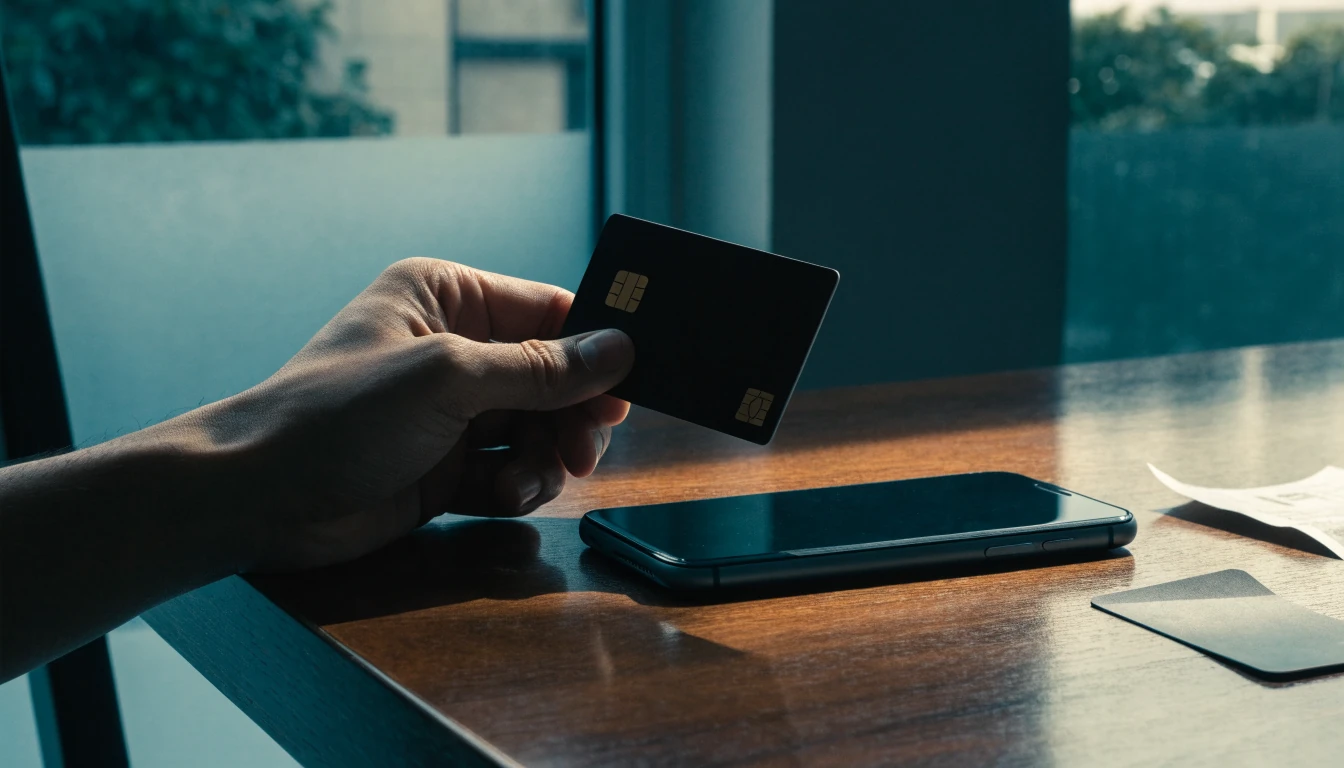
A Visa deposit begins in the casino cashier, not on the card itself. After signing in, the customer selects the deposit option and checks whether Visa appears among the available methods. That screen matters: payment logos elsewhere may be out of date, while the cashier shows what is enabled for that account and location.
If Visa is available, the form asks for the deposit amount and the card details required to authorise it. The card issuer may then request confirmation through its security process. Once approved, the cashier updates the balance; a card deposit can be instant. A declined transaction may instead reflect an issuer decision, an entry error or a card product the site does not accept. The exact message is more useful than repeated attempts.
Visa is not a single, uniform product. UK casinos commonly accept debit cards, but availability and eligibility can differ between sites and card products. Credit-card payments for gambling are prohibited at UK-licensed casinos, so Visa acceptance should not be read as permission to use every card carrying the brand. The cashier’s current options are the practical test.
Before confirming, the deposit amount and account currency should be visible. If the account is not held in pounds, conversion may affect the amount charged. A final review of the figure and payment details can prevent a small cashier action from becoming an avoidable dispute with the card provider.
Making a Visa Deposit
Sign in to the casino and choose the deposit option, confirming that Visa is available in the cashier.
Input the deposit amount and the required card details to authorise the transaction.
Complete the security process requested by the card issuer to approve the funds transfer.
The deposit screen is also where the transaction becomes real rather than advertised: the method is selectable, the amount is entered and the issuer decides whether to authorise it. A quick credit to the casino balance says nothing about how quickly money would return later. Deposits and payouts follow different processes. The cashier is a modest window, but an honest one.
Visa withdrawals are not simply deposits in reverse
A Visa deposit can appear in the casino balance almost at once; a withdrawal follows a less direct route. The cashier may show Visa as a payment option, but that does not make a payout an instant reversal of the original card transaction.
UK anti-money-laundering rules generally require winnings to be returned to the original payment source. This closed-loop approach helps operators check that funds are moving back to the person and route associated with the deposit, rather than being redirected elsewhere. Where the original card cannot receive the full amount, the casino may need to arrange another permitted method and carry out additional checks.
There is an administrative interval before any payment travels. A withdrawal request can wait for the casino’s internal approval, and the account may need KYC checks before funds are released. Specialist casino reviews describe first withdrawals as potentially taking longer while verification is completed; the time is not fixed, because both account status and the operator’s approval process matter.
That is why a card deposit that lands quickly says little about the time needed to withdraw. After approval, the card payment still has to pass through the relevant payment systems. A Visa withdrawal may therefore take several business days, although no single timetable applies to every casino, account or transaction.

The practical distinction is between speed at the point of funding and the full payout process. “Instant withdrawal” can sound like a card feature, but the casino’s review and verification stages come first. A listed Visa option is not, by itself, a promise of instant access to winnings.
Before treating Visa as a deposit-and-withdrawal route, the cashier’s current terms should be checked for card payouts and any alternative process. The relevant question is not merely whether Visa appears beside deposits, but whether the casino can return funds to that card and what checks apply before release. Licensed remote gambling in Great Britain sits within a regulated system; a payment logo alone does not establish the operator’s status.
No neat reversal.
When another payment route makes more sense
Visa is not the only route into a casino cashier, but alternatives differ in what they can do after a deposit. A method suited to adding funds may be deposit-only, while another may support withdrawals but require extra account checks. The useful comparison is therefore compatibility, not a contest for a universal winner.
Bank transfers and open banking are available at many sites. A specialist review describes them as capable of providing instant deposits and fast withdrawals, though the cashier’s current options and the bank’s own processing determine what happens in a particular case. A bank transfer can suit someone who prefers payments linked directly to a bank account; open banking can connect the transaction through a banking service. Neither label guarantees that every casino supports both directions of payment.
Capable of providing instant deposits and fast withdrawals, though this depends on the specific casino and bank processing.
Popular for speed and convenience, but may be excluded from bonus eligibility depending on the promotion terms.
Deposit-only methods that allow spending control without a bank card, requiring a different method for withdrawals.
E-wallets offer a different separation between a casino account and a bank account. PayPal is described in a specialist review as popular for speed and convenience, but that review also notes that it may be excluded from bonus eligibility. The terms attached to a promotion matter: a payment route can work for deposits while failing to qualify for a particular offer. Skrill and Neteller are available at some sites, though a specialist review reports that they are often excluded from promotions. Availability and bonus treatment are separate questions.
Prepaid vouchers make a sharper distinction. Paysafecard is deposit-only, so it cannot serve as the route for receiving a withdrawal. That may suit someone who wants to control the amount loaded without using a bank card, but winnings still need another permitted payout method. A casino may ask for further verification when the withdrawal route differs from the deposit method.
Apple Pay occupies another narrow place in the menu. Some UK Gambling Commission-licensed casinos accept it for deposits; that does not establish that it is available everywhere or that it supports withdrawals. Its presence in a cashier should be read as a specific payment option, not as evidence that every function of the account can use it.
The practical comparison is simple, if not glamorous: check whether a method is listed for deposits, whether it is also listed for withdrawals, and whether the promotion terms exclude it. Payment menus are not interchangeable. A prepaid voucher, a wallet and a bank-linked service can all fund play, yet leave very different routes for money to come back.

Visa availability across online casinos
Visa is a familiar payment option at UK-facing online casinos, but its presence is not universal. British casinos commonly accept debit cards, including Visa and Mastercard; that broad pattern does not mean every site supports every Visa card. Availability can differ between operators, and eligibility can depend on the particular card product.
A specialist review’s payment listings may show Visa and Mastercard for the sites it covers, but a published list is not a live guarantee that either method will appear for every account. Payment menus can change, and the cashier is the practical place to confirm what is currently available in the UK. A logo on an information page is a useful indication, not the final word.
The distinction between a card network and a card product matters. Visa identifies the payment network, while the card itself may be debit or credit. Credit-card payments for gambling are not permitted at UK-licensed casinos, so the relevant Visa option is a debit card, where supported. A Visa brand mark by itself does not establish that a specific card is eligible.
This makes claims about “Visa casinos” less tidy than they sound. The phrase can refer to sites that list Visa in general, sites that currently offer Visa debit deposits to UK customers, or sites where a particular customer’s card will be accepted. Those are related, but not interchangeable, states of affairs. A casino may list Visa while a given card product is unavailable; another may display the option only within its cashier.
Attention A Visa logo on an information page is only a useful indication; the current cashier is the only practical place to confirm if a specific card product is available and eligible in the UK.
The sensible distinction is between a casino’s advertised payment methods and the options actually presented at the point of payment. A current cashier listing confirms more than an old review or a general methods page. It also avoids treating a familiar logo as proof that every version of the product works. Payment systems are less ceremonial than their branding suggests.
Visa acceptance should also not be confused with a promise about every stage of a transaction. The question here is whether the method is offered and eligible, not whether every card will be accepted in every circumstance. The cashier provides the site-specific answer; the card’s type provides the other half.
For UK players, then, the answer is yes in the broad sense: many online casinos accept Visa debit cards. The narrower answer is conditional. Not every casino will necessarily offer it, and a Visa card is not automatically eligible simply because the network is recognised. Check the current cashier for Visa availability in the UK and for the card product shown there. That is the reliable dividing line between a general listing and an available payment method.
Visa, slots and the terms attached to bonuses
Visa can be a straightforward way to fund online slot play at a UK-facing casino, provided the cashier lists the card and accepts the particular card product. UK casinos commonly take debit cards, including Visa and Mastercard. That does not make every Visa card eligible, nor does it make every promotion available to every depositor. The cashier and the bonus terms answer different questions: one concerns whether money can be paid in; the other, what conditions attach to a promotional offer.

The distinction matters because a deposit is a transaction, while a bonus is a contract written in smaller print. A Visa payment may reach a casino account without difficulty, yet an offer may still have rules about which payment methods qualify. Those rules can change between promotions and operators. The presence of Visa in a payment menu is therefore not evidence that a particular welcome offer, free-spin deal or other promotion will apply to a Visa-funded account.
This is especially relevant when the same casino presents several payment choices beside a bonus banner. The banner may emphasise the offer; the terms specify the qualifying route. A payment method can be accepted for ordinary deposits but excluded from promotional eligibility. Conversely, a promotion may be available only under conditions that are not apparent from the cashier screen alone. The practical reading is not complicated, merely less glamorous than the advertising: check the offer conditions before making a deposit intended to trigger it.
Reports on payment and bonus policies are not uniform. A specialist review describes PayPal as valued for speed and convenience, while noting that it may be excluded from bonus eligibility. That is a reason to check the specific promotion, not to assume that PayPal is always excluded or always accepted. The same caution applies to Skrill and Neteller. A specialist review says these services are available at some casinos and are often omitted from promotions; that description is not a rule binding every operator or every offer.
Qualifying for Bonuses
To ensure a Visa deposit triggers a promotion, check the definition of a qualifying deposit, look for payment method exclusions in the terms, and verify if the offer must be manually activated.
Visa users should look for the promotion’s definition of a qualifying deposit, any stated exclusions by payment method, and whether the offer must be claimed or activated. The wording matters. A casino may distinguish between depositing with a named card and depositing through a wallet, even if the wallet is linked to a bank card. The cashier’s payment label does not settle how the promotion classifies the transaction. If the terms are unclear, the safest interpretation is not to assume eligibility.
The larger point is that a bonus is not simply extra money added to a balance. Its value depends on the conditions attached to it, including what games count towards any requirements and how winnings are treated. Slot promotions can be limited to particular games or exclude some titles; the exact rule belongs to the offer’s terms. A promotion advertised beside slot imagery should not be read as a promise that every slot contributes in the same way. Nor does an offer necessarily apply to every deposit just because the account is being used for slots.
There is a useful separation between choosing a payment route and choosing a promotion. A player may prefer Visa for a direct card payment, then decide that the terms of an offer are too restrictive or that the chosen route does not qualify. In that case, the ordinary deposit and the promotional deposit are not the same decision. Accepting a bonus without understanding its conditions can make a later withdrawal subject to rules that were avoidable simply by declining the offer.

Credit cards are not an alternative for gambling deposits at UK-licensed casinos: the regulator’s ban remains in force. Visa here means an eligible debit card, subject to the operator’s cashier and card-product checks. That boundary is not a technicality. It reflects a wider British policy choice to keep credit-card payments for gambling out of the licensed market, even when other forms of electronic payment remain available.
The language of casino promotions tends to make payment and play look like a single smooth event. In practice, each has its own terms: the card must be accepted, the deposit must be processed, and the offer must recognise the payment method. A Visa-funded slot session can therefore be possible without a bonus being attached. No mystery. Just separate conditions.
Slot play under British rules
Online slots in Britain are governed not only by who may offer them but by how quickly a game can run. Autoplay is banned, and every spin must last at least 2.5 seconds. The rules remove the option of setting a machine to repeat spins unattended and place a minimum interval between one result and the next.
That interval is brief, but it changes the shape of play. A slot cannot be made to cycle through repeated rounds automatically, nor can a player shorten each spin below the permitted duration. The screen may still be designed to feel immediate; the underlying game has a prescribed pace. Regulation, in this case, reaches into the rhythm of the interface.
UK Slot Restrictions
Autoplay is banned, every spin must last at least 2.5 seconds, and maximum stakes are capped at £5 for adults 25+ and £2 for those aged 18-24.
The ban on autoplay also means that each spin requires an individual action. This does not make a game harmless, or determine how long anyone will play. It does prevent the specific arrangement in which a sequence continues without a fresh decision at each turn. A modest interruption, deliberately built into the machinery.
These requirements apply within a wider British system in which real-money gambling is legal only through appropriately licensed and regulated sites. Remote gambling licensees serving Great Britain need a UK Gambling Commission licence. The Gambling Act 2005 governs gambling in England, Wales and Scotland; Northern Ireland is outside that Act’s scope. The distinction is a reminder that “UK rules” is convenient shorthand, not a single identical legal map.
There are also maximum stake rules for online slots. Customers aged 25 and over may stake no more than £5 per game cycle; for customers aged 18 to 24, the maximum is £2. The £5 cap for adults aged 25 and over took effect on 9 April 2025. These are limits on the stake for a game cycle, not a promise about the amount a player might spend across a session.
Age is part of the same framework: a gambling operator must verify a customer’s age before allowing a deposit. The legal threshold for online gambling is 18, but the slot stake rules distinguish between adult age groups even after that threshold has been crossed. The law does not treat adulthood as one undivided category.
For anyone comparing mobile slot sites or games funded by a Visa card, the relevant point is not that the payment method changes the rules. It does not. The spin limit, autoplay ban and stake caps concern the slot experience and apply independently of how an account is funded. A cashier can show which payment methods are available; it cannot make a prohibited game feature permissible.

British slot play is therefore shaped by two kinds of restraint: limits on the pace of a spin and limits on the stake attached to it. Neither is dramatic on its own. Together, they make the game less like an unattended conveyor belt and more like a sequence of separate, regulated decisions.
Visa and the limits of ‘not on GamStop’
“Not on GamStop” is a description of a site’s relationship with a self-exclusion scheme; it is not a guarantee about its licence, safeguards or payment options. Adding Visa to the phrase does not change that. A casino may list Visa, but that alone says nothing about whether the operator is authorised to serve customers in Britain.
For real-money gambling in Great Britain, remote gambling licensees must hold a UK Gambling Commission licence. Offshore casinos operate outside that regulatory system. The distinction matters more than the payment logo: a Visa symbol is not evidence of UK oversight, and a claim that a site is outside GamStop does not establish where it is licensed.

UK-licensed casinos must provide responsible-gambling tools, including self-exclusion. Remote operators must also prompt new customers to set a financial limit before their first deposit and make account-level limit controls accessible. These requirements form part of the regulated setting; they do not disappear because a site is described as “not on GamStop”. Nor does that phrase establish that a particular operator participates in, or is absent from, a particular scheme.
The wording can therefore blur two different questions: whether a site is connected to a self-exclusion service, and whether it is legally licensed to serve British customers. Those are not interchangeable. A search for Visa casinos without GamStop cannot settle either point on its own.
“Visa casinos with no fee” is another separate claim. Card acceptance does not, by itself, establish that a transaction is free; any applicable charges depend on the terms and payment route. The cashier may clarify availability and costs, but it cannot substitute for checking the operator’s status. The UKGC public register is the place to verify a licence before depositing.
The phrase sounds like a payment filter. It is not a safety label.
What is the fastest withdrawal method for UK casinos?
PayPal, open banking services and debit cards connected to fast payout systems are generally among the quickest options. The casino’s approval process and account verification also affect how soon the money arrives.
Do UK casino withdrawals require verification?
Yes, casinos may need to verify your account, particularly before a first withdrawal. Payouts can take longer while those checks are completed.
Which payment methods are accepted in Great Britain?
UK casinos commonly offer Visa and Mastercard debit cards, bank transfers, PayPal, and sometimes Skrill or Neteller. Paysafecard is for deposits only, and some UK-licensed casinos also accept Apple Pay deposits; check the cashier for the methods available to you.
Which method has the lowest fees?
There is no universally lowest-fee option: costs can come from the casino, payment provider, bank or card issuer, currency conversion, or network. Compare the charges and any exchange-rate spread for your payment amount, and check that your account currency is GBP to avoid conversion costs.
Are Visa and Mastercard deposits definitely debit cards?
No. The Visa or Mastercard logo alone does not identify the card product, and eligibility varies by casino and card. UK-licensed casinos cannot accept credit-card payments for gambling, so check that the cashier offers your card as an eligible debit method.
Are fast casino withdrawals guaranteed?
No. Even with a fast payment method, the casino’s approval process and whether your account is fully verified affect withdrawal speed.
Why must withdrawals return to the deposit method?
Returning funds to the original payment source is a common anti-fraud and anti-money-laundering control that helps keep the ownership trail clear. Using another route may require additional verification.
Why can a fast payout casino still delay my withdrawal?
A fast payment method does not bypass the casino’s internal approval or account checks; a first withdrawal may take longer while verification is completed. Bank-transfer cut-off times, weekends and currency conversion can also affect delivery.
Written by the editors at Tenobet Casino 4.