Live Blackjack Online at UK Casinos: How It Works
 Available in GB
See how player decisions, the dealer’s hand and table conditions shape a live blackjack round, from the first deal to the final result.
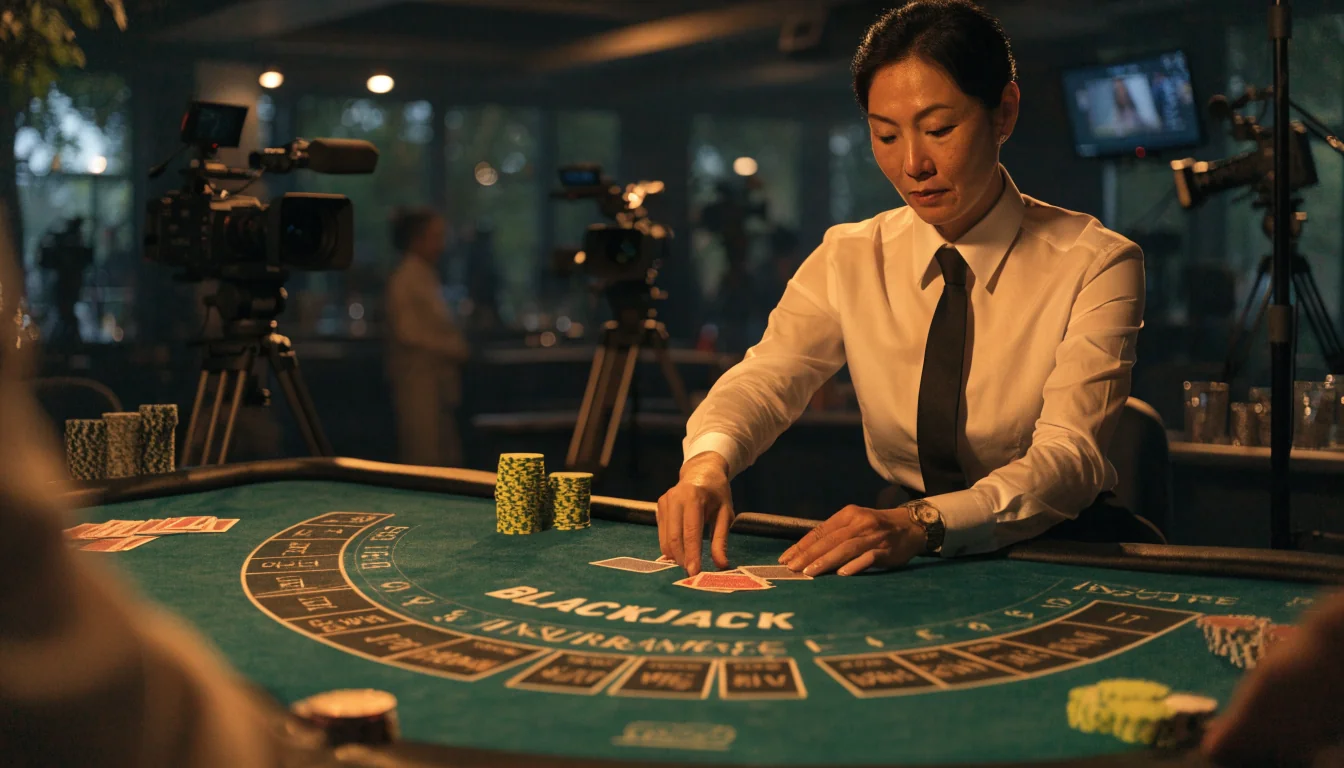
Table of Contents
- How Blackjack Works at a Live Table
- What the Live Dealer Changes
- Choosing a Blackjack Table: Pace, Stakes and Connection
- Blackjack Games Beyond the Basic Deal
- Blackjack Casino Sites and the UK Licence
- Live Blackjack Online in the UK: What to Expect
- Blackjack Rules, and What Free Play Does Not Mean
- Playing a Live Blackjack Hand
- Blackjack Bonuses: Read the Small Print
- Finding a Casino with Live Blackjack
How Blackjack Works at a Live Table
Blackjack is built around a narrow contest: each player tries to finish with a hand that beats the dealer’s while staying at or below 21. The target is not simply to reach 21. A lower total can be enough if the dealer’s hand is weaker, while a hand that passes 21 has gone too far. The game’s tension lies in that boundary: every attempt to improve a hand carries the possibility of spoiling it.
That makes the dealer the point of comparison, rather than the other people at the table. Players may be seated together, but each hand is judged against the dealer’s. A strong total held by another player does not improve anyone else’s position; nor does another player’s weak hand settle the contest. The basic question remains personal and immediate: can this hand beat the dealer without crossing the limit?
A casino blackjack round therefore has two linked parts. First comes the player’s effort to shape a hand that can compete. Then the dealer’s hand provides the standard against which it is assessed. The outcome depends on both totals, not on how impressive one looks in isolation. A hand near 21 is not automatically a winner, and a modest total is not automatically a loss. Blackjack rewards comparison, not spectacle.
The familiar phrase “getting as close to 21 as possible” is only half the rule. It matters just as much not to exceed it. That balance gives the game its particular rhythm: caution can leave a hand short, while ambition can carry it over the line. The arithmetic is plain; the judgement is less so. Casinos have long understood that a simple rule can sustain a complicated pause.
Winning at casino blackjack is not a matter of finding a guaranteed sequence. The aim is to beat the dealer on a given hand, but no approach can make every hand favourable. Blackjack retains a house edge, meaning the game is structured to favour the casino over time. That does not decide the result of any one round, but it does matter when a player treats a run of outcomes as proof that a certain pattern must continue.

Staking systems such as Martingale do not remove that edge. Raising a stake after a loss may look like a route to recovering it, but it can also deepen losses. A sequence of wagers is not a way to alter the underlying contest between the hand and the dealer. The table has no memory, and a previous loss does not make the next result owed.
The useful starting point is therefore modest: understand what counts as success, and separate that aim from promises about how to secure it. A player seeks a hand that beats the dealer while remaining within 21; the casino’s advantage remains part of the game. Simple rules. No certainty.
What the Live Dealer Changes
A live blackjack table puts a person back into a game that software can otherwise conduct without anyone visible. The dealer appears on a real-time stream, handles physical cards and carries out the deal in view of the players. Their decisions and movements are not represented by an animation: the cards are tangible objects, drawn from a standard deck, while the betting interface remains on screen.

That division is the defining feature of a live dealer blackjack casino. The game is presented through a camera, but participation still happens through buttons and a digital table layout. The dealer supplies the visible action; the interface carries players’ choices to the table. Online, the two parts meet in a stream that can be watched as events unfold, rather than a sequence generated entirely on a screen.
The distinction is not simply decorative. A physical card has to be picked up, turned and placed; the dealer’s hands make those actions legible. Small rituals that a digital game can compress become part of the experience. There is a human presence at the other end of the broadcast, though the relationship is necessarily shaped by a camera, a shared table and the interface between them.
That presence has limits. A live dealer can be seen and, where the table offers it, addressed through chat. Messages may also be exchanged with other players at the table. Such conversation can make a solitary screen feel briefly inhabited, but it does not turn the game into a private meeting. The dealer is managing a table, and chat is one feature within that arrangement, not a promise of sustained conversation.
A live dealer blackjack casino combines a real-time stream of a physical table with a digital interface for placing bets and making choices.
There is something revealing in this hybrid form. Casino gaming has long depended on ceremony as much as calculation: a table, a dealer, a sequence of gestures that makes chance feel public and orderly. The online version preserves the visible ceremony while moving the wager itself into a private device. A room is suggested, not entered. The human figure remains central, even as the surrounding social space is reduced to a stream and a chat box.
Some live blackjack tables also offer side bets or Bet Behind. These options change how a player may take part in the table, without changing the fact that the dealer is handling the cards in real time. Bet Behind allows a place in the action without occupying one of the main playing positions. Side bets add separate choices alongside the central game. Their presence varies by table, so the label “live blackjack” does not describe every feature available at every table.
For anyone comparing a live dealer blackjack casino in the UK with an entirely digital version, the meaningful difference is therefore not just that a person replaces an animation. It is the combination of physical cards, a visible dealer and optional social or betting features delivered through an online interface. The screen does not erase the old table; it frames it.
A curious compromise.
Choosing a Blackjack Table: Pace, Stakes and Connection
A live blackjack table asks for a different kind of time from a digital game. The cards are dealt in a studio, decisions pass through a real dealer and the round advances at the table’s pace. A digital version can move more quickly because there is no live dealing to wait for. Neither rhythm is inherently better; they suit different habits. The live format makes the pauses visible, while the digital one compresses them.

That difference matters when a session is planned around a short break or a fixed stretch of free time. At a live table, each hand is part of a shared sequence: bets are placed, the dealer completes the round, and the next one begins. Other players’ decisions and the dealer’s handling of the cards contribute to the tempo. The game cannot be made to hurry simply because one participant has finished deciding. Digital play generally removes much of that social timing, so rounds can follow one another more briskly.
The slower pace can be a reason to choose live play, not merely a drawback. It gives the table a public, observed quality: a hand unfolds in view rather than appearing as a quick result on a screen. But the same quality limits how many rounds fit into a session. Someone comparing formats is therefore comparing the shape of the experience as much as the game itself. More time between decisions does not change the rules; it changes how the play occupies an evening.
Stakes are another practical distinction. Live tables have higher minimum bets than digital versions, so the amount needed to join a particular table can narrow the choice. A lower digital minimum may make that format easier to approach with a modest, pre-set budget. The table’s stated minimum should be treated as a condition of entry, not as a suggestion that a larger stake is sensible. A budget set before play is more useful than a limit improvised after a run of hands.
Attention: Live blackjack tables often have higher minimum bets than digital versions, which may affect the accessibility of the game for some budgets.
A specialist review has described many live roulette and baccarat tables as starting around 20p, while blackjack tables often begin at higher limits. That comparison is a snapshot from one kind of source, not a dependable rule for every casino or every table. Limits vary, and a figure attached to one table does not establish what another will offer. The useful point is narrower: blackjack’s entry stake may be higher than the low starting figures seen in those other live games, so the minimum needs checking before a table is chosen.
That can make the word “best” less helpful than it appears. A table suited to a person seeking a slower, shared pace may be poorly suited to someone who values quick rounds or wants to keep each stake low. There is no single table condition that serves every budget and schedule. A sensible comparison begins with the minimum stake and the speed of play, then asks whether both fit the intended session. A familiar name or polished interface cannot alter those conditions.
Connection is part of the same calculation. Live play depends on a stable internet connection because the game is being streamed in real time. If the stream becomes unreliable, the table experience can be interrupted at exactly the point when timing matters. A digital game does not rely on a live dealer’s video feed in the same way. Live blackjack is therefore less suited to a connection that drops or fluctuates, even when the device itself is working properly.

The screen also has to carry the table as it unfolds: the dealer, cards, interface and other visible details. A stable connection helps keep that sequence coherent. It is not a guarantee against every interruption, but it is a basic condition of following live play. Choosing a table without considering connection quality is like choosing a seat in a room while ignoring whether the performance can be heard. The room is only half the arrangement.
These factors belong together. Pace affects how long a session lasts; the minimum affects what it costs to enter each hand; connection affects whether the live format can be followed continuously. A table that looks suitable on one measure may be unsuitable on another. The choice is less a hunt for a universal winner than a matter of matching the conditions to the kind of session intended.
A set budget provides a boundary when live play is slower and each hand takes time to arrive. That boundary should not expand to recover losses or extend a session beyond its plan. Blackjack still carries a house edge, and staking systems such as Martingale can lead to losses rather than overturning it. The quieter pace of a live table does not make the financial risk quieter.
The practical comparison is plain: digital blackjack tends to move faster and offer lower minimums, while live blackjack asks for more time, a higher entry stake and a dependable connection. The appeal of the human table is real, but so are its conditions. A little less haste.
Blackjack Games Beyond the Basic Deal
A blackjack table need not offer only a wager on the main game. Some live versions add side bets or a Bet Behind option, making the choice of table a question of format as well as rules. These features are optional, not a separate definition of blackjack: their presence does not make one table inherently better than another.
Optional Table Features
Side bets provide additional wagering options alongside the main game, while Bet Behind allows players to wager on another player’s hand without occupying a main seat.
A side bet sits alongside the principal wager rather than replacing it. Its appeal is that it gives the table another point of interest, but its terms belong to that particular game. The label alone does not explain what must happen for a bet to win, how it is settled or what the payout is. Those details need to be read in the table information before play. A name can sound self-explanatory while leaving the important part—what counts as a winning outcome—unspoken.
That distinction matters because an extra wager changes what is being risked, even when the main game remains familiar. Side bets can make a table feel more varied, but variety is not evidence of a better return. Blackjack retains a house edge, and adding another way to wager does not remove it. Systems that increase stakes after a loss, such as Martingale, can still lead to losses; a more elaborate table format does not alter that underlying fact.
Bet Behind offers a different kind of participation. Instead of taking a place in the main action, a player can place a wager behind another player’s hand where the table permits it. The option may suit someone who wants to join a round without occupying one of the active seats, but the table’s own rules determine how that arrangement works. It is not a promise of control over the hand or a shortcut to a favourable result.
The social arrangement is quietly revealing. A casino table has always had its visible participants and its audience; Bet Behind makes that boundary more permeable, while leaving the central seat with someone else. The online interface can accommodate that distinction without changing the game into a different kind of contest. A spectator can have a stake. That is enough.

For a UK blackjack casino game, the useful comparison is therefore not simply whether an extra feature appears on the screen. It is whether the rules are clear, whether the side wager is optional, and whether the table’s presentation makes its terms easy to inspect. The same name can sit beside different conditions in different games, so familiarity with a feature should not be mistaken for knowledge of its exact settlement.
Side bets and Bet Behind broaden the ways a live blackjack table can be approached, but neither needs to be used. The main game remains available without treating every extra button as an invitation. Optional means optional. A table’s pace, its rules and the player’s chosen stake still matter more than the number of features displayed around the felt.
Blackjack Casino Sites and the UK Licence
A blackjack table may look much the same wherever it appears on a screen. The legal position of the site hosting it is less interchangeable. In the United Kingdom, a live-dealer casino serving players must hold a licence from the UK Gambling Commission. The licence belongs to the operator, not to the cards, the studio or the table’s polished presentation.
That distinction makes licensing a practical first test when assessing a blackjack casino site. A familiar design, a live video feed or a long menu of tables does not establish that the operator is authorised to serve the British market. The relevant question is whether the company running the gambling service holds the required UK Gambling Commission licence. A site’s own claim can be a starting point; the regulator’s public register provides a way to check the operator’s status independently.
Licensing
In the UK, a live-dealer casino must hold a licence from the UK Gambling Commission to legally serve players.
It is worth matching the name on the site with the name associated with the licence. Casino brands and operating companies are not always presented as one neat label, and a licence statement is useful only if it relates to the business actually offering the gambling service. A vague badge in a footer is not the same thing as identifying the operator and confirming its regulatory status. Paperwork is not glamorous. It is meant to be legible.
The licence matters because it places the operator within the UK regulatory system. Remote gambling businesses selling into the British market are required to hold the relevant Gambling Commission licence, even when the company itself is based elsewhere. A foreign address does not remove that requirement. Nor does a site become locally regulated merely by accepting sterling, displaying British-themed imagery or offering a live dealer who speaks English.
This is a point about the venue, not a verdict on any single blackjack hand. Licensing does not turn gambling into a risk-free activity, and it does not promise that every session will be enjoyable or profitable. Blackjack retains a house edge; betting systems cannot abolish it. The licence establishes a regulatory condition for legal online gambling in the UK, rather than an assurance of personal outcomes.

The legal frame also has an age boundary: online gambling is lawful for adults aged eighteen or over when it takes place with a UK Gambling Commission-licensed operator. The regulator’s role therefore reaches beyond a logo on a webpage. It defines which businesses may offer real-money gambling to people in the British market, and under what local framework they do so.
When comparing blackjack casino sites in the UK, licensing should sit ahead of surface impressions. A broad game catalogue or a lively studio may help describe the service, but neither substitutes for confirming the operator’s licence. The same standard applies whether a site specialises in live blackjack or includes it among many casino games. The name above the table is only part of the picture; the company behind the service is the more consequential detail.
There is a small civic lesson in this arrangement. Gambling can cross borders in seconds, while responsibility cannot simply be exported with the server. Britain’s rule attaches to the business that sells into its market. For a player considering a live table, that makes the licence less an ornamental seal than a basic condition of lawful access.
Any discussion of casino sites is for entertainment purposes only, not gambling advice. A licence is a regulatory threshold, not a reason to spend beyond a set budget.
Live Blackjack Online in the UK: What to Expect
Choosing a live blackjack casino involves more than the game itself, so it is worth checking practical details before you play. This list includes payout speed as one point to consider.
Payout speed: 1-3 business days Chanze lists a payout speed of 1–3 business days, a practical detail to consider when choosing a casino for live blackjack.
Payout speed: 1-3 business days WinBeast lists a payout speed of 1–3 business days. This gives you a stated timeframe to factor into your live blackjack choice.
Payout speed: 1-3 business days EvoSpin’s listed payout speed is 1–3 business days, which is useful to keep in mind when considering where to play live blackjack.
Payout speed: 1-3 business days SpinFormula lists payouts as taking 1–3 business days. That stated timeframe is a relevant practical detail for live blackjack players.
Payout speed: 1-3 business days SlotoSport has a listed payout speed of 1–3 business days, offering a clear point to consider alongside your live blackjack preferences.
Payout speed: 1-3 business days Amunbet lists a payout speed of 1–3 business days. This is a useful practical detail when considering it for live blackjack.
Payout speed: 1-3 business days BeOnBet’s stated payout speed is 1–3 business days, a consideration for players weighing their live blackjack options.
Payout speed: 1-3 business days Britsino lists payouts as taking 1–3 business days. Keep this timeframe in mind when considering it for live blackjack.
Payout speed: 1-3 business days Jetsetspins lists a payout speed of 1–3 business days, providing a practical detail to consider for live blackjack.
Payout speed: 1-3 business days x3bet lists a payout speed of 1–3 business days. This stated timeframe is relevant when deciding where to play live blackjack.
Live blackjack brings a human dealer and a real-time stream into the online casino. The table is filmed as the game unfolds, while bets are placed through an on-screen interface. It is a form of online play, but not one in which every part of the experience is generated instantly by software: the dealer’s presence gives the game a visible, shared setting.
That distinction changes the rhythm. A digital version can move from one decision to the next with little pause; a live table depends on the pace of the dealer and the other players. The sequence takes longer, and the stream has to stay connected throughout. A weak or interrupted internet connection can make the experience frustrating, even when the game itself is straightforward.
A blackjack casino may offer both live and digital tables, but they serve different preferences. The live format gives the game a human point of contact and makes the table feel less solitary. It also asks for more patience. This is not a faster route through the same game; it is a different arrangement of time, attention and technology. The dealer is present on screen, though the play remains mediated by an interface.
Human dealer and real-time stream with a slower, shared pace.
Software-generated gameplay with faster rounds and lower minimum bets.
Live play requires a stable internet connection to avoid interruptions in the stream.
There is a practical trade-off as well. Live tables have higher minimum bets than digital versions, so the format may not suit every budget. The precise terms belong to the table being considered, rather than to the label “live blackjack” alone. A set spending limit can keep entertainment within bounds; losses should not become a reason to continue or to try to win money back.
The appeal is partly social. A live dealer can be seen and interacted with, and the table has the small rituals of a hosted game: waiting, watching, taking turns. Yet a broadcast does not remove the ordinary uncertainty of gambling, nor does a human presence make outcomes predictable. The distinction is more modest: the game is conducted in view, at a pace shaped by people rather than by a rapid digital sequence.
For anyone comparing online blackjack casinos in the UK, the essential expectations are therefore plain: a real-time dealer stream, slower play than a digital table, higher minimum bets and a need for reliable connectivity. The details of a particular table still matter, but the format itself is not mysterious. It is an online game with a live room attached.
A quiet room, in a sense.
This content is for entertainment purposes only and is not gambling advice.

Blackjack Rules, and What Free Play Does Not Mean
The central rule of blackjack is a contest of totals: the aim is to finish closer to twenty-one than the dealer without going over it. A hand that exceeds twenty-one has gone too far, however impressive its earlier total may have looked. That is the whole tension compressed into a small number of cards: approach the target, but do not cross it.
The rule is simple to state. The experience is less simple, because each decision sits between what is known and what remains uncertain. A card already dealt is visible; the next one is not. Blackjack’s appeal has always depended on that narrow interval between calculation and chance. It is not a puzzle with a single guaranteed solution, and no sequence of previous outcomes can make a future hand certain.
That distinction matters when a casino offers a free-play version. Such a game can present a blackjack-style interface without requiring a real-money stake, but its practice balance is not money. It cannot be withdrawn, exchanged for cash or treated as a real payout. A winning screen in free play is still only a screen.
Practice may help someone become familiar with the general aim or the way an interface presents choices. It cannot establish what a real-money session will produce. The stakes are absent, and the result has no financial value; confidence gained from a run of virtual wins is not evidence that the same run will recur for cash. A rehearsal, not a receipt.
Free-play versions are for practice only; virtual wins cannot be withdrawn or exchanged for real cash.
The distinction also prevents a common confusion: a free game is not a bonus balance. Bonus funds come with terms set by an operator, while free-play results have no claim on a real-money account at all. When an offer is involved, its conditions need separate attention, including any wagering requirements, game weighting and maximum bet rules. The label “free” does not make those terms disappear.
For real-money play, blackjack remains gambling, not a way to turn a staking pattern into certainty. The game retains a house edge, and systems such as Martingale can still end in losses. Increasing stakes after a loss does not alter the cards or remove the underlying risk. A budget set before playing is more meaningful than a plan invented after a run has gone badly.
The rules explain the contest; they do not promise a result. Free play can show what a blackjack game looks like, but it offers neither winnings nor proof of future success. This is entertainment, not gambling advice.
Playing a Live Blackjack Hand
A live blackjack hand begins on a screen, but it is not assembled by software alone. The table is filmed in real time at a studio, where a human dealer handles physical cards from a standard deck. The image and the betting interface share the work: one shows the table as it unfolds, while the other carries each player’s wager.
The sequence starts when the table is open for betting. A player selects a stake through the on-screen controls and confirms it there; the dealer does not receive a chip pushed across a felt surface. The distinction is small but telling. Casino rituals once depended on objects passed between people, while online play translates the same action into a click or tap and a figure on a display.

Once the deal is under way, the camera shows the dealer taking and distributing cards. The action is visible as it happens, rather than represented by an animation generated for each player. That gives the hand a shared setting: the dealer, cards and table remain in view, even though each participant is seated elsewhere. The interface is the practical bridge between that physical scene and the player’s decision to take part.
The screen usually places the table view alongside the controls and the player’s own hand information. Their arrangement can vary between services and devices, so the useful habit is to identify the wager area and the hand display before the deal begins. Small controls can be easy to overlook when the video occupies most of the screen. A clear view matters more than decorative effects.
When the hand ends, the table moves on to the next deal and the interface resets for another wager. This repeated pattern—bet through the screen, watch the physical cards, follow the hand, then decide whether to continue—makes the online version recognisable without pretending that it is a private table in a home. The studio is shared; the controls are individual.
A live stream can make the exchange feel immediate, but the wager remains real money when a real-money table is selected. A budget set in advance helps keep the session within its intended bounds. The familiar appearance of cards and felt does not change the financial nature of the action. Atmosphere is not a safeguard.
For anyone comparing a live table with a digital version, the central difference in the hand’s presentation is plain: a dealer handles actual cards on camera, while bets are placed through the online interface. That is the whole little theatre—physical cards, electronic decisions, and a screen joining the two.
Playing a Hand
Select a stake using the on-screen interface and confirm the bet.
Watch the live stream as the dealer distributes physical cards from the deck.
Use the digital controls to interact with the hand based on the visible cards.
Wait for the dealer to complete the round and the interface to reset for the next deal.
Blackjack Bonuses: Read the Small Print
A blackjack bonus can look relevant because the game appears in a casino’s menu, yet the offer and the table may belong to separate parts of the promotion. A welcome package might be restricted to slots, or apply only to selected games. A specialist review describes most UK welcome offers as free spins on slots, which cannot be used at live tables. That is a report about offers, not a rule that every casino follows; the promotion’s own terms decide what is eligible.
The distinction matters for a live blackjack bonus. If the terms exclude live games, a qualifying deposit or bonus balance cannot simply be carried over to the table. A no-deposit offer is not automatically more flexible: its name says nothing about which games count, whether live blackjack is included, or what conditions attach to any winnings. The precise wording is more useful than the label.
Even where live blackjack is eligible, game weighting can make play contribute only a small share towards the wagering requirement. Some terms assign live games a 10% weighting. In practical terms, eligible stakes count much less towards completing the requirement than they would under full weighting. The headline bonus may therefore appear generous while progress towards release remains limited. The percentage and eligible-game list should be checked together, rather than treating the bonus amount as the whole offer.
Wagering requirements set out what must be done before bonus funds or related winnings become withdrawable. Other conditions may specify a maximum bet while the bonus is active. Exceeding that limit can affect eligibility under the terms, so it belongs in the same careful reading as the game weighting and wagering rules. A promotion is a contract written in small print, not extra money without conditions.
For a casino blackjack bonus offer, the useful questions are narrow: does live blackjack qualify, what weighting applies, which balance is being wagered, and what restrictions apply while the offer is active? A table’s presence does not answer any of them. Nor does a prominent welcome banner. The terms do.
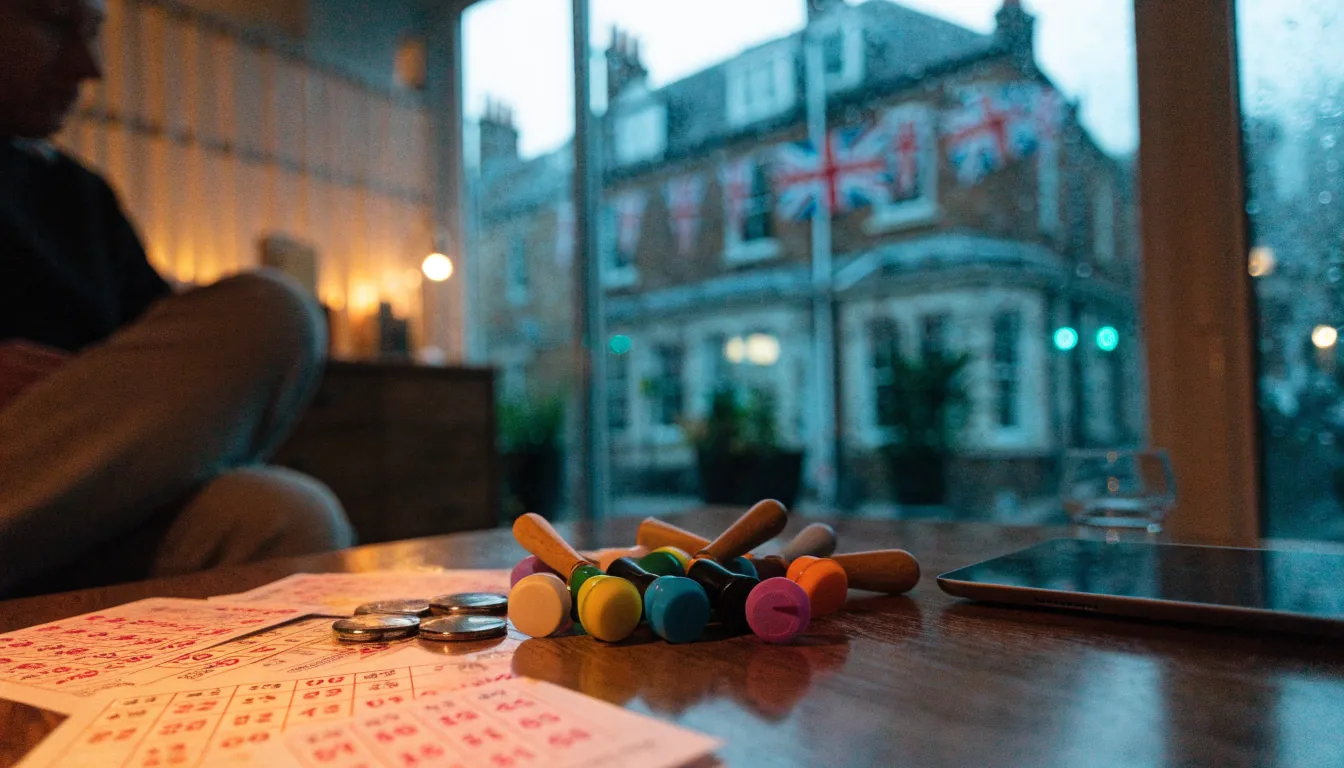
Bonuses can add restrictions to a game without changing its basic rules. That is the less glamorous part. Content on gambling is for entertainment purposes only, not gambling advice.
Finding a Casino with Live Blackjack
Blackjack may sit among a casino’s live games alongside other table formats, but its presence alone says little about the standing of the site that offers it. In the UK, legality begins with the operator: a casino offering live-dealer games to British customers must hold a UK Gambling Commission licence. The licence is not a decorative seal, nor a substitute for understanding what a particular site provides. It is the baseline for access.
That distinction matters because “casino” describes a broad arrangement, not a single table or style of play. A live blackjack casino site connects an online account to streamed games, while the wider casino may also offer digital versions and other live tables. The catalogue can change; the regulatory requirement does not. For UK players, an online casino with blackjack belongs in the same licensing framework as any other site taking real-money bets.
Finding blackjack in a menu is therefore only the first step in judging availability. The relevant question is whether the operator is licensed to serve the market, not simply whether the game appears in a lobby or in a promotional panel. A UK Gambling Commission licence provides the legal threshold for a casino with live blackjack; without it, the site is outside the framework that governs licensed online gambling in the country.
There is a small civic lesson in that arrangement. Gambling is permitted, but permission attaches to the operator and its obligations, rather than to the glamour of a streamed table. Access is ordinary; accountability is the point. A casino with blackjack in the UK should be assessed first as a regulated venue, then as a collection of games. The order is less exciting than a lobby banner. It is more useful.
This article is for entertainment purposes only and is not gambling advice.
How do you choose a live dealer casino?
Choose a UK casino licensed by the Gambling Commission, then check the table’s minimum stakes and whether your internet connection can support a live stream. Live games are slower than digital ones and often have higher minimum bets.
How do you play live roulette?
Choose a number or other bet on the table layout, then watch the dealer spin the physical wheel. You win if the ball lands on your selected number.
How can you win live dealer roulette?
You win a roulette bet when the ball lands on the number you selected. The result is decided by the physical wheel and ball.
Why does the dealer always win in blackjack?
The dealer does not always win: each player’s hand is compared with the dealer’s, and a player wins by beating the dealer without going over 21. The casino has an advantage over time, but that does not determine every round.
What is the house edge in blackjack?
It is the casino’s built-in advantage over players over time. Blackjack still allows players to beat the dealer in individual hands, but no staking system removes that advantage.
Published by the Tenobet Casino 4 team.