Casino Dice Games in the UK: Online Play Explained
 Available in GB
The guide separates dice-themed slots from table games and considers betting formats, demo play, platform protections and payment options.

Table of Contents
- Dice Games in the Online Casino
- Dice Casinos Across the UKGC Divide
- What “Best” Means When Bonus Terms Are Involved
- The Dice Roll Slot: A Slot, Not a Table
- Casino Dice and the Shape of a Bet
- Demo Play and the Random-Number Question
- Crypto Dice, Craps and Platform Protections
- Bitcoin as a Casino Payment Option
- How Casino Dice Play Fits the House-and-Player Model
- What a Dice Casino Site Can Offer Beyond One Game
Dice Games in the Online Casino
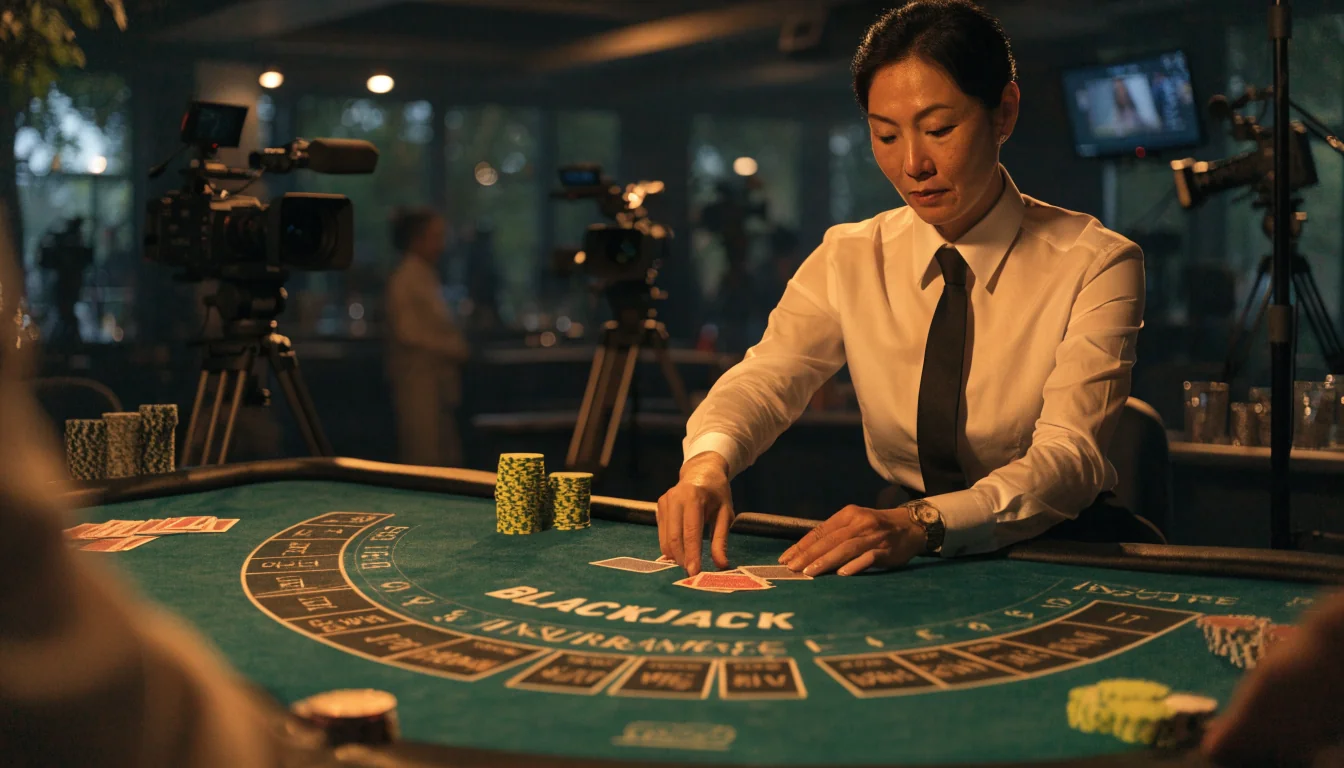
An online casino gives casino play a place on a screen. Where permitted by law, casino games are available through online casinos, bringing an activity associated with physical rooms into a digital setting. Dice-themed play belongs to that wider change: it can be encountered as part of an online casino’s offering, rather than only in a building arranged for face-to-face play.
The distinction sounds simple, but it alters the atmosphere around the game. A casino room is a public interior, with its own rituals of arrival, attention and departure. Online, the setting is private and chosen by the person using it. The screen does not have the architecture of a casino, yet it can frame casino play as a visit all the same. The room has become optional.
That change helps explain the appeal of looking for an online dice casino. The phrase points not merely to dice, but to a setting in which dice-themed casino play appears alongside the broader idea of an online casino. The attraction may be the familiar image of dice; it may also be the ease with which a digital setting can be reached. Neither explanation needs to be universal. People arrive at the same category of play for different reasons, and the screen makes those private reasons difficult to see.
Dice carry a useful cultural shorthand. They suggest chance before any explanation is offered: a small object, a visible result, a sense that possibility has been reduced to a face turned upward. In a digital casino, that image can travel without the physical object being present. The symbol remains recognisable even as the setting changes. This is part of the broader language of casino games, where a familiar sign can make an unfamiliar interface feel legible.

An online casino also changes the scale of the encounter. There is no shared room to establish a common tempo or make other people’s attention visible. The screen directs attention inward, towards the activity in front of it. That privacy can feel like convenience, but it also makes the experience less social by default. The atmosphere that once came from a room and its occupants is no longer guaranteed by the setting. A digital environment has to suggest its own sense of occasion, or dispense with one.
This is not a claim that every online casino feels the same, or that every player is seeking atmosphere. The point is narrower: the location of casino play has changed. Online availability turns the casino from a place one enters into a service one can encounter through a device, where local law permits it. The change is practical, but it is also cultural. It moves an activity historically associated with a named venue into ordinary digital life, where it sits among many other things that can be opened on a screen.
The phrase “online casino dice” can therefore describe more than a game category. It marks a meeting between an old emblem of chance and a newer way of distributing entertainment. Dice do not need to lose their recognisable character when the setting becomes digital. Their cultural meaning is already compact: chance, uncertainty, the small drama of an outcome. The online casino supplies a different frame around that meaning, one less dependent on a particular room or public ceremony.
There is a quiet tension in this shift. A casino is conventionally imagined as somewhere apart from everyday life, while a screen belongs to the everyday almost by definition. Online casino play draws the two together. The activity retains the casino’s associations, but its setting can be domestic or otherwise personal. That proximity does not make the experience trivial; it makes the boundary between leisure and the rest of the day less visible. A change of venue can change the meaning of an activity without changing its name.

For dice-themed casino play, the result is a category that is at once familiar and altered. The image of dice offers continuity, while the online setting supplies a new mode of access. There is no need to confuse that setting with a physical casino, or to treat every digital experience as a replica of one. It is its own context: casino games made available online where the law permits. The room is elsewhere.
Dice Casinos Across the UKGC Divide
The phrase “dice casino” can make a site sound like a distinct kind of establishment, but the important distinction for people in Britain is often not the game on the screen. It is the operator’s regulatory status. In 2026, a specialist review has described the online market as two parallel spaces: services within the UK Gambling Commission’s system and offshore platforms operating beyond it. That is a description of the market’s appearance, not two equivalent routes to lawful gambling.
For a casino serving customers in Great Britain, the central question is whether its operator holds the relevant UKGC licence. The Gambling (Licensing and Advertising) Act 2014 established the requirement for operators wishing to take bets from British residents to be licensed. The requirement concerns the service offered to the public, not the country where a company has its offices. A distant address does not remove the obligation to hold a British licence when taking bets from British residents.
This makes “UK casino sites with dice games” a phrase with two possible meanings. It can refer to licensed services available in Britain that include dice-themed play, or to any website that accepts a British customer and happens to offer such a game. Those descriptions may overlap in ordinary browsing, but they are not interchangeable in law. A site’s willingness to accept a registration does not itself establish that it has permission to serve the British market.

Offshore casinos do accept UK players, while operating outside the UKGC system. Their accessibility is a practical fact, not a licence. The distinction can be easy to miss because a website may present itself in familiar language, take deposits and make games available without looking markedly different from a locally licensed service. The regulatory boundary is less visible than the interface. That is precisely why the label attached to a site matters less than the status of the operator behind it.
For a dice casino site, the presence of dice games does not alter the licensing question. Nor does calling a service a “trusted dice casino” settle it: trust is an impression, while a licence is a defined regulatory status. The UKGC framework is the relevant one for legal online gambling in Great Britain. Where an operator is outside that framework, it is not a UKGC-licensed casino, even if it accepts players from Britain.
The word “offshore” describes a position outside the UKGC system; it should not be mistaken for a separate British licence category. A foreign licence, where one exists, is not the same as authorisation from the UKGC to serve British customers. The legal requirement applies to the activity of taking bets from British residents. It is not replaced by a company’s location or by the fact that a platform has a functioning website.
This is a question of status rather than a ranking of sites. No particular dice casino can be called trustworthy merely because it offers a familiar game or appears prominently online. Likewise, a catalogue that includes dice slots, casino dice slots or other games with dice says nothing by itself about whether the operator is licensed to take bets in Britain. Game selection and regulatory permission are separate matters.
Regulatory Status
A site’s willingness to accept a registration does not establish that it has permission to serve the British market; only a UKGC licence ensures lawful operation in Great Britain.
The language of “dice casino sites UK” can blur those matters because it describes where a player is, not necessarily where a site is authorised to operate. Some platforms outside the UKGC space accept UK players, but acceptance should not be read as approval. A service can be reachable without belonging to the licensed market. The British rules set the obligation on operators that take bets from residents; the existence of an offshore option does not erase it.
There is a social contrast here as well as a legal one. Online gambling crosses borders with little ceremony: a page opens, a game loads, and the geography of the company may recede from view. Regulation, by contrast, depends on jurisdiction and accountability. The UKGC system marks the boundary between operators authorised to serve the British market and those operating beyond it. A dice game does not cross that boundary on its own.
For anyone comparing UK casino sites with dice games, the useful distinction is therefore not whether a site looks British, calls itself trusted, or accepts a British address. It is whether the operator holds the UKGC licence required to take bets from British residents. The distinction is plain in law, if not always on the screen.
What “Best” Means When Bonus Terms Are Involved
When choosing a UK casino dice game in 2026, it helps to check what is known about payouts alongside the games on offer. This list gives a brief reference point for each operator.
Payout speed: 1-3 business days Chanze lists a payout speed of 1–3 business days.
Payout speed: 1-3 business days WinBeast lists a payout speed of 1–3 business days.
Payout speed: 1-3 business days EvoSpin lists a payout speed of 1–3 business days.
Payout speed: 1-3 business days SpinFormula lists a payout speed of 1–3 business days.
Payout speed: 1-3 business days SlotoSport lists a payout speed of 1–3 business days.
Payout speed: 1-3 business days Amunbet lists a payout speed of 1–3 business days.
Payout speed: 1-3 business days BeOnBet lists a payout speed of 1–3 business days.
Payout speed: 1-3 business days Britsino lists a payout speed of 1–3 business days.
Payout speed: 1-3 business days Jetsetspins lists a payout speed of 1–3 business days.
Payout speed: 1-3 business days x3bet lists a payout speed of 1–3 business days.
“Best” is a question of fit, not a reliable label for a casino. A welcome offer can look generous while making its value dependent on wagering requirements, qualifying deposits and restrictions on what can be played. For someone comparing dice-themed offers, the useful comparison is therefore between the conditions attached to them, not the headline bonus alone.
The rules for incentives in Britain place a clear boundary around that calculation. Since 19 January 2026, wagering requirements on bonus funds cannot exceed 10x. A £20 bonus at that maximum would require £200 in total stakes before the requirement was met. That figure describes turnover, not a guaranteed route to a withdrawal: gambling outcomes remain uncertain, and meeting a requirement does not mean the original bonus will have become cash in full.
The rules also prevent a single incentive from combining different gambling products, such as casino play and betting. A promotion cannot make a casino reward depend on placing bets in another product category. This matters because an offer’s headline may conceal the route required to unlock it; the conditions should make clear which activity qualifies and what must happen before any winnings can be withdrawn.

A bonus can still come with restrictions within its own category. The type of game that contributes towards wagering, any excluded games, and the deadline for using the offer can all affect its practical value. Those details need to be read together. A low wagering requirement may mean little if the eligible games are narrow or the offer expires before it can reasonably be used. Clear terms matter more than decorative arithmetic.
Some practical conditions are less prominent than the headline amount. Specialist casino reviews have reported that welcome packages can set a minimum deposit for each stage, and that free-spin winnings may be subject to a maximum cash-out amount. Such terms are specific to an offer, not universal features of dice casinos. A free-spin cap, for instance, limits what can be retained even when a spin produces a larger win. The distinction between winnings and the amount actually withdrawable is not a small-print curiosity.
Comparing Bonus Offers
- Check if wagering requirements exceed the 10x ceiling
- Verify that the offer does not combine different gambling products
- Review eligible games and excluded titles
- Confirm the expiry date of the offer
- Check for minimum deposit requirements or maximum cash-out caps on free spins
A no-deposit bonus is a different proposition: it can be received without spending money. That does not mean it is free of conditions. Wagering requirements, eligible games and withdrawal rules may still determine whether the reward can be converted into withdrawable funds. The absence of an initial payment removes one barrier, not every condition.
For people weighing the best dice casino in the UK, a sensible reading of “best” begins with the actual terms: the wagering ceiling, whether the offer stays within one product type, deposit conditions, eligible games, expiry rules and any cap on winnings. Bitcoin-themed promotions deserve the same scrutiny; the payment label does not tell anything about the bonus conditions. Nor does the word “dice” establish that a casino offer applies to every dice game or to a dice slot.
There is no universal winner hiding in the wording. A smaller offer with plainly stated conditions may be easier to assess than a larger headline with several restrictions. The difference is not glamour. It is arithmetic, and the rules attached to it.
The Dice Roll Slot: A Slot, Not a Table
A slot with dice on its reels can look like a game of chance borrowed from a casino table. The resemblance is mostly visual. A dice-roll slot is still a slot: its defining action is a spin, and the stake is attached to that spin. The dice may supply the theme, symbols or title, but they do not turn the machine into table-style dice play.
That distinction matters in Britain because online slots have specific stake limits. Since 9 April 2025, a player aged 25 or over can stake no more than £5 on a spin. For players aged 18 to 24, the maximum is £2 per spin. The rules follow the slot format, not the artwork. Dice symbols do not create an exception.
The limits are part of the regulation of online gambling in Britain, where real-money gambling operators serving customers in England, Scotland and Wales must hold a UK Gambling Commission licence. A slot’s dice theme does not alter that regulatory status. Nor does a label such as “roll the dice” make a game a table game: the relevant question is how it is played, not what appears on screen.
The word “roll” can suggest a physical die thrown across a felt surface, with a dealer or other players nearby. In a slot, the same word may simply lend an old image of chance to a machine-format game. Casinos have long borrowed the language and scenery of other forms of play; the set dressing travels more easily than the rules.
This is why searches for a dice-themed slot can lead to a different kind of product from searches for casino dice. A slot is built around spins and stake limits, rather than the structure of a table wager. The shared vocabulary can blur the boundary, but the boundary remains useful: one is a machine-style game, the other belongs to table-style play.
The age bands are a reminder that regulation is not only about what a game looks like. It also assigns different maximum stakes to different adult age groups. The £5 ceiling applies to those aged 25 and over; the lower £2 ceiling applies to those aged 18 to 24. A game screen may present the same symbols to both groups, while the permitted stake differs.
Slot Stake Limits
Since 9 April 2025, the maximum stake per spin is £5 for players aged 25 or over, and £2 for players aged 18 to 24.
A dice-roll slot game may therefore be considered alongside other online slots, rather than treated as a special category of dice table. The same is true of a rolling-dice theme or a slot marketed around dice: its theme can shape the presentation, but the spin remains the relevant unit for the stake cap. Naming does not outrank format.
That point also keeps “free play” language in its proper place. A slot described as a free dice game is still being described by its presentation and mode of access; the phrase does not make it a table game. Where real-money spins are involved, the slot stake limits apply. The distinction is plain enough. The imagery is not the rule.
Casino Dice and the Shape of a Bet
Casino dice begins with a simple exchange: cash or chips are put at risk against a possible outcome. The wager gives chance a financial shape. A player chooses to stake something on what may happen; the casino offers the game under conditions that make its own long-term position favourable.
That distinction matters more than the drama of a single result. A bet is not a prediction made reliable by confidence, nor does a run of wins change the underlying terms. Each stake concerns an outcome or a combination of outcomes, and the appeal lies partly in the possibility that a short spell will reward the player. The possibility is real. So is the broader structure around it.

Casino games are generally arranged to give the house a predictable advantage over time. This does not mean that every individual wager loses, or that a player cannot leave ahead after a particular session. Short-term gains are part of the arrangement, not an exception that disproves it. The house advantage becomes meaningful across continued play: it describes the direction in which the game is designed to lean, rather than forecasting the result of any one bet.
Dice have a long cultural life beyond casinos. They are small objects asked to settle questions, divide fortune, or make uncertainty visible. Gambling turns that old gesture into a transaction. The roll, or whatever form an outcome takes in a casino dice game, matters because a stake has been attached to it. Without the wager, chance is only chance. With money or chips at risk, it becomes part of the casino’s economic design.
This is why the shape of a bet deserves attention before the excitement of a result. A player is not simply testing luck in a neutral space. The game has terms, and the house advantage is built into the long view. A winning outcome can feel decisive; mathematically, it remains one event within a structure intended to favour the casino over time.
The difference between an individual win and the overall balance is easy to blur. Casinos need not prevent players from winning in the short term. Their advantage works at the level of the game’s continued operation, where many possible outcomes and wagers form the wider picture. That is the quiet architecture behind casino dice: uncertainty on the surface, a consistent commercial direction underneath.
No wager can turn that direction into a promise about what happens next. The player may gain; the house may benefit over time. Both statements can be true without contradiction. And the dice remain indifferent.

Demo Play and the Random-Number Question
A dice casino demo is generally sought as a way to explore a game without putting money at stake. That changes the immediate meaning of a roll: it can be watched as an outcome within a game, rather than as a wager with cash behind it. But “demo” describes the play context, not the machinery that produces each result.
Random-number games use numbers selected by a computer or other gaming equipment. The system’s role is to generate those numbers; the visible roll is how a game presents an outcome. A demo label alone does not explain whether a particular title uses that method, or whether its demonstration mode operates in precisely the same way as its real-money mode. Those are separate questions, easily bundled together by a familiar button.
This distinction matters across the loose family of games gathered under dice play. A casino dice game demo may evoke a table, while a dice slot demo points towards machine-style play. Online craps searches carry their own expectation of a recognised table game. The shared language of dice does not make these formats identical, and a free-to-try mode does not settle what sits behind the screen. Names are not mechanisms.
Nor should a demonstration be mistaken for evidence about future results. Random-number games generate selected numbers through computer or gaming equipment; a sequence seen without a real-money stake does not, by itself, establish what will happen in later play. The same caution applies to free spins: the phrase describes an offer or play feature, not a guarantee that outcomes are predictable. A roll remains an event in a game, not a forecast.

The attraction of demo play is partly social. It gives the rituals of casino play—watching, waiting, reading a result—a setting without the same financial commitment as a cash wager. Yet the screen can make different things look deceptively alike: a simulated roll, a random-number result, and a real-money bet may share imagery while answering different questions. One concerns how play is presented; another, how an outcome is generated; the third, whether money is at risk.
A demo can therefore be useful as an introduction to a game’s appearance and rhythm. It cannot be treated as a transparent window into every technical detail of its real-money counterpart. The distinction is modest, but important. A sample is not a guarantee.
Crypto Dice, Craps and Platform Protections
A crypto-oriented casino is a description of a platform, not a set of dice rules. Searches for crypto dice or craps may lead to sites that place dice-themed games alongside other casino formats, but the label alone says little about how a game works or what safeguards apply. Craps remains a casino dice game; attaching “crypto” to the casino does not explain its rules.
Some platforms in this category may operate under licences issued in Curaçao, Malta or Gibraltar. Those licences belong to different regulatory systems, and they do not amount to a UKGC licence. That distinction matters in Britain: a remote operator taking bets from British residents must hold the relevant UK licence. A foreign licence does not make an otherwise unlicensed service a legal UK casino.
The divide is not merely administrative. A licence identifies the framework under which a platform operates, while player-protection features describe tools offered within that framework. Non-GamStop platforms may provide their own controls, including deposit limits, session timers and self-exclusion options. These can help define boundaries around play, but their presence does not change the platform’s licensing status or make different regulatory systems interchangeable.
- Check for a valid UKGC licence for British residents
- Use clear deposit limits and session timers
- Utilise self-exclusion tools to block access
- Assume a foreign licence equals UKGC authorisation
- Mistake the presence of protection tools for regulatory approval
- Rely on the term “non-GamStop” as a marker of legality
The tools also serve different purposes. A deposit limit can restrict how much money enters an account; a session timer marks time spent playing; self-exclusion is intended to block access for someone who chooses to stop. Their usefulness depends on the controls being clear and workable, rather than merely displayed in an account menu. Protection is a matter of design and enforcement, not a reassuring icon.
In a UKGC-licensed setting, responsible-gambling measures sit within a regulated system that requires operators to offer tools such as self-exclusion. On an offshore platform, the operator’s own features may be available, but the UKGC is not overseeing that service. The difference is easy to blur when a site presents familiar controls beside a foreign licence. Familiarity is not equivalence.
For anyone assessing a crypto dice or craps site, the meaningful questions concern both its legal status for UK customers and the practical reach of its safeguards. The game name is the least revealing part. A dice table can look simple; the conditions around it are not.
Bitcoin as a Casino Payment Option
Bitcoin can appear in descriptions of casino payments alongside more familiar methods, but its presence on a cashier page is not a verdict on the operator. A specialist casino review reports that some alternative platforms list Bitcoin, Ethereum and Litecoin, while also offering conventional cards and e-wallets. That is a description of the platforms covered by that review, not a promise that every site accepts each method or that the options remain unchanged.
The distinction matters because a payment method has two separate stories: how money is moved, and under what system the gambling service operates. A Bitcoin deposit does not itself establish that a casino is licensed to serve people in Britain. Online gambling is legal in the UK only through licensed and regulated sites; remote operators selling into the British market must hold the relevant UKGC licence, wherever they are based. The cashier can look international. The legal test does not.

Nor does the phrase “conventional cards” mean that every card type is available for gambling in the regulated market. UK-licensed operators cannot accept credit-card payments for gambling, including credit-card funds routed through a money service business. E-wallets are subject to a related restriction where the wallet permits credit-card funds to be used for gambling. A list of payment logos, without those distinctions, tells only half the story.
Bitcoin also changes the reader’s attention. A search for dice play with Bitcoin may be driven by the payment rail rather than by any particular table or game. Yet the method of funding does not define the game, and the name of a dice game does not reveal which currencies a casino will accept. These are separate decisions, often presented together in the same interface because a cashier is where the commercial and recreational parts of a casino meet.
For anyone comparing a Bitcoin option with cards or an e-wallet, the relevant details are the operator’s terms and the status of the service, not the novelty of the currency. Crypto is a means of transfer, not a licence. That is the quieter distinction.
How Casino Dice Play Fits the House-and-Player Model
The basic casino arrangement is not a contest among everyone gathered around a table. In table games, players generally compete against the casino, with a croupier or dealer conducting the game. That distinction shapes how play is organised: the house provides the setting and runs the proceedings, while each player’s result is measured against the game rather than against another customer.

This is the useful starting point for understanding how casino dice play fits into a casino. The phrase can suggest a particular set of rules, but the broader structure is more fundamental: a table game places the casino on one side of the contest and the player on the other. A dealer’s presence is not merely decoration. It is part of the way table play is administered.
That differs from games in which players do not compete against the house. Poker is a familiar example of that arrangement. The casino can still earn revenue, but instead of taking the opposing side of each player’s contest, it generally collects a commission known as a rake. Different structure, different source of income.
The distinction matters when people look for instructions on how to play dice at a casino, or wonder what casino game is played with dice. The word “casino” covers more than one relationship between participants and operator. A table game is not automatically a player-versus-player contest simply because several people sit around it; the house may remain the opponent, with the dealer overseeing the action.
Nor does the general model settle questions about casino dice payouts or the precise sequence of play. Those belong to the rules of a particular game, not to the shared house-and-player framework. The framework explains who is on which side; it does not supply a universal set of dice instructions. A small distinction, with practical consequences.
For anyone considering how to play casino dice games, then, the first conceptual step is to identify the relationship the game establishes. In the standard table-game model, the player is not trying to defeat the other people at the table. The contest is with the house, and the dealer conducts it. In other games, the house may instead earn through a rake. Casinos have more than one way to sit at the table.
What a Dice Casino Site Can Offer Beyond One Game
A casino built around dice in its name need not be a room devoted to a single way of playing. Online casino catalogues can bring different formats together, though the mix varies from site to site. The useful distinction is less about a theme than about how a game is organised: some play resembles a machine, while other formats are arranged around a table.
Gambling machines are generally designed for one person at a time and do not require an employee to operate them. That gives machine-style play a private, self-contained rhythm. Table games have a different social architecture: they are commonly run by a dealer or croupier, with the action organised around a shared table. The machinery may be digital, but the old division of labour remains recognisable.
A site’s range can therefore matter even when dice are the point of arrival. A catalogue might include machine-style games alongside table formats, giving the category broader edges than its label suggests. That does not mean every casino offers the same selection, or that a dice-themed search leads to identical choices everywhere. A name is not an inventory.
The phrase “top dice casino” can imply that one venue has been crowned above the rest. Yet a more useful comparison begins with what a site actually makes available: whether its catalogue stays close to dice or extends into other casino formats, and whether play is machine-led or table-based. Those are differences of structure, not proof of quality.
For anyone interested in dice games at casinos, the surrounding catalogue is part of the picture. A casino site can be a collection of distinct forms of play rather than a single game with a digital doorway. The label is only the entrance.
Written by the editors at Tenobet Casino 4.