EcoPayz payments at UK casinos: what to check
 Available in GB
EcoPayz and Payz refer to the same rebranded service, but casino acceptance, payout routes and account conditions still need checking separately.

Table of Contents
- EcoPayz Is Now Payz: What the Name Change Means
- Finding Payz in the Casino Cashier
- Deposits, Payouts and the Original-Source Rule
- Payz, Slot Play and Bonus Eligibility
- Card Payments: A Separate Route Through the Cashier
- Other Ways to Fund a UK Casino Account
- Why a Fast Deposit Does Not Guarantee a Fast Withdrawal
- Payz and GamStop Are Different Questions
- Limits, Currency and the Cost of a Transaction
- What Consistent Account Details Can Prevent
EcoPayz Is Now Payz: What the Name Change Means
EcoPayz became Payz in 2022. The change matters because payment information does not always use one name consistently: older references may say EcoPayz, while newer wording may use Payz. In casino-related searches and payment descriptions, both names can therefore point to the same rebranded service rather than to two separate options.
The old name has not vanished from everyday language. It may remain in page titles, saved bookmarks, older articles or a player’s own description of a payment account. Meanwhile, a current interface or more recently updated information may display Payz. That overlap is ordinary after a rebrand: names travel at different speeds through websites, documents and conversation.
For anyone comparing casino payment information, the distinction is useful but limited. “EcoPayz” and “Payz” are naming clues, not proof that a particular casino accepts the service. A page using one name may be referring to the service under its previous branding; it does not establish whether the payment option is currently available at a specific operator. The label identifies what is being discussed, not the present terms of a casino account.
Choosing a casino site that accepts ecoPayz involves checking how its payment terms fit your needs. This list gives a brief reference point on payout speed for the sites featured on this page.
Payout speed: 1-3 business days Chanze lists a payout speed of 1–3 business days.
Payout speed: 1-3 business days WinBeast lists a payout speed of 1–3 business days.
Payout speed: 1-3 business days EvoSpin lists a payout speed of 1–3 business days.
Payout speed: 1-3 business days SpinFormula lists a payout speed of 1–3 business days.
Payout speed: 1-3 business days SlotoSport lists a payout speed of 1–3 business days.
Payout speed: 1-3 business days Amunbet lists a payout speed of 1–3 business days.
Payout speed: 1-3 business days BeOnBet lists a payout speed of 1–3 business days.
Payout speed: 1-3 business days Britsino lists a payout speed of 1–3 business days.
Payout speed: 1-3 business days Jetsetspins lists a payout speed of 1–3 business days.
Payout speed: 1-3 business days x3bet lists a payout speed of 1–3 business days.
This is why older searches for EcoPayz casinos can still lead to material that uses Payz, and references to Payz may still be relevant to someone who knows the service by its former name. The reverse is also true: a page that continues to say EcoPayz may not be describing a different product simply because the name has not been updated. Reading the two labels as unrelated brands can turn a straightforward naming change into a false distinction.
The transition also explains why a casino payment page and an older guide might appear to disagree while referring to the same service. One may use Payz, another EcoPayz. That difference alone says something about when or how the wording was updated; it does not settle whether the account can be used there today. Branding is not a compatibility statement.
The same caution applies to phrases such as “EcoPayz deposit” or “Payz casino”. They are compact ways of describing a payment route in relation to gambling, but they should not be mistaken for a promise about deposits, withdrawals, account conditions or current availability. The rebrand supplies one definite piece of context: EcoPayz changed its name to Payz in 2022. Everything beyond that concerns the policies and arrangements of the individual casino and cannot be inferred from the name alone.
A change of name rarely arrives everywhere at once. Businesses update their own materials, but references elsewhere can persist in copied descriptions, archived pages and informal discussion. Payment terminology is particularly prone to this lag because people often keep using a familiar name long after a company adopts another. As a result, a UK casino page mentioning EcoPayz is not automatically obsolete, and a page mentioning Payz is not automatically evidence of a newly added payment method. The wording needs to be read as a reference to the rebranded service, not as a timestamp or a guarantee.

It is also easy to mistake the old label for a special version of the service intended for casinos. The name change itself does not create that distinction. EcoPayz is the former name; Payz is the name adopted after the 2022 rebrand. A casino-related phrase describes the setting in which the payment service is being discussed, not a separate casino product implied by the wording.
For that reason, searches for the best casinos accepting EcoPayz may bring up pages using either name. The variation is linguistic, not a ranking criterion. Nor does the shared terminology establish that every casino accepts Payz, that it is available for every kind of transaction, or that its terms are identical across operators. Those are separate matters. The name can clarify which service a page means, but it cannot stand in for the casino’s own current information.
There is a small lesson in the persistence of the older name. Brands can change their public identity in a single announcement; habits, indexing and old copy do not change at the same speed. In practical language, EcoPayz and Payz may coexist for a while, especially in material written at different times. The sensible reading is neither to treat them as two competing payment brands nor to assume that an old mention proves present acceptance. One service, two names across the transition.

Finding Payz in the Casino Cashier
A casino’s general payment page is a starting point, not proof that Payz will appear as a usable option. Such pages can group methods under broad labels, list services that are unavailable in a particular country, or remain online after the cashier has changed. For a practical check, availability means the method is actually displayed for the account and transaction being made.
The cashier is the more precise place to look. After signing in, the deposit area should show the methods currently offered to that account. Payz may be listed under that name, while older payment information may still use EcoPayz. A general reference to e-wallets does not establish that either label is supported: the category is wider than the method.
That distinction matters because the same casino can present different payment choices according to account settings, location or other conditions. A site may mention Visa, Mastercard, bank transfer, e-wallets and cryptocurrencies in its payment information without offering every option to every customer. A specialist review of casino payment pages can describe what those sites list, but it cannot replace the live cashier check. The cashier speaks to the account in front of it; the marketing page speaks in broader terms.
The method’s exact label is worth checking, too. If Payz is absent, a generic e-wallet heading is not enough to assume it is available behind a submenu or under another provider. Conversely, a payment page that still says EcoPayz may be referring to the same service under an older name. Where the wording is unclear, the operator’s own support channel can clarify whether the displayed option is intended for UK accounts.

Currency is another setting to confirm before starting a transaction. A specialist review of casino payment pages reports that GBP is supported, but that does not mean every account is automatically set to pounds. The account currency should be visible in the profile or cashier. If it is set to another currency, a payment intended in pounds may be converted along the way, changing the amount recorded by the casino or the payment provider.
It is easier to settle that setting before entering payment details than to discover a mismatch after confirming a deposit. The cashier may show an amount in the casino’s account currency, while the wallet or bank displays the amount in a different one. A familiar pound symbol on one screen does not prove that every part of the payment chain uses the same currency.
A careful check is therefore narrow and concrete: sign in, open the deposit cashier, look for Payz or EcoPayz by name, and confirm the account currency before proceeding. Broad payment claims can help identify what to investigate. They cannot confirm that a particular option is available on a particular account today. The small print has a counterpart: a button.
Deposits, Payouts and the Original-Source Rule
A payment method can appear in the deposit menu without being available for withdrawals. That distinction matters when considering whether a casino that accepts EcoPayz or Payz for funding can also send winnings back through it. Deposit acceptance alone does not establish a payout route, and a cashier’s options may differ between incoming and outgoing transactions.
Original-Source Rule
In the UK, anti-money-laundering controls commonly mean that a payout should return to the source used to fund the account to help operators trace the movement of money.
The two movements are handled separately. A deposit transfers money into a gambling account; a withdrawal asks the casino to release a balance. The operator may apply different checks and rules to each. So a payment route that works at the first stage should not be treated as proof that it will work at the second.
In the UK, anti-money-laundering controls commonly mean that a payout should return to the source used to fund the account. This original-source approach helps operators trace the movement of money and reduce opportunities for fraud. It is not simply a matter of convenience: the payment path forms part of the checks around a gambling transaction.
That can make the wording in a general payment list less useful than it first appears. A casino may name a wallet as a way to deposit, while its withdrawal procedure directs funds elsewhere or requires a different arrangement. The practical question is therefore not only whether Payz appears among the deposit methods, but what the casino says happens when a withdrawal is requested.
If the original route cannot receive a payout, the operator may need to consider an alternative. That can involve additional verification before funds are released, because the change needs to be reconciled with the account and the transaction history. An alternative route is not automatically a workaround to the original-source rule; it may require the casino to establish why the usual route is unavailable and confirm that the proposed destination is acceptable.

This is why claims that a casino “accepts EcoPayz” can be incomplete. They may describe deposits only, or reflect information that does not spell out the withdrawal process. A clear payment policy should distinguish between the two directions and explain what happens when the original source is unsuitable for returning funds. Where the wording is ambiguous, the cashier or the operator’s payment terms are more useful than a broad label.
For anyone comparing casinos that accept Payz deposits, payout compatibility is part of the same decision, not a detail to leave until a balance is ready to withdraw. The payment page should be read alongside the withdrawal terms, with attention to any conditions for using another route. No general claim about Payz can establish how a particular operator handles a particular account.
The rule may feel less visible than the deposit button, but it shapes the whole transaction. Money has a route in and, under common UK anti-money-laundering practice, a route back. A deposit option is only half the story.
Payz, Slot Play and Bonus Eligibility
A payment method can affect more than how money reaches a casino account. It may also determine whether a welcome offer, deposit promotion or other bonus is available. That distinction matters when Payz appears in a cashier: seeing a payment option does not, by itself, establish that a particular promotion can be claimed with it.
The terms attached to an offer are the place to settle the question. They may specify which deposit methods qualify, whether a bonus must be activated before a payment, and what happens if a customer uses an excluded route. The relevant wording can differ between promotions at the same casino, so a general statement that an operator accepts a payment method cannot replace the terms for the offer in question.
- Check the terms of the offer for payment-method exclusions
- Confirm if a bonus must be activated before making a deposit
- Verify which games contribute towards wagering requirements
- Assume availability in the cashier guarantees bonus eligibility
- Miss the required steps to activate a promotion
- Assume every game in the lobby counts equally towards a bonus
Promotional eligibility can also depend on the order of events. A bonus may need to be selected before depositing, or the deposit may need to meet conditions set out in the offer. If those steps are missed, the payment can still reach the account while the promotion does not attach. That is a small administrative distinction with a familiar commercial purpose: the casino defines which transactions count as promotional ones.
Payz should therefore be considered in two separate ways: as a possible account payment route, and as a possible qualifying route under the promotion rules. Availability in the cashier answers only the first question. The bonus terms answer the second. Neither can safely be inferred from the other.
Payment exclusions are not unique to Payz. A specialist review notes that PayPal may be left out of bonus eligibility despite its appeal as a payment option. The same kind of review reports that Skrill and Neteller are available at some casinos but may be excluded from promotions. These observations describe examples, not a fixed rule for every operator or offer. Conditions change, and the individual promotion remains decisive.
The same care applies to casino games and slots. An offer may define which games contribute towards its requirements, or distinguish between game categories. Without checking those conditions, it is not possible to assume that every game on a casino account counts equally. A payment method does not make a game eligible, and a game’s presence in the lobby does not establish how it is treated under a bonus.
There is also a difference between a casino account that can be funded with Payz and an account that offers a particular bonus when funded that way. The first concerns payment compatibility; the second concerns promotional rules. App access does not erase that distinction: an offer displayed in a casino app still has its own terms, and the payment choice may remain relevant.

The prudent reading is exact rather than hopeful: identify the promotion, check its payment-method exclusions and game conditions, then confirm that the intended deposit route is compatible. A bonus is a contract with footnotes, not a decoration on the cashier.
Card Payments: A Separate Route Through the Cashier
Debit cards occupy a familiar place in UK casino payments. Visa and Mastercard are commonly accepted, and a card can sit alongside a digital wallet in the same cashier without being part of the same payment route. That distinction matters when a casino’s general payment page names a card brand: the logo alone does not establish that every card bearing it will work for every customer.
Payment pages and specialist casino reviews may list Visa or Mastercard, but such lists are not a live confirmation of what a UK account can use. Availability can depend on the casino’s current arrangements and on the card product presented. The cashier is where those details become concrete: it shows which options are enabled for the account and whether the available card route matches the card in question.
That is especially relevant when an EcoPayz or Payz search leads to a card-related result. A branded payment service and a bank-issued debit card are different routes, even if both can be described loosely as “card payments”. A casino accepting Visa debit does not, by that fact alone, accept Payz, an EcoPayz-branded card, or every product connected with a wallet. Nor does a payment logo on a general information page settle the question for a particular account.
Credit Card Ban
The regulator prohibited credit-card payments for gambling on 14 April 2020; this includes funds routed through a money service business.
The ordinary debit card has a practical advantage: it is tied to a bank account and is a familiar way to pay. But familiarity is not a guarantee of acceptance. A cashier may distinguish between debit and credit products, or offer a card brand while declining a particular card. The distinction should be checked before a transaction rather than inferred from the brand printed on the plastic.
Credit cards sit on the other side of a firm legal boundary. The regulator prohibited credit-card payments for gambling on 14 April 2020, and the rule remains in force at UK-licensed casinos. It is not a matter of whether a particular operator happens to accept a card type: credit-card gambling is not an eligible route. The restriction also reaches credit-card funds routed through a money service business, so putting an intermediary between the card and the casino does not turn the payment into an acceptable one.
This is why “card accepted” is too broad to be useful without the product detail. A debit card may be available, while a credit card cannot be used for gambling at a UK-licensed site. Wallets have a related boundary: a wallet payment cannot be accepted where the wallet allows credit-card funds to be used for gambling. These rules concern the source and character of the funds, not merely the button selected in the cashier.
For anyone comparing card options with Payz, the sensible distinction is simple: one is a bank-card route, the other a separate payment service. A casino’s support for one does not establish support for the other. Check the cashier’s current card choices and eligibility before treating a listed brand as an available payment method.
A logo is not a route.
Other Ways to Fund a UK Casino Account
When Payz is not listed in a casino cashier, the alternatives are not interchangeable. Some routes move money from a bank account, some rely on a separate wallet, and a prepaid voucher may be limited to deposits. The useful comparison is not simply which logo appears on a payment page, but what the cashier permits that method to do.
Bank transfers and open-banking services connect a casino payment more directly to a bank account. A specialist review describes these routes as capable of providing instant deposits and fast withdrawals at many sites. That is a description of reported availability, not a promise for every operator: the cashier’s current options determine what is supported. Transfer delivery can also depend on banking arrangements, so a method presented as fast should not be confused with a guaranteed arrival time.
E-wallets offer a different arrangement. Skrill is described in a specialist review as one of the more common deposit methods at UK-facing casino sites in 2026; Neteller is another name that may appear in some cashiers. Their presence does not establish that withdrawals are available through the same route, or that either wallet is eligible for every promotion. Those functions and conditions belong to the individual casino’s payment and bonus terms. PayPal and Apple Pay may also appear, but their availability is not universal; Apple Pay is accepted for deposits by some UKGC-licensed casinos.
Connects directly to a bank account and can provide instant deposits and fast withdrawals.
Includes services like Skrill, Neteller, PayPal, and Apple Pay for funding and potential payouts.
Includes options like Paysafecard, which are strictly for deposits and cannot be used for withdrawals.
Prepaid vouchers suit a narrower purpose. Paysafecard is deposit-only, so it can fund an account but should not be treated as a route for receiving casino winnings. That distinction matters: a payment logo can signal a way into the account without offering a complete path back out.
Jeton is a more limited alternative. A specialist review reports that it remains available at a handful of UK online casinos in 2026, rather than being a method to assume will appear across cashiers. This makes checking the payment menu especially relevant before relying on it.
There is no single best EcoPayz alternative for every account. Someone prioritising a bank-linked route may compare bank transfer or open banking; someone already using an e-wallet may look for a supported wallet; a voucher is suited to deposits rather than withdrawals. The practical shortlist is therefore made by matching the cashier’s listed functions to the intended transaction—not by treating all alternatives as equivalent.

Why a Fast Deposit Does Not Guarantee a Fast Withdrawal
A deposit and a withdrawal travel through different parts of a casino’s payment process. Money arriving quickly in an account says little about how long a later payout will take: before funds leave, the casino may need to review the request and confirm that the account has completed verification.
A specialist review of casino withdrawals notes that internal approval forms part of the processing time, and that a first withdrawal can take longer while checks are completed. The same review identifies the casino’s approval process and the account’s verification status as factors in payout speed. These are not properties of Payz itself. A wallet may handle a payment promptly while the casino’s own review remains pending.
The first payout can therefore feel different from a deposit made through the same payment route. A new withdrawal request may bring the account’s identity and payment details into sharper focus. If information still needs to be checked, the request may wait before it is passed on for payment. That distinction matters when comparing reports about casinos that accept EcoPayz or Payz: a quick deposit report does not establish how that casino handles withdrawals, or how long its approval stage takes.
The process has separate stages. The casino receives the withdrawal request, carries out its internal review, and then releases the payment for processing. The time spent at the casino is not necessarily the same as the time taken by the payment route after release. A displayed status such as “pending” may refer to a request still awaiting casino approval rather than a payment already on its way through the wallet.
This is why claims about fast deposits cannot, by themselves, answer questions about Payz withdrawal time. The useful detail is whether a casino supports withdrawals to that route and what its own payout procedure says—not simply whether Payz appears among the deposit options. Availability and processing are separate questions.
Account verification also has a practical effect on the journey. Where checks are unfinished, the first payout may involve additional review before the casino approves it. Once an account is verified, that particular obstacle may no longer apply, but it does not turn a payout into an instant transaction or remove the casino’s approval stage.
A casino’s payment information should therefore be read for its withdrawal process, not just its deposit methods. The cashier can show which routes are offered, while the operator’s withdrawal terms explain the approval steps and any relevant account checks. Neither a fast deposit nor a payment logo tells the whole story.
Payout Process
The casino receives the withdrawal request and carries out an internal review of the account.
The operator confirms the account’s identity and verification status before approving the funds.
Once approved, the casino releases the payment for processing through the chosen payment route.
A quick arrival is only the opening act.
Payz and GamStop Are Different Questions
A payment option and a gambling-control scheme operate on different parts of the relationship between a casino and its customer. EcoPayz, now known as Payz, concerns how money is moved. GamStop concerns self-exclusion from participating gambling services. Paying through a wallet does not change whether a casino is covered by GamStop, nor does it alter the casino’s regulatory status.
That distinction matters when a site is described as an EcoPayz casino outside GamStop. The presence of Payz in a cashier is not evidence that the site is outside the scheme, and the absence of GamStop coverage is not a feature of the payment method. “Not on GamStop” describes something about the operator’s relationship to the self-exclusion system; it says nothing reliable about which deposits the cashier will accept.
For customers in Great Britain, a remote gambling operator selling into the market must hold the relevant UK Gambling Commission licence. A payment route cannot make an unlicensed casino licensed, or turn a licensed casino into an unregulated one. The regulatory question belongs to the operator, not to the wallet used at checkout.
Self-exclusion and financial limits also serve different purposes. GamStop is associated with blocking access to participating gambling services; an account-level limit sets a boundary on money deposited with a particular operator. UKGC rules require remote operators to ask new customers to set a financial limit before their first deposit and to make account-level limit controls accessible. These controls belong to the casino account, not to Payz.
A wallet is therefore not a bypass around either a self-exclusion arrangement or an operator’s safeguards. Searching for casinos that accept EcoPayz but are not covered by GamStop can blur two separate questions: whether the payment method is available, and what protections or restrictions apply to the account. Neither answer can be inferred from the other.
The separation is deliberate. Money movement is one layer; permission to gamble and the controls attached to an account are another. A familiar payment logo cannot settle the second question.
Limits, Currency and the Cost of a Transaction
A Payz deposit has more than one possible cost, and the cashier’s headline figure may not tell the whole story. Deposit minimums and maximums can differ by payment method and account status; a specialist payment review also notes that charges may come from the casino, the payment provider, the card issuer or bank, or the network handling the transaction.
Currency adds another layer. A specialist payment guide says that GBP is supported on the pages it reviewed, but the account currency still needs confirming before a first payment. If the wallet balance, casino account and transaction are not all in the same currency, an exchange may take place. Its cost can be built into the conversion rate rather than shown as a separate charge.
That distinction matters. A specialist payment review warns that the exchange-rate spread can outweigh a visible flat fee. A payment that appears to have no charge at the cashier may therefore still cost more than expected once the provider’s rate is applied. Bank or issuer charges may also sit outside the casino’s own fee information.
Attention: Exchange-rate spreads can outweigh visible flat fees, meaning a transaction may cost more than the headline fee suggests.
For an EcoPayz or Payz deposit, the useful comparison is the total amount leaving the account against the amount credited to the casino balance—not a single line labelled “fee”. The cashier and the payment provider’s terms may show different parts of that calculation, so neither screen alone necessarily captures every cost.
Limits and currency settings are unglamorous details. They are also where a small transaction becomes unexpectedly expensive.
What Consistent Account Details Can Prevent
Payment checks are often treated as a technical nuisance, but their underlying concern is simple: whether the money and the casino account belong to the same person. When names or other basic account details do not line up, a transaction can raise questions that have little to do with the payment service itself. Consistency cannot guarantee acceptance, but it can reduce avoidable uncertainty.
That is why the cleanest route is often one payment account used in the same person’s name for both deposits and withdrawals. The casino account and the payment account then present a coherent picture of ownership. A different route, or details that appear to point to different people, may require explanation or further checks. A payment method’s presence in a cashier does not settle those questions.
The same principle applies when the service has changed its name. EcoPayz became Payz, and payment information may not use the same label everywhere. A difference in branding is not, by itself, evidence that two different people are involved. What matters for an account check is the identity attached to the casino and payment accounts, rather than a familiar or unfamiliar name on a screen.
There is a wider reason for these checks. Gambling accounts handle money, and remote gambling licensees have responsibilities around fraud prevention and anti-money-laundering controls. Returning funds to the original payment source is a common way to preserve a traceable connection between the deposit and the payout. It is an administrative control, not a judgement about the customer.
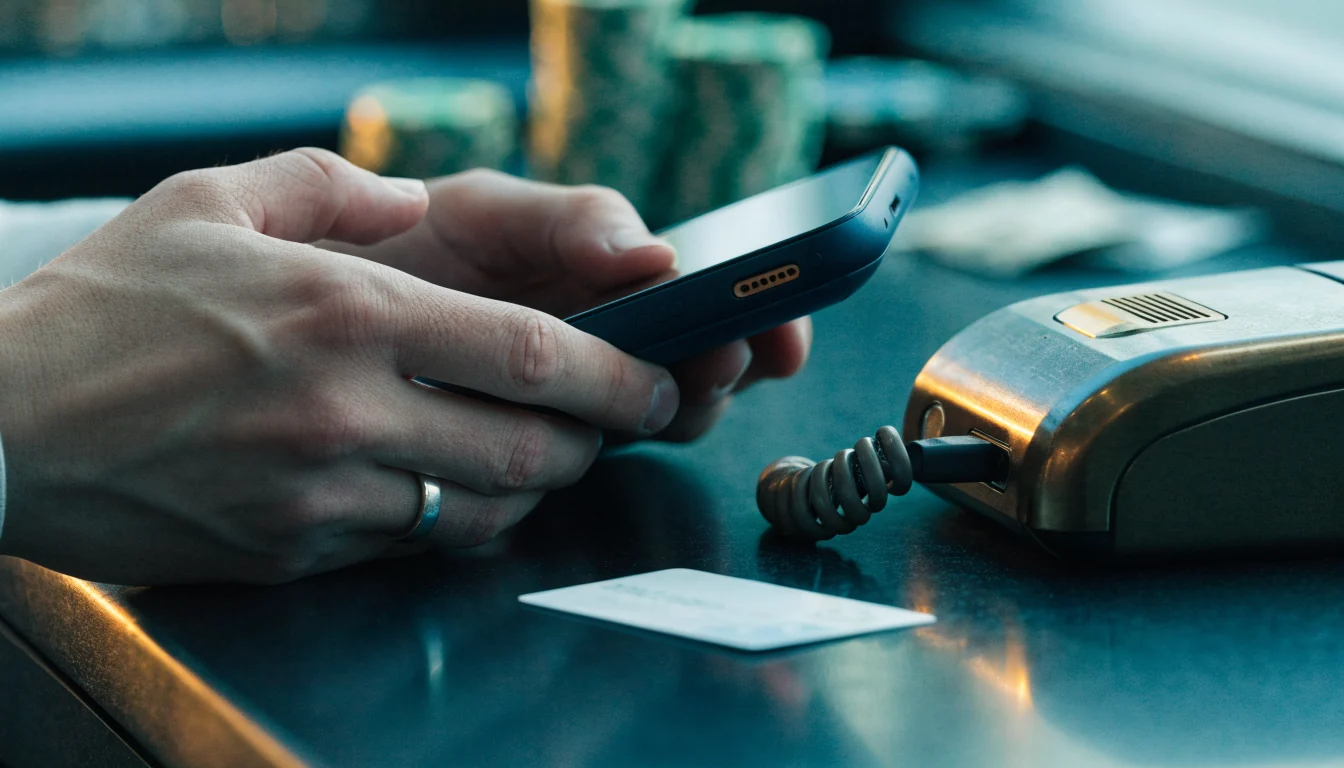
That distinction matters when a preferred route cannot be used for a withdrawal. An alternative may be possible, but it can mean additional verification before the casino is satisfied that the destination belongs to the account holder. The request is not necessarily a sign that anything has gone wrong; it reflects the need to account for a changed route. Even so, a switch can make the transaction less straightforward than keeping one named account in use.
Basic consistency begins with the details entered when the casino account is opened. A payment account held under a different name, or information that does not correspond across accounts, may leave the operator unable to establish ownership from the details already available. The resulting questions can create friction even when the underlying explanation is ordinary. A shared household, an old account record or a name variation may be innocent; the checks still need a clear answer.
This is not a promise that matching details will remove every review. Casinos may need to verify an account for other reasons, and a payment provider has its own procedures. Nor does a consistent route guarantee that a particular method will be accepted for every transaction. It simply avoids adding a preventable ownership puzzle to the ones the operator already has to resolve.
The point is especially relevant to real-money casino accounts, where deposits and withdrawals are part of the same financial record. A payment account belonging to the same customer makes that record easier to follow. If the route changes, the account holder may have to establish the link again. Paperwork has a way of multiplying when a simple line becomes a dotted one.
A sound approach to Payz payments, or any other e-wallet route, is therefore less about finding a clever path than maintaining a consistent one. Account ownership, payment ownership and the return route should make sense together. That will not control every decision or processing time, but it can prevent basic details from becoming an avoidable obstacle. The least dramatic transaction is often the one with the clearest paper trail.
Why can a fast payout casino still delay my withdrawal?
A fast payment method does not skip the casino’s approval process. Withdrawals can take longer while your account is being verified, especially for a first payout, and bank transfers may also be affected by cut-off times and weekends.
Are fast casino withdrawals guaranteed?
No. The timing depends on the casino’s approval process, whether your account is fully verified and the payment method used.
Are Visa and Mastercard deposits definitely debit cards?
No. Visa and Mastercard are commonly accepted for UK casino deposits, but check the card’s type and eligibility in the cashier. Credit card gambling has been banned in the UK since 14 April 2020.
Which payment methods are accepted in Great Britain?
Common options include Visa and Mastercard, bank transfer, e-wallets and, at some sites, cryptocurrencies. The cashier shows which methods are available for your account.
What is the current minimum deposit?
The minimum usually starts at £10–£20, depending on the payment method.
Is Skrill available?
Yes, Skrill is available at some UK-friendly casino sites and is a common deposit method. It may be excluded from promotions.
Published by the Tenobet Casino 4 team.