Casinos That Accept WebMoney in the UK: What to Check
 Available in GB
WebMoney and Boku are separate methods, so evidence about one does not establish that a casino accepts the other.
Table of Contents
- WebMoney, Boku and the limits of the available evidence
- What a Boku deposit involves
- Boku deposits and casino bonuses
- Why pay-by-phone options have become less common
- Boku charges, limits and phone credit
- Other ways to fund a casino account
- Checking whether a payment method is actually accepted
- Boku deposits and the withdrawal gap
- Boku’s network-level limits
- GamStop status cannot be inferred from a payment method
WebMoney, Boku and the limits of the available evidence
A casino cashier can display several payment names, but one name cannot stand in for another. WebMoney and Boku are distinct methods. The fact that a UK casino accepts deposits through Boku does not establish that it accepts WebMoney, and a reference to one cannot safely be read as confirmation of the other.
That distinction matters because payment labels often get grouped together in broad discussions of online casinos. They may appear in the same conversation about deposits, yet that does not make them interchangeable. A claim about Boku applies to Boku. It says nothing, by itself, about whether WebMoney appears in a casino’s cashier, whether WebMoney deposits are supported, or whether a particular WebMoney transaction would be accepted.
The difference is more than a matter of vocabulary. A casino’s payment arrangements are operator-specific. Acceptance of one method is not a general promise to accept other services, even if both are discussed as ways of funding an account. Nor does a casino’s willingness to accept a particular payment method establish anything about every other operator. Payment acceptance is not a trait that transfers from one brand to another.
When looking for a UK casino that accepts WebMoney, check that the payment method is currently available and review the withdrawal terms. The payout timeframe is one practical detail to consider.
Payout speed: 1-3 business days Chanze lists a payout speed of 1–3 business days.
Payout speed: 1-3 business days WinBeast lists a payout speed of 1–3 business days.
Payout speed: 1-3 business days EvoSpin lists a payout speed of 1–3 business days.
Payout speed: 1-3 business days SpinFormula lists a payout speed of 1–3 business days.
Payout speed: 1-3 business days SlotoSport lists a payout speed of 1–3 business days.
Payout speed: 1-3 business days Amunbet lists a payout speed of 1–3 business days.
Payout speed: 1-3 business days BeOnBet lists a payout speed of 1–3 business days.
Payout speed: 1-3 business days Britsino lists a payout speed of 1–3 business days.
Payout speed: 1-3 business days Jetsetspins lists a payout speed of 1–3 business days.
Payout speed: 1-3 business days x3bet lists a payout speed of 1–3 business days.
This leaves a narrow but important boundary around what can be said. A small number of casinos licensed by the UK Gambling Commission still accept Boku deposits, although that group has been shrinking since 2023. That is a statement about Boku, not a list of casinos accepting WebMoney. It cannot be converted into one by changing the payment label.
The same care applies to phrases such as “WebMoney casino” or “casino with WebMoney deposits”. They may sound like simple descriptions, but they contain a concrete claim: that a particular operator currently accepts that method for deposits. General familiarity with the operator, or evidence that it accepts another payment service, does not prove that claim. The payment option has to belong to the casino’s own arrangements, not to an assumption assembled from a different method.
There is a historical reason Boku can attract attention in this discussion. Pay by phone has been a recognisable route into casino accounts, and some UK-licensed operators still accept Boku. But the regulator did not introduce a rule naming Boku as a banned method. Individual operators have instead dropped it because they considered the compliance risk. That distinction matters: a method’s shrinking presence does not mean that a regulator issued a blanket prohibition, and it does not establish the status of WebMoney.
British gambling regulation supplies the wider setting, but not a shortcut to payment details. Remote gambling operators serving consumers in Great Britain must hold the relevant Gambling Commission licence. The licence governs the operator’s ability to offer gambling; it is not a catalogue of every payment method the operator accepts. A licensed casino may make its own cashier choices, and those choices cannot be inferred from the licence alone.
The reverse is true as well. A payment label, wherever it appears, does not by itself establish that an operator is licensed to serve the British market. Payment acceptance and regulatory status answer different questions. Conflating them produces a tidy impression, but not a reliable one.

This is why claims about WebMoney casinos need to be specific. The useful question is not whether Boku has appeared at UK casinos, or whether a casino has accepted some form of electronic payment. It is whether the named operator currently offers WebMoney to its UK customers, under the relevant account and deposit conditions. Without that operator-level connection, a list of WebMoney casinos would be guesswork dressed as certainty.
The word “currently” also carries weight. Payment menus change. The declining number of UKGC-licensed casinos that accept Boku shows that a method’s presence can contract over time; an old mention need not describe today’s cashier. A payment claim therefore needs to match the operator and the time at which the account is being used. Historical availability is not a standing promise.
WebMoney should not be presented as another name for Boku, and Boku’s place in the UK casino market should not be used as proof of WebMoney acceptance. Keeping those statements separate is not pedantry. It is the difference between describing a known payment arrangement and inventing one by association. The distinction is plain. The consequences are not.

What a Boku deposit involves
A Boku deposit begins in the casino’s cashier, where the payment method is selected before the transaction details are entered. The process then moves from the casino account to the mobile phone: the player supplies a deposit amount and a phone number, and confirms the payment using a verification code sent by SMS. The phone is not merely a place to receive a receipt. It is part of the payment route.
That sequence is straightforward, but each step has a distinct purpose. Choosing Boku tells the cashier which payment route to prepare. Entering the amount states how much the player intends to add to the account. Providing the phone number identifies the mobile connection involved in the transaction. The SMS code then acts as the confirmation step. Until that confirmation is completed, the request has not followed the full process.
In practical terms, the cashier is where the transaction is initiated, while the phone supplies the confirmation channel. A person using Boku therefore needs access to the mobile number entered into the payment form. A number belonging to somebody else, or one that cannot receive the verification message, cannot serve as a dependable link in this flow. There is no separate card detail in the described sequence; the phone number and confirmation code take their place in authorising the deposit.
The code matters because it is more than a formality appended to the end of a payment. It connects the request made in the casino cashier with a confirmation received on the mobile device. The player enters the amount and number, receives the SMS, and uses the supplied code to confirm. That is the central action. The method has no elaborate ritual, but it does depend on the two sides of the process matching: the details entered in the cashier and the phone receiving the message.
A specialist review describes Boku deposits as available only in amounts divisible by ten, giving £10, £20 and £30 as examples. That is a report about the method’s stated payment increments, not a timeless rule for every cashier. Payment arrangements can change, and the cashier’s displayed options are the relevant place to see which amounts it currently permits. The distinction is useful: a payment route may be present while the amount field still limits the choices available for that particular transaction. Small print has a way of becoming the main event.
The cashier’s interface may present the steps in a single flow, but the underlying order remains the same: select Boku, enter the amount, provide the phone number, then confirm by SMS code. The sequence is worth understanding before starting because it explains why merely selecting the method does not complete a deposit. The confirmation is a separate act, carried out through the phone rather than by returning to the cashier and choosing another payment option.
This also means that the phone number is not incidental account information. It is the destination for the verification message associated with the deposit. If the message does not arrive, the process cannot be confirmed through the described route. The important point is not to infer a particular cause from a delay or failed attempt; it is simply that SMS verification forms part of the payment flow, rather than an optional follow-up.
Boku Deposit Process
Select Boku as the payment method in the casino’s cashier.
Enter the intended deposit amount and provide your mobile phone number.
Receive a verification code via SMS on your mobile device.
Enter the supplied code in the cashier to complete the authorisation.
Boku is therefore best understood here as a staged payment process rather than a button that moves money by itself. The casino cashier gathers the transaction details, the mobile number receives the confirmation message, and the code completes the authorisation. The mechanism links an online account to a mobile connection without asking for card details in the described steps. It is phone-led, with the cashier and handset sharing the work.
That mechanism should not be confused with a claim about every casino’s available options. A cashier can only process the methods it displays, and the presence of a familiar payment name elsewhere does not make it part of this sequence. Nor does the SMS step turn Boku into a general-purpose banking service. It describes how a deposit is confirmed, not how every other kind of account activity works.
For someone encountering Boku for the first time, the plainest description is also the most accurate: choose it in the cashier, state the deposit amount, enter the mobile number, and confirm with the code received by text. The phone is the confirming instrument; the casino cashier is where the deposit begins. No mystery.

Boku deposits and casino bonuses
A deposit method and a promotion are separate parts of a casino’s terms. A cashier can accept a payment without that payment qualifying for a welcome offer; conversely, a casino may allow a particular pay-by-phone deposit to count towards a bonus. Neither arrangement tells anything about WebMoney.
A specialist review found that bonus eligibility for pay-by-phone deposits varies by operator. It identified MrQ, Duelz, Mr Vegas and Videoslots as accepting such deposits for bonus eligibility. That is a limited, operator-specific finding, not a general rule for every casino or every mobile payment service. It also does not establish that a Boku deposit qualifies at those casinos: MrQ and Duelz are associated with Fonix, while Mr Vegas and Videoslots are associated with Siru Mobile.
The distinction matters because “pay by phone” describes a family of services, not one universal cashier option. A bonus condition attached to one service cannot simply be transferred to another. Nor does a casino’s willingness to accept WebMoney settle whether a WebMoney deposit qualifies for a promotion. Payment acceptance and bonus eligibility need separate confirmation in the operator’s terms.
A specialist review of Boku casinos found no dedicated Boku deposit bonuses at the platforms it assessed, and reported no Boku-specific restrictions there. That is a finding about the platforms considered, not a promise that every offer works with Boku or that the conditions remain unchanged. Promotional rules can be revised, and the cashier’s payment menu alone does not explain the terms of an offer.
The practical detail lies in the promotion wording. Terms may define which payment methods count, which deposits qualify, and whether an offer requires a particular kind of deposit. A general welcome offer is not evidence that every method is eligible. Equally, the absence of a special Boku bonus does not mean that a casino has no other promotion; it only separates an ordinary offer from a payment-specific one.
This is especially important when comparing bonuses across casinos that accept WebMoney. A headline offer says little about the payment routes that can activate it. The relevant distinction is not between a “good” and “bad” payment method, but between what the cashier accepts and what the promotion’s conditions recognise. The two lists may differ.
WebMoney terms therefore cannot be inferred from Boku findings, and Boku terms cannot be inferred from the treatment of other Pay by Phone services. A bonus is a contract with its own conditions, not a property carried automatically by a deposit button. Before a deposit, the operator’s current promotion terms are the place where eligibility is defined. Small print, large consequences.
Why pay-by-phone options have become less common
Pay by Phone has not disappeared from British online casinos, but Boku has become a less reliable sign of what a cashier will offer. A specialist review describes operators moving away from Boku since 2023: some replaced it with Fonix or Siru Mobile, while others removed pay-by-phone payments altogether. That is a reported pattern, not a guarantee that every casino followed the same path.

The change matters because “pay by phone” is a category, not a single payment service. A casino that once offered Boku may now show another provider, or no phone-based option at all. The name of the payment method in an old review or discussion can therefore describe a past cashier rather than the one currently available. Payment menus are less like permanent fixtures than shop windows: operators can rearrange them without changing the games behind them.
There was no UK Gambling Commission rule specifically banning Boku. Individual operators dropped it amid compliance risk. That distinction is important. A service can become scarce through decisions made by businesses, without a regulator having prohibited it by name. The result for players may look like a general retreat, even when the cause is a series of separate operator choices.
Fonix and Siru Mobile appear in the reported replacements. Their presence does not mean that Boku has simply been renamed, or that the services work identically. Nor does a casino’s support for one establish that it supports another. The cashier’s actual options are specific to the operator and can change over time.
This shift also offers no evidence about WebMoney. Boku, Fonix and Siru Mobile are pay-by-phone services; WebMoney is a separate payment method. A casino replacing Boku with Fonix, for instance, has not thereby added WebMoney. The changing fortunes of phone payments cannot answer whether any particular UK casino accepts a WebMoney deposit.
That leaves a narrower but more useful picture: Boku remains available at some UK-licensed casinos, while the number of operators offering it has been shrinking, according to the specialist review. Other operators have moved to a different phone-payment provider or removed the option. A historic list may capture one point in that transition, not a permanent feature of the market.
The broader shift is therefore not a simple story of one service being banned and another taking its place everywhere. It is a patchwork of operator decisions. For anyone comparing payment methods, the label “Pay by Phone” does not settle which provider is involved, and a past reference to Boku does not establish what the cashier offers now. Nor does any of this turn Boku into a WebMoney route.
While no UK Gambling Commission rule specifically banned Boku, individual operators have dropped the service due to compliance risks.
Boku charges, limits and phone credit
A Boku deposit does not travel through a casino account in quite the same way as a card payment. The cost is placed on the mobile account: for a customer on a monthly contract, it appears on the phone bill; for a pay-as-you-go customer, it is taken from the available phone credit. The phone account therefore becomes part of the payment chain, even though the deposit is made in a casino cashier.
That distinction matters when judging what a displayed limit means. A specialist review gives £30 per transaction as the standard UK Boku limit, while noting that some casinos or mobile networks may permit £40 or £50. Those higher figures are not a universal allowance, and a limit stated by one operator does not establish what another will accept. The amount available in a particular cashier may differ from the amount a mobile account can support.
For pay-as-you-go users, the balance is a hard practical boundary: a Boku deposit cannot exceed the credit remaining on the phone. A specialist review describes insufficient credit as a reason for a payment to be declined. This is not an additional casino deposit limit so much as a constraint imposed by the prepaid balance. A cashier may offer an amount, but the phone account still has to cover it.
The distinction between billed and prepaid service also changes when the cost becomes visible. On a monthly contract, the Boku charge is added to the mobile bill; on pay-as-you-go, the available credit falls. In either case, the casino is not taking the money from a WebMoney balance or charging a WebMoney card. Boku’s billing route is tied to the mobile account, not to a bank card simply because both can be used to move money.
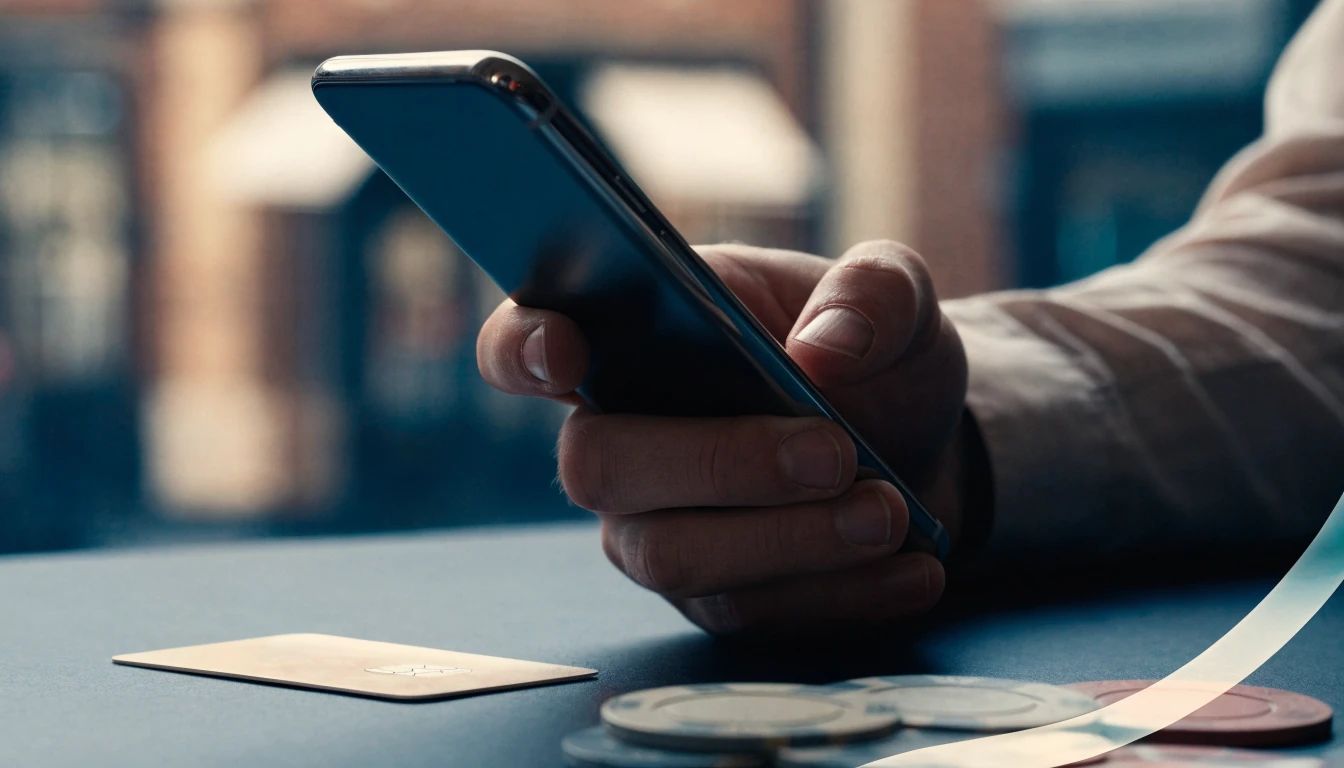
That is why Boku-specific limits cannot answer whether a casino accepts WebMoney, a WebMoney card or a debit card linked to that service. A payment method may appear beside other options in a cashier, but the name of one method says nothing about the acceptance of another. Nor does a Boku limit establish the terms for online casinos that accept WebMoney payments. Different rails, different conditions.
The phone bill makes the transaction feel almost domestic: a gambling deposit folded into the same account as calls and data. Yet the apparent simplicity conceals a dependence on the mobile provider’s billing arrangement and, for prepaid customers, on credit already held. The cashier is only one part of the decision; the phone account is the other.
No universal figure.
Other ways to fund a casino account
A documented alternative route runs through Neteller. A specialist review reports that players can use Boku to add funds to a Neteller account, then use Neteller to deposit at a casino that accepts it. The route is indirect: Boku is used to fund the e-wallet, while Neteller is the method presented to the casino.
That distinction matters when comparing alternatives to WebMoney for online casinos in the UK. The route does not establish that a casino accepts WebMoney, nor that Neteller and WebMoney work in the same way. It describes a specific Boku-to-Neteller-to-casino path. Each step depends on the relevant service being available for the account and the casino accepting Neteller at the time of deposit.
Indirect funding via Neteller
A player can use Boku to add funds to a Neteller account, and subsequently use Neteller to deposit at a casino that accepts it. This route depends on both the availability of Boku for Neteller funding and the casino’s acceptance of Neteller.
For someone looking for a WebMoney alternative, this may be worth investigating where direct Boku deposits are offered but the chosen casino also supports Neteller. It is not a universal workaround: a casino that accepts Boku does not thereby accept Neteller, and a casino that accepts Neteller does not thereby accept Boku. Payment options belong to the individual cashier, not to a shared category of casinos.
The arrangement also changes what “using Boku at a casino” means. The casino deposit is made through Neteller, rather than by selecting Boku in the casino cashier. That can make the route relevant to players whose priority is finding a way to move money from a phone-billed payment method into an account accepted by a casino. It does not turn Boku into a direct casino deposit option at every Neteller site.
The evidence for this pathway comes from a specialist review, so it should be treated as a reported route rather than a standing promise about every account or operator. Services and cashiers can change, and a payment method shown in one place does not guarantee that it will appear in another. The practical check is whether Boku can fund Neteller and whether the intended casino currently lists Neteller among its deposit methods.
For a direct WebMoney deposit, this is not an answer: it offers no confirmation of WebMoney acceptance. For an alternative payment chain, it is more specific. Boku may fund Neteller; Neteller may then fund a casino account that accepts it. Two separate checks, and two separate points where the route can end.
Checking whether a payment method is actually accepted
A payment logo on a casino’s homepage is not the same thing as a working deposit option. The cashier is the practical test: it shows which methods the operator makes available for the account at the point a deposit is being arranged. A method mentioned in an old review, a general payment guide or a search result may no longer appear there.

That distinction matters for WebMoney. A casino may accept one kind of payment without accepting another, even when both are described loosely as online wallets or digital payments. References to WebMoney cards, debit payments or a general “pay” option should not be treated as proof that WebMoney itself can fund an account. The method needs to be identified by name in the operator’s cashier, not inferred from a broad category.
The same care applies to claims that a deposit is instant. A payment method’s presence does not establish how quickly a casino credits funds, whether the option is open to every customer, or what conditions apply. Those details belong to the operator’s current payment information and cashier, rather than to a label repeated elsewhere. A test of an advertised option should also distinguish between seeing a name and being able to complete the deposit flow.
Licensing is a separate question. The UK Gambling Commission regulates gambling in the United Kingdom, including remote gambling offered to consumers in Great Britain. Its remit applies regardless of where the operator’s key equipment is located, and it is the sole regulator for commercial gambling in Great Britain. That regulatory role concerns gambling activity and operators; it does not amount to approval of WebMoney, Boku or any other particular payment service.
A valid licence therefore cannot be used as evidence that a named payment method is available. Nor does a payment logo establish that an operator holds the licence required to serve the British market. The two checks answer different questions: one concerns whether the casino is authorised to offer gambling, the other whether a specific deposit route is available through its cashier.

Before making a deposit, the operator’s licence number should be checked against the Gambling Commission’s public register. The cashier should then be checked separately for the exact payment method, with its displayed terms read before confirming a transaction. A remembered brand name is not a payment option. A regulator’s licence is not one either.
Boku deposits and the withdrawal gap
A deposit and a withdrawal are often treated as opposite ends of one transaction. With Boku, they are not. The service can be used to put money into a casino account, but it cannot carry casino funds back out. A payment route that opens the door does not necessarily provide a route home.
That distinction matters when comparing payment methods. A casino cashier may display a way to deposit without offering the same method for withdrawals. Boku is a clear example: it is deposit-only. Any expectation that winnings could be returned through it would confuse the direction of the payment with the capability of the service.
The practical consequence is that a separate withdrawal method has to be registered when depositing with Boku. That may mean a debit card, an e-wallet or a bank transfer, depending on the casino’s available options and its account rules. The withdrawal method is not an afterthought to arrange only once a balance is ready to leave; it belongs in the payment decision made before funds go in.
This is also why a list of deposit methods does not, by itself, describe how an account can be cashed out. Payment pages can present several routes for sending money to an operator, while withdrawals follow a different set of options. The two lists may overlap, but Boku demonstrates that overlap cannot be assumed.

Nor does a Boku deposit establish anything about WebMoney. A player looking for a WebMoney casino needs to confirm WebMoney’s availability separately in the operator’s cashier; Boku’s deposit-only status says nothing about whether WebMoney can be used to deposit or withdraw. Similar questions about a WebMoney card, a minimum deposit or a bonus remain separate from the narrow fact that Boku cannot return casino funds. Payment names are not interchangeable merely because they appear in the same cashier.
The broader UK requirement is straightforward: the casino must verify a customer’s age before allowing deposits, and a valid UK Gambling Commission licence should be checked before money is deposited. The licence is a regulatory safeguard, not proof that a particular payment method supports withdrawals. Those are separate checks, addressing separate risks.
The point is not that Boku cannot fund an account. It can. The gap appears later, when funds need to leave. A deposit method is only half a payment arrangement.
Boku is a deposit-only service; it cannot be used to withdraw funds from a casino account.
Boku’s network-level limits
A Boku payment passes through a mobile network as well as a casino cashier, so the amount a casino displays is not necessarily the only constraint. The network can apply its own daily deposit cap. A specialist review attributes enforcement of that daily limit to the mobile operator rather than the casino. The distinction matters: the operator may control whether another payment can pass, even when the casino’s cashier still offers Boku.
The figures reported for network limits do not agree on the transaction level. One account puts the limit at about £10 per transaction and £30 per day. Another gives a daily limit of £30 but specifies no separate cap for each transaction. Those are not interchangeable descriptions: the first places a ceiling on each payment as well as the day’s total; the second establishes only a daily figure. Neither should be treated as a universal, permanent tariff.
That disagreement is less surprising when the payment crosses several systems. A casino sets what it is prepared to accept through its cashier; a mobile operator may impose a separate limit on payments billed through its network. The two controls answer different questions. One concerns the casino’s deposit rules, the other the customer’s use of a phone-billed service. A payment can therefore be available in the cashier without being guaranteed to pass the network’s checks.
There is no single figure that can safely be applied to every Boku account from these reports. The transaction cap is especially uncertain: one account names one, while another leaves it unspecified. The daily figure is more consistent across the descriptions, but it still belongs to reported network terms, not an assurance that every operator applies the same setting at all times.
This also explains why a failed attempt need not mean that a casino has withdrawn Boku or that the cashier has changed its own rules. A mobile operator’s limit may be the relevant barrier. Conversely, a casino’s willingness to accept a deposit does not override a limit applied by the network. Two gates, two authorities.

GamStop status cannot be inferred from a payment method
A casino’s payment options and its GamStop status answer different questions. WebMoney, where offered, describes how money may be paid into an account; it does not show whether the operator participates in a self-exclusion scheme. The same distinction applies to Pay by Phone services such as Boku. A payment method cannot establish that a casino is connected to GamStop, nor that it is outside the scheme.
That matters for searches for WebMoney casinos not on GamStop or sites said to be unaffected by GamStop. A cashier listing WebMoney is not evidence that a casino is absent from the self-exclusion system. Nor does the absence of a payment option reveal anything about that status. The two details have to be established independently.
Licensing provides a separate, important piece of context, but it is not a substitute for checking self-exclusion arrangements. In Great Britain, the Gambling Commission grants operating licences to gambling businesses and personal licences to individuals who perform relevant roles. Those licences concern permission and oversight within the gambling system; their existence alone does not identify whether a particular operator is connected to GamStop.
The distinction can be easy to blur because payment pages, licence details and self-exclusion information all appear under the same casino brand. They are not interchangeable credentials. A casino may advertise a particular deposit route, while its licensing and self-exclusion position require separate confirmation. Searches for WebMoney casinos without GamStop therefore cannot be answered simply by finding a WebMoney logo or payment option.
There is also a practical limit to what a payment label can promise. It says nothing, by itself, about fees, eligibility, the operator’s regulatory status or the handling of a self-exclusion request. Those matters belong to different terms and records. Payment is one narrow part of the relationship. GamStop is another. A logo is not a status check.
Are Boku casinos still available in the UK in 2026?
Yes. A small number of UKGC-licensed casinos still accept Boku, although operators have been moving away from it since 2023.
What are the deposit limits at pay by mobile casinos?
Boku is usually limited to £30 per transaction, though some casinos or networks may allow £40 or £50. Network-level limits are typically about £10 per transaction and £30 per day; PAYG users are also limited by their remaining phone credit.
Are there any Boku casinos left in the UK?
Yes. Jackpot Mobile Casino and Peachy Games are among the small number of sites that still accept Boku directly.
Prepared by the Tenobet Casino 4 editorial staff.