iPad Casinos UK: How Tablet Gambling Works
 Available in GB
An iPad is simply a way to access an online casino; licensing and terms remain tied to the operator.
Table of Contents
- What an iPad Changes—and What It Doesn’t
- Playing at an Online Casino on an iPad
- Choosing Without a Promised Best-of List
- Casino Apps on iPad: The Download Question
- Real-Money Play and the Rules Around Deposits
- Free Slots on an iPad: Play Without a Deposit
- Casino Games and Slot Games on the Tablet
- Deposits, Bonuses and the Pay-by-Mobile Catch
- Live Casino and Blackjack on an iPad
- for · slot · free
What an iPad Changes—and What It Doesn’t
An iPad changes the setting in which online gambling takes place. The casino remains an online service; the tablet is the means of reaching it. That distinction sounds obvious, but the language around “iPad casinos” can make the device seem like a category of its own, as though it came with a separate class of operators or games. It does not.
An iPad casino is simply an online casino accessed on an iPad. The label describes the route in, not a different kind of gambling. A service does not become more trustworthy, more generous or more suitable merely because it appears on a tablet. Those qualities belong to the operator and its terms, not to the object held in the hands.
In Great Britain, online casinos serving customers must hold a UK Gambling Commission licence. The rules attach to the gambling service, rather than to the make or size of the screen. Online gambling is legal for adults aged 18 and over when the operator holds that licence. The tablet does not create an exemption, or a new legal category. Paperwork follows the business.
Choosing an iPad casino in the UK means finding an option that suits your needs on a tablet. This list offers a starting point, with payout speed as the available point of reference.
Payout speed: 1-3 business days Chanze lists a payout speed of 1–3 business days.
Payout speed: 1-3 business days WinBeast lists a payout speed of 1–3 business days.
Payout speed: 1-3 business days EvoSpin lists a payout speed of 1–3 business days.
Payout speed: 1-3 business days SpinFormula lists a payout speed of 1–3 business days.
Payout speed: 1-3 business days SlotoSport lists a payout speed of 1–3 business days.
Payout speed: 1-3 business days Amunbet lists a payout speed of 1–3 business days.
Payout speed: 1-3 business days BeOnBet lists a payout speed of 1–3 business days.
Payout speed: 1-3 business days Britsino lists a payout speed of 1–3 business days.
Payout speed: 1-3 business days Jetsetspins lists a payout speed of 1–3 business days.
Payout speed: 1-3 business days x3bet lists a payout speed of 1–3 business days.
That is the useful starting point for anyone considering an iPad for casino play in the UK. The device may shape how someone encounters an online service, but it does not decide which operator is legitimate or what a particular offer means. Nor does the phrase “iPad casino” establish that a separate product exists. It is ordinary online gambling viewed through a particular device.
The same distinction helps untangle the surrounding language. “iPad casinos”, “casino on an iPad” and “iPad casino UK” point to much the same practical idea: access to an online casino using a tablet. Words such as “free spins” describe an offer, not an iPad feature; the tablet itself says nothing about whether an offer is available or what conditions apply.
The device matters as a setting. The rules and responsibilities belong to the gambling service. Keeping those two things apart makes the rest of the subject easier to judge—and prevents a piece of hardware from being mistaken for a safeguard. A screen is not a licence.
Playing at an Online Casino on an iPad
An iPad is a way into online gambling, not a separate kind of casino. The operator, account and rules remain those of the online service; the tablet is the screen and controls through which its pages are reached. That distinction matters because a site described as suitable for iPad play is not, by that description alone, a different or specially regulated product.


Access begins with the casino’s website. Whether its pages work as intended on a particular iPad depends on the operator’s own service and the device setup, so a label such as “iPad-friendly” is not a substitute for checking the live site. Pages may be arranged differently on a tablet than on a desktop, and a layout that fits the screen is only one part of usable access. Account pages, help information and the route to customer support also matter; an attractive front page is a thin measure of how well a service works.
The tablet changes the scale of the encounter. A casino page that once sat on a desk can now appear on a sofa or at a kitchen table, in the ordinary spaces of domestic life. That portability can make gambling feel less like entering a venue and more like opening any other online service. The impression is misleading in one important respect: the device does not change the legal status of the activity or the operator’s obligations.
In Great Britain, remote operators offering gambling to customers must hold a UK Gambling Commission licence. Online gambling is lawful for people aged eighteen and over when it takes place with an operator holding that licence. The Gambling Act 2005 governs England, Wales and Scotland; Northern Ireland has a different legal framework. The iPad does not create an exception to these rules. A casino reached through a tablet is still an online casino, and its regulatory position does not depend on the size of the screen.
In Great Britain, remote operators offering gambling to customers must hold a UK Gambling Commission licence, and online gambling is lawful for people aged eighteen and over when it takes place with such an operator.
This is also why “online casino for iPad” should not be treated as a promise that every casino will provide the same experience. A page may load while some functions are awkward to use, or an operator may set out its service differently across devices. The relevant distinction is not between a tablet casino and a non-tablet casino, but between a service that works for the account holder’s circumstances and one that does not. That can only be established by looking at the actual site and its terms, rather than trusting a device label.
There is a social history tucked inside this small change of scale. Gambling has long been organised around places: a gaming room, a betting shop, a casino floor. Online access loosens the tie between gambling and a dedicated venue. Regulation, meanwhile, insists that the operator remains accountable even as the activity moves into private space. The screen travels; the licence does not become less important.
A sensible assessment of access therefore stays modest. The iPad can provide a route to an online casino, but it cannot confirm that a particular operator is licensed, that every page is practical on that device, or that an account is appropriate for a given person. Those are separate questions. The tablet is an instrument, not a safeguard.
That distinction also prevents confusion between the device and the service. Searching for an iPad casino can make it sound as though the tablet itself determines what is available. In practice, the operator defines the account and the conditions under which its online service is offered; the device simply provides one means of reaching it. A familiar interface may make the activity feel casual. Its consequences are not thereby casual.

The useful standard is ordinary but easily overlooked: access should be judged by the live service, and the service by its legal standing and terms. No special status comes with the tablet. Just a screen.
Choosing Without a Promised Best-of List
A search for the best iPad casino sounds as if it ought to end with a winner. But “best” is not a feature of the tablet, nor a separate class of gambling business. It is a judgement assembled from questions that matter differently to different people: whether an operator is entitled to serve the market, what its terms say, and whether its overall offer suits the person using it. A confident ranking can conceal those distinctions rather than settle them.
The firmest starting point in Great Britain is regulatory status. An operator offering remote gambling to people there must hold the relevant UK Gambling Commission licence, wherever the business itself is based. Online gambling is legal for adults aged eighteen and over when it takes place with an operator holding that licence. The device does not alter the rule. An iPad does not turn an offshore casino into a locally licensed one, and a polished presentation is not evidence of regulatory standing.
That distinction is more useful than a decorative medal or a broad claim of quality. Licensing sets a basic boundary; it does not, by itself, establish that a particular casino is suitable for every player. A comparison should therefore separate what can be checked from what is preference. Legal status is a threshold. Taste is not.
- Check the operator’s regulatory status
- Verify current UKGC authorisation
- Separate legal status from personal taste
- Trust a decorative quality medal
- Rely on broad claims of quality
- Assume a polished presentation proves regulatory standing
A further difficulty is that a device-specific label can imply more than it proves. Calling something an online casino for iPad says where a person hopes to access it, but does not establish that every part of the service has been tested on every iPad, or that the experience is identical across devices. Claims about performance, compatibility or ease of use need evidence tied to the relevant product and conditions. Without that, a ranking may be measuring the confidence of its wording.
The same caution applies when the choice is framed around casino apps or games. Those are distinct questions: an app is not the whole operator, and a selection of games does not answer whether the business is properly authorised to serve British customers. A list that treats these as interchangeable measures can look precise while comparing unlike things. The tablet is the setting, not a certificate of quality.
There is also a social history beneath the tidy language of rankings. Gambling has long been sorted into categories—licensed, permitted, restricted—not because the labels make play harmless, but because the state has chosen to define who may offer it and under what authority. In Britain, that framework places obligations on operators rather than making the device or the player’s choice of screen the central issue. Regulation is less glamorous than a “best” badge. It is more consequential.
For anyone comparing claims, the useful test is whether the reason for a recommendation is visible and relevant. Is it grounded in a checkable condition, or in adjectives such as “top” and “premium”? Does it distinguish an operator’s legal standing from a personal preference? Does it say what was assessed, rather than letting the word “iPad” stand in for a technical test? These questions do not produce a universal winner. They do make unsupported certainty easier to recognise.
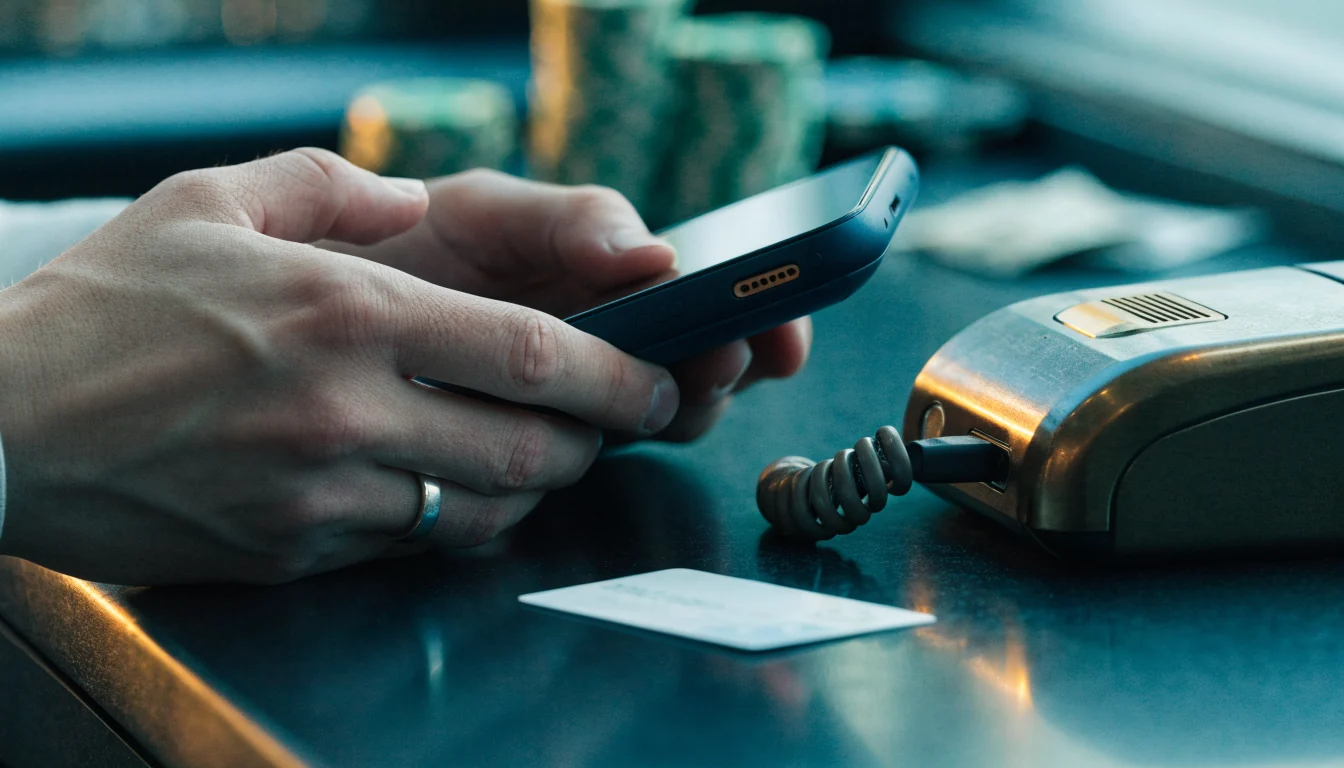

A best iPad casino UK list would imply that the same operator can be established as best for everyone through a single shared measure. That is a promise the phrase cannot keep on its own. A more honest comparison can identify the threshold that matters in this market—current UKGC authorisation—and explain the limits of any further judgement. The rest depends on what the individual values, and on evidence that can be checked rather than merely admired.
No podium required.
Casino Apps on iPad: The Download Question
An iPad casino app sounds like a distinct product: a little casino contained in a little square, ready to be summoned from the home screen. In practice, “app” describes a way of reaching an operator, not a separate kind of casino. An account, the games and the operator’s rules remain theirs whether the service is opened through an installed app or through a browser.
That distinction matters because the word can imply more certainty than it carries. A casino’s name appearing in an app store, or an icon sitting on a tablet, does not by itself establish that the service is intended for UK customers, that it holds a UK Gambling Commission licence, or that its current terms suit a particular account. Remote operators serving the British market need the relevant licence, wherever they are based. The device does not alter that requirement.
A casino’s appearance in an app store or an icon on a tablet does not establish that the service is intended for UK customers or holds a UK Gambling Commission licence.
Nor is “best” an attribute that can be read from the existence of an app. A polished icon says little about the practical matters that govern an account: access conditions, account support, payment routes and withdrawal terms. These need to be checked with the operator, not inferred from screenshots, old descriptions or the fact that an app can be installed. Digital packaging has never been a reliable substitute for the small print.
Specific iPad casino apps and installation requirements cannot be treated as interchangeable across operators. Some services may present an app-based route; others may be accessed without one. The sensible distinction is between the operator’s own current instructions and assumptions formed from a generic guide. An app label alone cannot establish what the current service supports on a particular iPad.
The same caution applies to the cashier. A specialist review may list Visa, Mastercard, Skrill, Neteller, PaysafeCard and several major cryptocurrencies among methods accepted by a casino. That is a report about the operator reviewed, not a promise that every method is available to every account now. The live cashier is the relevant place to confirm what can actually be selected. Payment availability should not be inferred from the presence of an app.
The cashier also sets out practical terms that an app description cannot settle: deposit and withdrawal minimums and maximums, fees, and processing times. These depend on the selected method and can change. Withdrawal routes and conditions deserve their own check rather than being assumed to mirror deposits. A specialist review can offer context, but a dated account of a payment arrangement is not a current instruction.

There is a broader cultural trick in the word “app”: it makes an institution feel like a feature of the device. Yet the device is only the doorway. The operator still controls the account, the terms and the cashier; the UK framework still governs whether real-money service may lawfully be offered to British customers. A shortcut is not a change of jurisdiction.
For anyone comparing app-based access with a browser, the useful question is therefore not which icon looks most convincing. It is whether the operator’s current information explains access, account conditions and payment terms clearly. If it does not, the home-screen shortcut adds little. A smaller doorway, same rules.
Real-Money Play and the Rules Around Deposits
An iPad does not create a separate kind of gambling account. Real-money play still means opening an account with an online casino and placing funds at risk; the tablet is simply the screen through which that activity is reached. The important questions therefore sit less in the device than in the rules governing the account and its deposits.
In Great Britain, a remote gambling operator holding a UKGC licence cannot accept a credit-card payment for gambling. The restriction also covers a credit-card payment routed through a money service business, so changing the route does not turn borrowed card funds into an acceptable deposit. The rule reflects a particular judgement about gambling and credit: the convenience of moving money should not make it easier to stake money that has not yet been paid back. A small piece of financial friction, deliberately kept.
Credit Card Ban
In Great Britain, a remote gambling operator holding a UKGC licence cannot accept credit-card payments for gambling, including those routed through a money service business.
That distinction matters when considering an iPad casino for real money. The payment choices displayed by a particular operator are not a universal list, and the appearance of a method on one service does not establish that another accepts it. Nor does using a tablet alter the rule. A payment remains a gambling payment whether it begins on a phone, computer or iPad, and an intermediary does not exempt it from the credit-card restriction.
Before a first deposit, a new remote customer must be asked to think about setting a financial limit. This is not an ornamental prompt to click past on the way to the cashier. A limit gives an account a boundary chosen before play begins, when the decision is less entangled with the pull of a game or the wish to recover a loss. The account must also keep its limit-setting facilities available afterwards, rather than treating the initial decision as a one-time formality.
The distinction between considering a limit and setting one is worth keeping clear: the required prompt asks the customer to consider it, while the lasting safeguard is that account-level tools remain accessible. The point is continuity. A financial boundary that can be revisited is different from a warning that appears once and disappears.
An iPad real-money casino experience can make the deposit step feel like an ordinary part of using a familiar device. That familiarity does not make the transaction ordinary in its consequences. The money is exposed to gambling, and the rules are designed around that fact, not around the size or portability of the screen. A cautious approach begins before the balance changes: with the limit prompt, with the payment method’s status, and with a clear distinction between credit and funds that are not being borrowed.

The phrase “real-money slots” can suggest that the device itself determines what is permitted. It does not. Real-money gambling in the UK belongs with operators holding the relevant UKGC licence, and the same deposit safeguards apply whether the account is reached through a browser or another route. The tablet changes the setting, not the underlying responsibility of the operator to apply the rules.
There is no special exemption for a real-money casino app on an iPad, nor a different set of deposit principles for tablet play. The practical question is not whether a screen looks like a casino, but whether the operator and transaction sit within the applicable safeguards. A deposit is not merely a tap. It is the point where entertainment acquires a financial edge.
Free Slots on an iPad: Play Without a Deposit
Free slot play has a different purpose from gambling with money. It lets a player engage with a slot-style game without making a deposit for that play. The distinction matters: the word “free” describes the cost of a particular mode, not a promise that every slot, casino or version of a game offers one.
On an iPad, the phrase can mean several things. Some players are looking for free online slots they can open without downloading anything; others want a free slot app or a casino’s no-cost play option. Those are different routes to the same broad aim, and one label cannot establish what a specific service provides. The available options depend on the operator and the game.
Free Play Options on iPad
Players may look for free online slots accessible without downloads, free slot apps, or no-cost play options provided by a casino. The available options depend entirely on the operator and the game.
Nor does a free-play label turn a slot into a cash game. A no-cost mode should be understood on its own terms: it is not evidence that a balance can be withdrawn, that paid play is required later, or that a particular title is available. The small print does the less glamorous work of separating those meanings.
There is a social history in the appeal. Casino games have long borrowed the language and rituals of paid play; a free mode lets people approach that form without making a deposit the price of admission. That can be useful for familiarising oneself with a game, but it should not be mistaken for a forecast of results with money involved. A game’s free version, where offered, is not a financial test.
The request for free slots on an iPad with no download also needs a little care. “No download” expresses a preference about access; it does not, by itself, confirm that a service works in a particular way on a particular device. The same applies to searches for free iPad slots: a broad phrase cannot identify the operator’s terms or the exact mode available.
The sensible distinction is plain: free play means no deposit for that play, while real-money gambling is a separate activity with separate conditions. A slot’s name, appearance or presence on a casino site cannot settle those conditions. Read the description attached to the play mode before treating it as free, and keep free play separate from decisions about depositing.

Casino Games and Slot Games on the Tablet
The phrase “iPad casino games” can suggest a special catalogue built for a particular device. In practice, it describes a way of reaching casino games, not a separate class of games with its own names or rules. A slot remains a slot; the tablet does not turn it into a different wager.
That distinction matters when looking for a list of games or a “best” choice. Names alone would say little about what is available at a particular casino, and a catalogue can change. The useful questions are more modest: what kinds of games are offered, what rules govern them, and whether the game’s instructions are clear before play begins. Specific titles should be checked where they are actually offered, rather than assumed from a general description of iPad play.
Slots also sit within rules that are unusually visible in their mechanics. In Britain, autoplay is banned, and each online slot spin must take at least two and a half seconds. The stake limit is five pounds per game cycle for adults; the lower limit of two pounds applies to players aged eighteen to twenty-four. These are not design suggestions for a tablet interface. They are restrictions on the gambling itself.
There is a social history in that distinction. A screen makes the game feel private and portable, but regulation treats the wager as a public matter: the same protections apply whether the device rests on a kitchen table or elsewhere. Small screens do not make small rules.
UK Slot Regulations
In Britain, autoplay is banned, each spin must last at least 2.5 seconds, and stake limits are £5 per game cycle for adults (with a £2 limit for those aged 18–24).
For casino games beyond slots, the category is broad, but an iPad label alone does not establish which titles a particular operator carries or how each one works. Game descriptions and rules are therefore more useful than a generic promise of a complete selection. The names matter less than the terms attached to them.
Deposits, Bonuses and the Pay-by-Mobile Catch
An iPad casino bonus is still an offer attached to an account, not a reward created by the tablet. The same applies to a no-deposit bonus: its name does not settle who qualifies, what restrictions apply, or whether a particular deposit method counts. Those details belong to the operator’s current promotion terms.
Payforit makes the payment step unusually visible. At a casino that offers it, the player selects Payforit, enters a mobile number, receives a confirmation code by SMS and submits that code to complete the deposit. The amount is charged to the phone bill or deducted from prepaid credit. A small screen does not change the route: the phone account is involved even when casino play is taking place on an iPad.
The important catch comes later. Payforit cannot be used to withdraw casino funds. A deposit made this way therefore does not create a matching route back. Before using it, the account’s available withdrawal method needs to be understood, along with the operator’s identity checks and terms. A bonus does not make that distinction disappear.
A specialist review reports that Payforit deposits are commonly excluded from welcome promotions. That matters for anyone weighing a deposit against an offer: the payment may fund play without qualifying for the advertised bonus. The cashier and promotion terms are more useful than the headline.

Bitcoin raises a separate question. An iPad does not establish that a casino accepts cryptocurrency, and a mention elsewhere is not confirmation of current availability. The live cashier is where any supported payment method must be checked. Nor should a no-deposit offer be assumed to require Bitcoin, or any other deposit route, without reading its conditions. Names travel easily across screens. Terms travel less visibly.
Live Casino and Blackjack on an iPad
Live casino play brings a human dealer into an online game, making it different in character from a slot or other software-led game. On an iPad, the device is simply the point of access; it does not turn live blackjack into a separate kind of gambling. Whether a particular casino offers a live table, and whether that table is available through its iPad service, depends on the operator’s current offering.
Blackjack gives the format a familiar centre: a player competes against the dealer, with decisions shaped by the game’s rules. Those rules, table conditions and any associated terms should be read before play. A game’s name alone says little about how a particular table works.
The word “live” can suggest unmediated presence, but the experience remains organised by a remote operator. The dealer, the game interface and the rules all sit within that arrangement. The tablet does not dissolve the distance; it makes the distance easier to overlook.
For customers in Great Britain, a remote operator serving the market must hold the relevant UKGC licence. That matters as much for live blackjack as for any other online casino play: the format does not sit outside the country’s gambling rules. Online gambling is legal for adults aged eighteen and over when offered by an operator holding that licence.
Regulatory Compliance
For all forms of play, including live blackjack, the operator must hold a relevant UKGC licence to lawfully serve customers in Great Britain.
Specific tables and device performance can change, so neither should be assumed from a general claim that a casino has live games. The live casino label is broad, not a guarantee of a particular dealer, table or blackjack variant. The small print still deals.
for · slot · free
The language of slot apps borrows from two different worlds. “Machine” suggests the fixed, physical cabinet; “app” suggests a small piece of software that can be carried from room to room. On an iPad, both ideas meet in a screen, but neither word tells much about what happens when the game opens. The important distinction is not between a machine and a tablet. It is between play that stays free and gambling that involves money.
A free label can describe the cost of entering a game, not the whole experience around it. A game may ask for no deposit and still use the familiar visual grammar of casino play: reels, symbols, a spin button, a displayed balance. Those conventions can make the activity feel continuous with gambling, even when no money is being staked. The resemblance is deliberate in form, but it does not erase the difference in consequence.
That difference matters more than whether an app is called a slot, a casino game or a machine. A free game does not become a real-money casino merely because its screen imitates one. Conversely, an iPad does not make gambling free simply because the game is delivered through an app rather than a browser. The device is a container; the terms of play determine what is taking place.
In Britain, online gambling for money is lawful only through operators holding a current UK Gambling Commission licence, and customers must be at least eighteen. The rules also shape the experience itself. Online slot autoplay is prohibited, and each spin must last at least two and a half seconds. These are not decorative details of software design. They express a public decision that gambling should not be made frictionless by removing the player’s involvement from one spin to the next.

For real-money online slots, the maximum stake per game cycle is five pounds for adults aged twenty-five and over, and two pounds for those aged eighteen to twenty-four. The five-pound limit for all adults took effect on 9 April 2025. A free-play screen does not change those rules if the activity becomes gambling for money. It is the money at risk, not the tablet’s appearance, that draws the boundary.
The phrase “best slot app” tends to compress several separate judgements into one. Best-looking, easiest to understand, most faithful to the feel of a traditional machine, and most cautious about the transition from free play to paid gambling are not the same quality. Nor does a crowded screen or a familiar casino vocabulary prove that a product offers a better game. Those are choices of presentation, and presentation can make an activity seem simpler than its financial consequences.
Free casino games also sit within a culture that treats leisure as something to be packaged, named and carried. The tablet makes that packaging feel private and ordinary: an activity can appear beside books, messages and household tasks, in the same rectangle. That proximity says nothing about whether a game is harmless or risky. It does, however, make clear why the difference between practice and gambling should remain visible rather than blurred by the shared language of slots.
A useful description is therefore a modest one. Free play means no money is being wagered in that play; a real-money slot is a different activity, with different legal protections and financial consequences. Names such as “slot machine app” describe the style of the game, not a guarantee about its terms. The small screen changes the setting. It does not change the stakes.
Do online casino bonuses work with Payforit deposits?
Usually not. Most UK casinos exclude Payforit deposits from welcome bonuses and other promotions.
Do UK casinos offer welcome bonuses for Payforit deposits?
Most UK casinos exclude Payforit deposits from welcome bonuses, although the terms of each offer may differ.
Can I withdraw casino winnings to my phone bill with Payforit?
No. Payforit can be used to deposit, but not to withdraw casino funds.
What is the current minimum deposit?
Payforit deposits typically start at £3–5. Check the casino’s live cashier for the minimum that applies to your account.
Created by the ”Tenobet Casino 4” editorial team.